Catholic saint biography
St. Charles Lwanga
Saint Charles Lwanga was a Christian leader among the royal pages in Buganda, in present-day Uganda. He encouraged young believers during persecution and was burned to death at Namugongo on June 3, 1886.
- Commemoration:
- June 3
- Lived:
- About 1860–1886 — Buganda, present-day Uganda
Why dates and liturgical observances can differ
Read the sources for this biography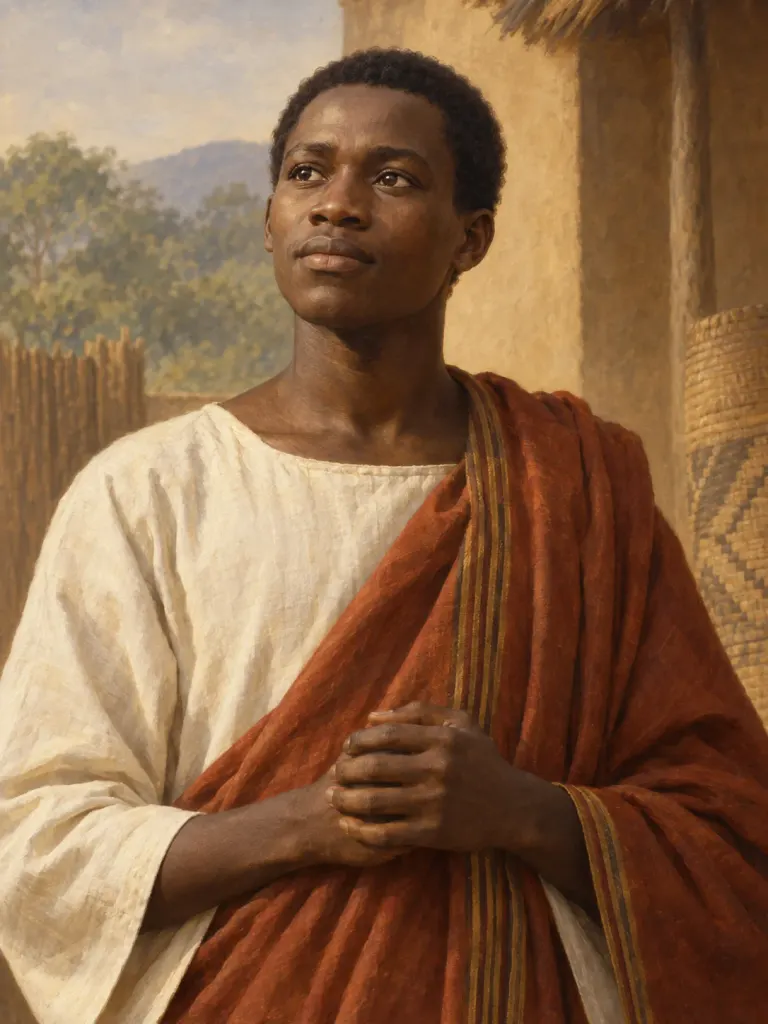
Charles Lwanga: martyrdom, companions and feast day
How did Charles Lwanga die, and who ordered his death?
Charles was burned to death at Namugongo during the persecution ordered by King Mwanga II. The king condemned Christians who would not abandon their faith. The judgment at Munyonyo and the execution at Namugongo were separate events; the place names should not be used interchangeably.
When is Saint Charles Lwanga's feast day?
June 3 is the Memorial of Saint Charles Lwanga and Companions, Martyrs, in the Roman Catholic calendar. The shared title remembers a community of witnesses, not Charles alone. A memorial is a liturgical rank; it does not by itself create an obligation for everyone to attend weekday Mass.
What is Charles Lwanga's connection to Saint Kizito?
Charles baptized Kizito and other future martyrs before their journey to Namugongo. Munyonyo Shrine commemorates those baptisms. Reading Kizito's story alongside Charles's shows how their lives were connected through teaching, encouragement and care during danger.
These answers were compared with the linked sources on using AI assistance.
Biography
Charles Lwanga served at the court of King Mwanga II of Buganda and became a Catholic during the early growth of Christianity in the kingdom. After the killing of Joseph Mukasa, he assumed an important role in encouraging and protecting the young Christian pages. Their refusal to surrender their religious commitments brought them into conflict with the king.
The official beatification account remembers him as a leader among the palace pages. He instructed and encouraged young believers and baptized catechumens when the danger of execution became immediate. His responsibility was therefore both protective and religious.
The conflict included resistance to the king’s sexual coercion as well as demands concerning Christian faith. Describing that abuse as coercion keeps the focus on the power exercised over vulnerable young people. Charles’s witness belongs within their shared efforts to maintain faith and personal dignity under threat.
Charles was burned to death at Namugongo on June 3, 1886. He belongs to the group of twenty-two Catholic Ugandan martyrs canonized by Paul VI in 1964; Anglican Christians were also killed in the persecution. Remembering that wider setting prevents the story from becoming merely an isolated act of heroism. The Catholic memorial of Charles and his companions is June 3.
Context & contribution
The martyrs and Christian cooperation in Uganda
Charles Lwanga's memory belongs to a history that includes Anglican as well as Catholic victims. At Namugongo in 1969, Paul VI addressed members of Uganda's Anglican Church and explicitly honored their martyrs alongside the Catholic martyrs. He treated their common witness to Christ as a reason to pursue deeper Christian unity.
The address also named practical cooperation: the Christian Council in Uganda and joint efforts to make biblical translations accessible. This gives an institutional dimension to remembrance. Honoring Charles and his companions could encourage shared work while acknowledging continuing church differences. The papal address did not erase those differences or extend the Catholic canonization decree to every person commemorated by another tradition.
Explore the sources for this section
AI-assisted source comparison updated 2026-09-26. Editorial approach
From the Saint Discovery blog
Keep exploring your faith
Practical guides to prayer, the saints, and living the Catholic faith.
Why Do Catholics Pray to Saints? Intercession Explained
Why do Catholics pray to saints? Learn how intercession differs from worship, how it relates to Jesus, and a simple way to ask a saint to pray for you.
A next step with your saintRead the article Living the seasonsHow to Celebrate Your Patron Saint's Feast Day at Home
Celebrate your patron saint's feast day with prayer, a short biography, and an act of kindness. A practical plan for families, sponsors, and individuals.
A next step with your saintRead the articleFrom reading to reflection
What will you carry with you?
After reading about St. Charles Lwanga, take a moment to consider:
- Read Paul VI's 1969 address and explain why cooperation in translating Scripture is a fitting response to the martyrs' shared witness.
These are reflection prompts from Saint Discovery, not quotations from the saint.
Sources and further reading
- Vatican News: Charles Lwanga and companions ↗
- Benedict XV: In Africam quisnam, beatification account of the Ugandan martyrs ↗
Biography source comparison recorded on . This is an AI-assisted comparison, not independent human or ecclesiastical approval.
What the recorded review covers
AI-assisted expansion checked against retrieved historical and institutional sources; traditions distinguished from documented history; not ecclesiastical approval
A source list helps you check an account; it does not establish that every claim is certain. Follow the biography’s qualifications about historical evidence, traditions and feast calendars.
Suggest a correction to this biography
How we research these pages and handle corrections · Directory corrections log
More lives to explore
Suggestions based on the site’s quiz themes, not a historical relationship or a measure of holiness.