Catholic saint biography
St. James the Greater
- Commemoration:
- July 25
- Lived:
- First century; died in the 40s — Galilee
Roman feast.
Why dates and liturgical observances can differ
Read the sources for this biography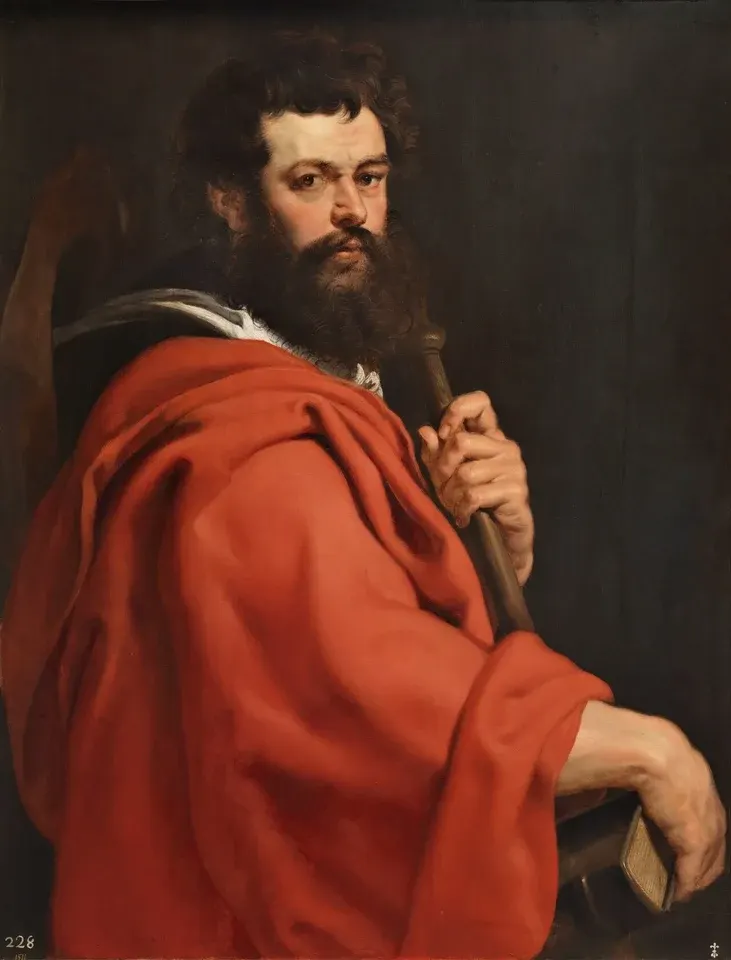
Biography
Saint James the Greater, the son of Zebedee and brother of John, was one of Jesus' Twelve Apostles. His title distinguishes him from the other apostle named James; it is not a judgment that one was holier than the other.
Together with Peter and John, James witnessed events including the Transfiguration and Jesus' anguish in Gethsemane. The Gospels thus place him close to both the revelation of Christ's glory and the suffering that challenged the disciples' expectations of the Messiah.
Acts records that Herod Agrippa had James killed by the sword. The notice is brief and supplies no detailed account of his final words or trial. It makes him the first of the Twelve whose martyrdom is explicitly recorded in the New Testament.
Later traditions connect James with preaching in Spain and with the transfer of his remains to Santiago de Compostela. These accounts should be distinguished from the biblical evidence. Their influence on Christian history is nevertheless substantial: Compostela became a major destination of pilgrimage, and James's staff and pilgrim imagery continue to associate his apostolic mission with the journey of faith.
Context & contribution
The request for honor and the lesson of service
Benedict XVI's catechesis draws attention to a less comfortable part of James's discipleship: the request that he and his brother receive privileged places beside Jesus in the kingdom. Read alongside the later martyrdom notice, that episode prevents a portrait in which the apostle understood the meaning of following Christ completely from the beginning.
The catechesis interprets his journey through the contrast between glory and suffering. The disciple who desired a place of honor had to learn a form of participation that included Christ's passion. This is a theological reading of the Gospel episodes, not a reconstruction of James's unrecorded thoughts or final speeches. Its force rests on comparing what the texts actually preserve.
Explore the sources for this section
AI-assisted source comparison updated 2026-09-26. Editorial approach
From the Saint Discovery blog
Keep exploring your faith
Practical guides to prayer, the saints, and living the Catholic faith.
Walking the Camino de Santiago: A Catholic Beginner’s Guide
Walking the Camino de Santiago? Explore its Catholic meaning, beginner routes, preparation tips, pilgrim credentials, and ways to pray along the journey.
Connected to this saintRead the article Prayer & reflectionWhy Do Catholics Pray to Saints? Intercession Explained
Why do Catholics pray to saints? Learn how intercession differs from worship, how it relates to Jesus, and a simple way to ask a saint to pray for you.
A next step with your saintRead the articleFrom reading to reflection
What will you carry with you?
After reading about St. James the Greater, take a moment to consider:
- Read the request for places of honor and Acts 12:1–2 together. Discuss how the contrast changes an account of James that mentions only his closeness to Jesus.
These are reflection prompts from Saint Discovery, not quotations from the saint.
Sources and further reading
Biography source comparison recorded on . This is an AI-assisted comparison, not independent human or ecclesiastical approval.
What the recorded review covers
AI-assisted expansion checked against cited sources; historical traditions distinguished from documented evidence; not ecclesiastical approval
A source list helps you check an account; it does not establish that every claim is certain. Follow the biography’s qualifications about historical evidence, traditions and feast calendars.
Suggest a correction to this biography
How we research these pages and handle corrections · Directory corrections log
More lives to explore
Suggestions based on the site’s quiz themes, not a historical relationship or a measure of holiness.