A solemnity, a feast, and a memorial are different ranks of celebration in the Roman Catholic liturgical calendar. A solemnity is the highest of these three; a feast comes next; a memorial brings a particular remembrance into the weekday's worship. The rank helps determine the prayers and shape of the celebration, especially when two observances fall on the same date.
That explains a familiar puzzle: your saint calendar names someone, but your parish celebrates a Sunday instead. Neither calendar necessarily contains an error. One may be identifying a saint's customary date while the other tells you which liturgy is celebrated this year. Here is how to read those distinctions without needing to become a calendar expert.
What is a solemnity?
Solemnities are among the Church's principal celebrations. Their observance begins with Evening Prayer on the preceding day; some also have a distinct Vigil Mass. The Universal Norms on the Liturgical Year and the Calendar, paragraphs 10–14, explain the three ranks and their celebration.
At Mass on a solemnity, the Gloria and Creed are included. Christmas is a familiar example. The word does not mean that a celebration should feel gloomy or unusually severe. Think of it as a calendar designation that gives the day particular prominence.
What is a feast?
A feast has a distinct liturgical celebration but ranks below a solemnity. At a weekday feast, the Gloria is included; the Creed is not normally required. These distinctions come from the General Instruction of the Roman Missal, paragraphs 53 and 68, which specify when these parts of Mass are used.
September 29, the celebration of Michael, Gabriel, and Raphael, is a feast. Our guide to the archangels' feast explores its meaning. In ordinary conversation, people also say “feast day” about a saint's annual remembrance regardless of its formal rank. A birthday-style family celebration does not tell you whether the liturgical calendar calls that day a Feast, Memorial, or Solemnity.
What is a memorial, and what does optional mean?
Memorials are integrated into the weekday celebration. They may be obligatory or optional: an optional memorial permits a choice about observing that remembrance, within the liturgical rules. The distinction concerns the liturgy; it is not a judgment that one saint deserves your affection and another does not.
A memorial does not ordinarily add the Gloria or Creed to a weekday Mass. Nor does every memorial replace the weekday Scripture readings. The USCCB's 2026 calendar explains that weekday readings are generally retained, with exceptions for required proper readings. That is why the Gospel may continue the week's sequence even when the priest names a saint in the opening prayer.
“Obligatory memorial” also does not mean everyone must attend Mass that weekday. The obligation here is about which celebration is observed when the liturgy is celebrated. Attendance obligations are a separate question.
Why does a Sunday sometimes replace a saint's day?
Sunday celebrates Christ's Resurrection and anchors the liturgical year. Vatican II emphasizes that central place in Sacrosanctum Concilium, paragraph 106. The calendar serves that focus on Christ; its purpose is not to fit the greatest possible number of saint celebrations into every week.
A useful example is September 27, 2026. Vincent de Paul's customary memorial date is September 27, but the USCCB lists this year's date as the Twenty-sixth Sunday in Ordinary Time. In the general calendar, the Sunday celebration takes precedence. Vincent has not been removed from the Church's memory. You can still learn from his life through our reflection on Vincent de Paul and helping people in poverty.
There are exceptions to any simplified “Sunday wins” rule. Solemnities and feasts of the Lord can replace Sundays in Ordinary Time; Sundays of Advent, Lent, and Easter have greater precedence. The Universal Norms' table of liturgical days, rather than popularity or personal preference, settles these conflicts. Local calendars can also affect the result.
Is every solemnity a holy day of obligation?
No. Liturgical rank and the obligation to attend Mass are related but distinct. For example, the U.S. calendar identifies August 15, 2026, as the Solemnity of the Assumption while explicitly noting that it is not a holy day of obligation that year, because it falls on Saturday under the applicable U.S. norm.
For a particular date, check your diocese's current guidance and parish schedule. A calendar from another country, or an undated image shared online, may not answer the question for your location. Do not infer a new attendance obligation simply from the word “solemnity,” or assume it has disappeared because a website uses the casual term “feast.”
A five-minute way to check your saint's day
Start with the exact date and year. Use the USCCB's annual liturgical calendar page if you are in the United States, then check diocesan or parish information for local observances. The USCCB explains that its calendar combines the General Roman Calendar with the proper calendar for the United States.
Next, read the day's main heading before following a link to an individual saint. Note the rank, the assigned readings, and any explanatory footnote. If your parish's bulletin differs from the general listing, ask whether a local patronal celebration or another proper observance explains it. Bring the exact date to the question; “Why didn't we celebrate my saint?” can be difficult to answer without it.
Finally, separate your liturgical question from your family plan. You can attend the parish's scheduled liturgy and later read a saint's biography together. Our guide to celebrating a patron saint's day at home offers practical ideas. Let that devotion draw you toward the Church's worship rather than become a source of anxiety about getting every detail right.
For a Confirmation group, give students the same date in two different years. Ask them to record the calendar heading, the saint associated with the date, and one reason those answers might differ. The exercise teaches them to check a source before assuming a contradiction, while keeping their interest in the saints connected to the shared life of the Church.
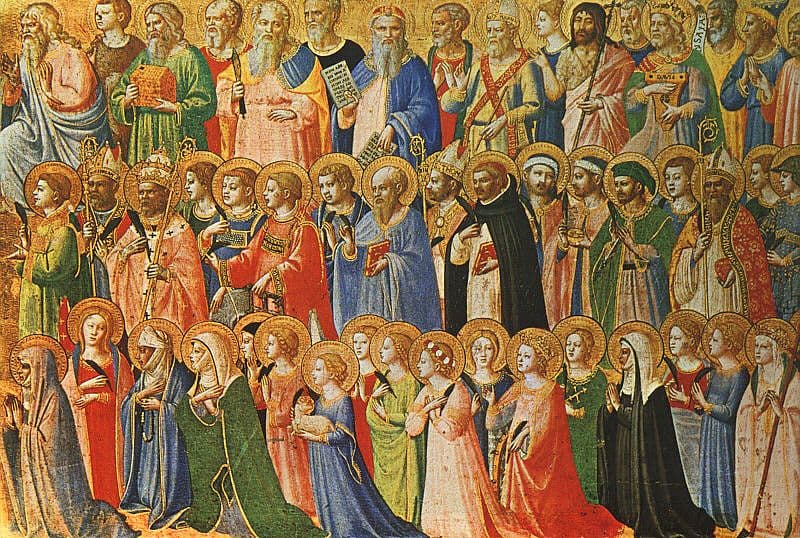
Cover artwork: a detail of The Forerunners of Christ with Saints and Martyrs, attributed to Fra Angelico, from the National Gallery, London. The reproduction is public domain; see the artwork's source and licensing record.
