To celebrate your patron saint's feast day at home, read a short account of their life, thank God for their example, ask for their prayers, and choose one act of love to practice. A few attentive minutes can make the date meaningful without an elaborate meal or a shopping list.
This guide offers an optional home devotion. Adapt it for yourself, your family, or a conversation with your Confirmation sponsor.
What is a saint's feast day?
In everyday conversation, a saint's “feast day” means a day associated with celebrating that saint. In the Roman Catholic liturgical calendar, celebrations have particular ranks, including solemnities, feasts, and memorials. They do not all have the same place in the calendar.
The USCCB's guide to the liturgical year explains those distinctions and links to calendars for the United States. The celebration observed at Mass can depend on the year and the local calendar. Check your parish's calendar when planning around a particular liturgy.
The purpose reaches beyond remembering a famous person. The Compendium of the Catechism, question 242, places the remembrance of saints within the Church's celebration of Christ's mystery throughout the year. Their lives direct our attention to God.
Find the date and choose a small plan
Look up your saint in the saint directory, read the feast-day information, and follow the biography's sources if you want to investigate further. If different calendars list different dates, identify which calendar each source is using. Your parish can help you understand the observance in your own community.
Then choose a time that fits the day you actually have. It could be breakfast, a quiet lunch break, or ten minutes before bed. Put a reminder in your calendar with the saint's name and a link to the biography. Planning one small practice is often more useful than saving many ideas you will not use.
Label a recipe or custom as a regional tradition when its origin is known, or as your own family's idea when it is not. That honesty helps children distinguish Church worship, inherited culture, and creative household practices. A meal, story, or act of charity at home can be moved to a workable time while you follow the actual liturgy of the day.
A ten-minute feast-day plan
Minutes 1–2: begin with gratitude
Make the Sign of the Cross and thank God for one good thing in your day. If others are joining you, give each person the chance to name an intention. There is no need for everyone to make a speech.
You might begin with this original prayer: “Lord Jesus, thank you for the people who show us how to love you. Help us listen, learn, and grow in charity today. Amen.”
Minutes 3–5: read one part of the saint's story
Read a short section aloud or silently. Choose one event rather than trying to summarize an entire life. With children, explain unfamiliar words and use a part of the story appropriate to their age.
Ask one question: What choice did this person face? What virtue do we notice? What do we still want to understand? If an account is described as a legend or later tradition, say so. You can appreciate a story's meaning while being clear about what is historically known.
Minutes 6–7: ask for the saint's prayers
Name your intention simply: “Saint ___, pray for us as we try to ___.” Then bring the need directly to God in your own words or pray the Our Father.
The Catechism, paragraph 2683, teaches that the saints share in the Church's life of prayer and that we may ask for their intercession. If this is unfamiliar, our explanation of why Catholics pray to saints is a helpful next read.
Minutes 8–10: choose an action
Let the reflection lead to one specific response. A discussion about generosity might lead to sharing time with someone who is lonely. A discussion about patience might lead to listening without interrupting. A discussion about courage might lead to making an apology you have postponed.
Make the action small enough to do, and decide when you will do it. At the end of the day, notice what you learned without turning the exercise into a scorecard.
Three ways to adapt the celebration
With young children
Use a brief story and one question. Children can draw something they remember, name a person to pray for, or help choose a kind action. A favorite snack can make the occasion memorable, but it is an optional family choice, not a requirement of the devotion.
With a Confirmation sponsor
Read the same biography before you meet. Each person can bring a passage or question, then talk about where that example might matter in ordinary life. Revisit the practical intention from the candidate's Confirmation saint report, if their program includes one.
On your own
Keep a short note with three lines: what you noticed, whom you prayed for, and what you intend to practice. You can return to it next year and see how your understanding has developed. A simple practice can be worthwhile even when no one else joins you.
Start with a saint you want to know better
You do not have to organize a celebration around an unfamiliar name. Begin with your baptismal or Confirmation patron, a saint connected with your parish, or someone whose story has raised a question for you.
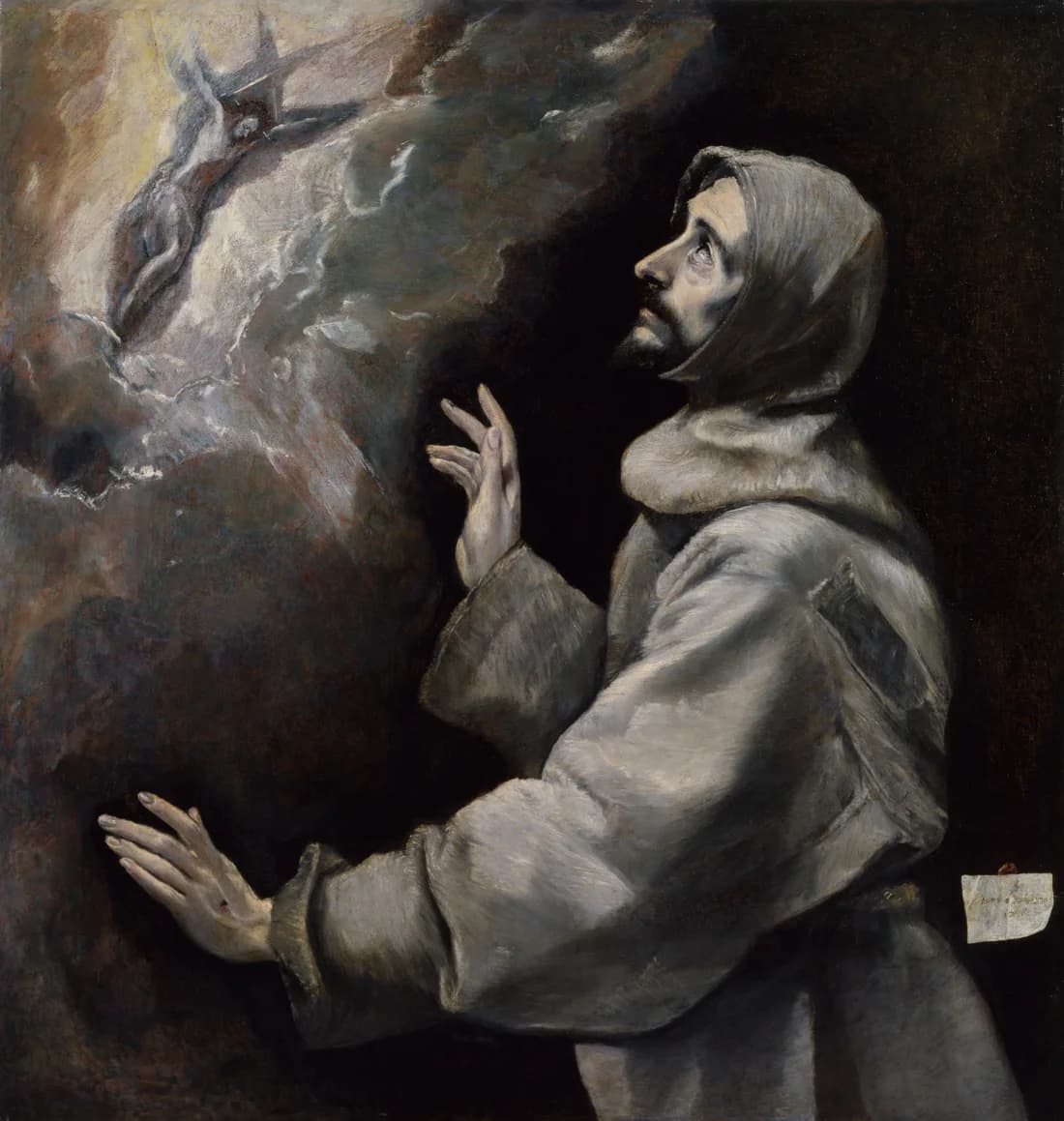
For example, read Saint Francis of Assisi's biography and choose one episode for discussion. Use the biography and its sources to guide the conversation rather than assuming a familiar artwork tells the whole story. The painting accompanying this article is El Greco's depiction of Francis receiving the stigmata.
If you would like a daily starting point instead of an annual reminder, visit Saint of the Day. Treat it as an invitation to learn and pray, and consult your parish calendar for the day's liturgical observance.
A worked example: celebrating Saint Francis without stopping at animals
Here is an original family activity built around the Francis biography. Before gathering, select its account of his service to people excluded from society and follow the cited source. Read the paragraph together and ask, “Who was easy to avoid in Francis's setting, and whom do we overlook in ours?” Keep the historical episode and your present-day application clearly separate.
Choose one response suited to your household: ask a local organization which supplies are useful, arrange a visit welcomed by someone who is lonely, or invite an overlooked person into a shared activity. Children can help prepare a card or choose an appropriate task. Set a time to follow through instead of ending with a vague intention to be kinder.
At a later meal, discuss what actually happened. Did you ask what the person needed? Did your plan respect their wishes? A feast-day practice can teach listening as well as generosity. This is a suggested activity, not a claim that Francis prescribed this celebration or that every family should use the same plan.
Common questions
Do I have to attend Mass on my patron saint's feast day?
A personal patron's celebration does not by itself establish a holy day of obligation. Check the calendar and guidance for your location. Attending Mass can be part of your plan when possible, but the optional home activities here do not replace any obligation to participate in Mass.
What if I miss the date?
You can still read the biography, pray, and choose an act of charity on another day. This home reflection does not depend on completing a routine at an exact time.
Do we need special food, decorations, or candles?
No. Use what helps you pay attention. The heart of this suggested practice is learning, prayer, and a concrete response to the saint's example.