Catholic saint biography
St. Anna Wang
- Lived:
- Died at about fourteen years of age — China
Group memorial and individual death date require separate calendar documentation.
Read the sources for this biography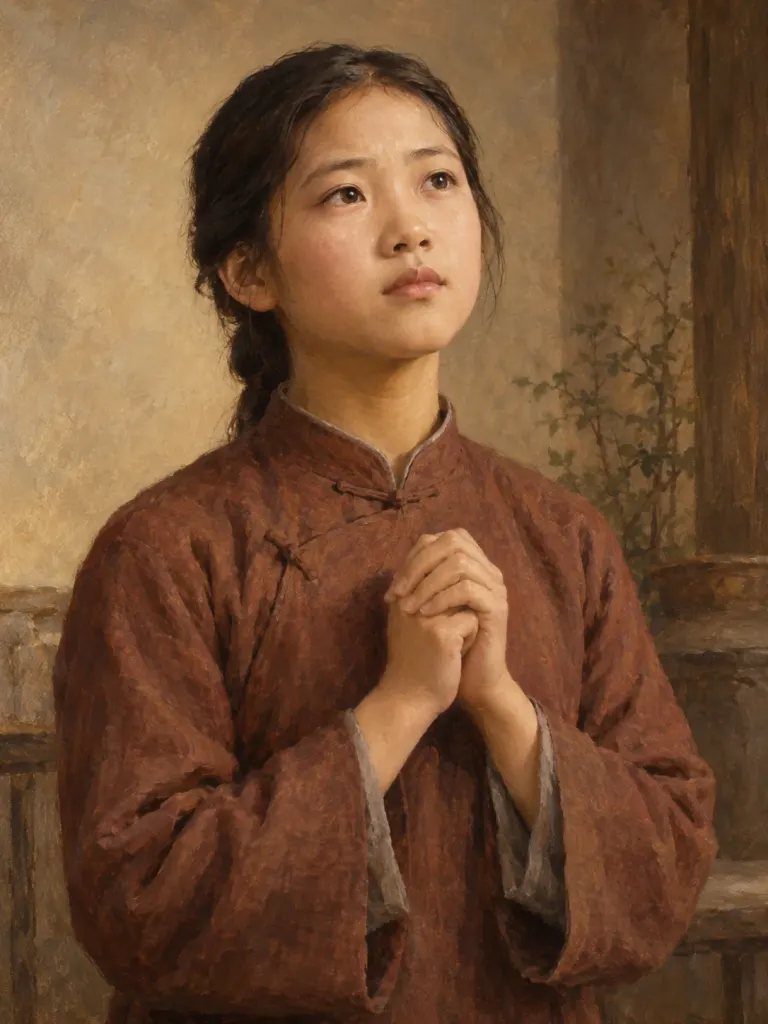
Biography
Anna Wang was a young Chinese Christian remembered among the martyrs canonized by John Paul II on October 1, 2000. In the canonization homily, the pope recalled her refusal to renounce her faith despite threats of execution.
John Paul II identified Anna as fourteen years old when she faced the demand to abandon Christianity. His account emphasizes her response to coercion and the approach of death. It does not provide a comprehensive history of her education, household, or the everyday practices of her community.
Her canonization forms part of the recognition of Augustine Zhao Rong and 119 companions. The group encompasses different ages and states of life rather than a single congregation. Anna’s presence makes the witness of young lay Christians visible within that larger history; additional childhood anecdotes require separate evidence.
Her witness belongs to the wider history of the 120 martyrs of China, which includes laypeople as well as clergy and religious. The canonization homily preserves the central account of her martyrdom. The limited surviving biographical detail makes it important to distinguish this public witness from fuller stories that cannot be securely established.
Context & contribution
Honoring witness without simplifying China's history
John Paul II's canonization homily explicitly distinguishes honoring the martyrs from passing judgment on every political question in the historical periods concerned. That distinction is especially useful for reading Anna's story: the Church recognizes her fidelity without turning a young person's death into a complete interpretation of Chinese history.
The homily places Chinese believers at the center of the commemoration and also acknowledges missionaries' human limitations. Anna's presence among the martyrs makes a local young lay voice visible within a story sometimes told only through foreign institutions. The appropriate response is to attend to that witness while retaining the complexity the canonization address itself recognizes.
Explore the sources for this section
AI-assisted source comparison updated 2026-09-26. Editorial approach
From the Saint Discovery blog
Keep exploring your faith
Practical guides to prayer, the saints, and living the Catholic faith.
Why Do Catholics Pray to Saints? Intercession Explained
Why do Catholics pray to saints? Learn how intercession differs from worship, how it relates to Jesus, and a simple way to ask a saint to pray for you.
A next step with your saintRead the article Living the seasonsHow to Celebrate Your Patron Saint's Feast Day at Home
Celebrate your patron saint's feast day with prayer, a short biography, and an act of kindness. A practical plan for families, sponsors, and individuals.
A next step with your saintRead the articleFrom reading to reflection
What will you carry with you?
After reading about St. Anna Wang, take a moment to consider:
- How can a presentation honor Anna's refusal of coercion while avoiding broad claims about an entire people or historical era?
These are reflection prompts from Saint Discovery, not quotations from the saint.
Sources and further reading
Biography source comparison recorded on . This is an AI-assisted comparison, not independent human or ecclesiastical approval.
What the recorded review covers
AI-assisted expansion checked against retrieved historical and institutional sources; traditions distinguished from documented history; not ecclesiastical approval
A source list helps you check an account; it does not establish that every claim is certain. Follow the biography’s qualifications about historical evidence, traditions and feast calendars.
Suggest a correction to this biography
How we research these pages and handle corrections · Directory corrections log
More lives to explore
Suggestions based on the site’s quiz themes, not a historical relationship or a measure of holiness.