Ecumenism is the effort to restore unity among Christians through prayer, dialogue, conversion of heart, and cooperation. For Catholics, its goal is full, visible Christian unity. The USCCB's introduction to ecumenism describes this work as a response to Christ's desire for his Church to be one.
That can sound like a subject reserved for bishops and theologians. Yet it also matters when you discuss faith with a Protestant friend, pray with an Orthodox relative, or work alongside Christians from another church. Ecumenism asks how those relationships can become more truthful, charitable, and open to the unity Christ wills.
Why does Christian unity matter?
In John 17:20–23, Jesus prays for those who will believe through his disciples' witness, asking that they may be one. He connects that unity with the world's recognition that the Father sent him. Christian unity therefore belongs to the Gospel's mission as well as to the life of the Church.
For a reader encountering Christianity for the first time, divisions can be confusing. Christians may speak about the same Jesus while disagreeing about authority, sacraments, or the Church itself. Ecumenical work takes those differences seriously while seeking to overcome estrangement. It invites Christians to consider whether their words and conduct help others see Christ's love.
What does the Catholic Church teach about ecumenism?
The Second Vatican Council's 1964 decree Unitatis Redintegratio is a foundational Catholic text on Christian unity. It recognizes that valid Baptism creates a real bond among Christians, even when full communion is lacking. It also calls Catholics to renewal, prayer, and honest dialogue.
This bond gives Christians a reason to approach one another as people already connected to Christ. Differences remain significant, and the relationship between Catholics and Orthodox Christians differs from the relationship between Catholics and the various Protestant communities. The USCCB's overview describes the Church's dialogue with these different partners in pursuit of visible unity.
Pope John Paul II reaffirmed the Church's commitment in his 1995 encyclical Ut Unum Sint. In paragraph 20, he presents ecumenism as part of the Church's life and mission. Paragraph 97 explains that, in Catholic teaching, full communion includes communion with the Bishop of Rome. Catholic ecumenism has a concrete understanding of the unity it seeks.
Does ecumenism mean giving up Catholic beliefs?
No. Unitatis Redintegratio, paragraph 11, requires Catholic teaching to be presented faithfully and clearly. It rejects an appearance of agreement achieved by obscuring what the Church actually believes. At the same time, it calls for humility, charity, and language that other Christians can understand.
In practice, you can listen carefully to a friend's understanding of the Eucharist and explain your own without pretending the differences have disappeared. If a question catches you off guard, take time to learn. Our guide to the seven sacraments offers a starting point for understanding Catholic sacramental teaching before discussing it with someone else.
Ecumenism and interreligious dialogue: what is the difference?
Ecumenism concerns relationships and unity among Christians, including Catholics, Orthodox Christians, and Protestants. Interreligious dialogue concerns relationships with people of other religions, such as Muslims, Hindus, and Buddhists. The USCCB's explanation of interreligious dialogue emphasizes friendship, mutual understanding, and cooperation for the good of humanity.
Both call for respect and honest conversation, but their starting points and goals differ. For example, a discussion between Catholics and Lutherans about Baptism is ecumenical. A conversation between Catholics and Muslims about serving their neighborhood is interreligious. Knowing the distinction helps you understand what a parish event or Church document is trying to accomplish.
Can Catholics pray with other Christians?
Yes. Shared prayer for Christian unity is an established part of Catholic ecumenical practice. Unitatis Redintegratio, paragraph 8, encourages appropriate prayer together and connects the search for unity with personal holiness and a change of heart.
You might join a parish-supported prayer service, read a Gospel passage with a Christian friend, or pray together for someone who is ill. Ask your parish for guidance when planning a public event. Shared prayer should express the faith participants truly share, with care for the beliefs and practices of each community.
Does ecumenism allow everyone to receive Communion?
Shared prayer does not automatically mean shared Eucharistic Communion. The USCCB's guidelines for receiving Communion explain that the Eucharist expresses unity in faith, life, and worship. Christians who are not in full communion with the Catholic Church are ordinarily not admitted to Communion.
The conditions differ. For members of Eastern Churches not in full communion with Rome, Catholic ministers may administer Penance, Eucharist, and Anointing when they freely request them and are properly disposed. Canon 844 §3 also extends these conditions to members of other Churches judged by the Apostolic See to be in the same sacramental condition. For Christians outside those cases, canon 844 §4 requires danger of death or another grave necessity judged by the diocesan bishop or bishops' conference, inability to approach their own minister, a voluntary request, Catholic faith regarding the sacrament, and proper disposition. These are not general permissions based simply on friendship or attendance at a Catholic wedding. Read canon 844.
Ask a priest about an individual situation and respect the discipline of the other person's Church. Guests can be welcomed warmly at Mass and join in prayer without receiving Communion.
Has ecumenical dialogue achieved anything concrete?
The Catholic–Lutheran Joint Declaration on the Doctrine of Justification is a useful example. It identifies a shared understanding that salvation begins with God's grace in Christ, rather than something people earn independently. It also addresses good works as the fruit of a renewed life. This agreement does not declare every Catholic and Lutheran teaching identical. Its conclusion explicitly identifies further questions concerning Church authority, ministry, sacraments, and other matters. Read paragraphs 15 and 37–43 of the Joint Declaration.
The achievement is precise: carefully examining a historic disagreement can reveal real agreement and clarify what still divides Christians. Treating the declaration as proof that all differences have vanished misses that achievement. So does dismissing dialogue because it did not produce immediate institutional reunion.
Try a conversation with an identifiable question
Instead of asking whether Catholics and Protestants “believe the same thing,” choose one question: What do you mean when you say that salvation is God's gift? Each person can consult an official source from their own community and explain its meaning before responding to the other. Write down the actual agreement and the remaining question separately.
This is a suggested discussion method, not a negotiation in which friends can change their Churches' teaching. If either person cannot answer a question accurately, leave it open and seek better information. A conversation that replaces one caricature with an accurate understanding is worthwhile even when disagreement remains.
Four practical ways to take part in ecumenism
1. Ask a question before making an assumption
Try asking a Christian friend how their congregation understands Baptism, worship, or discipleship. Listen to the answer they actually give. Avoid treating one person's experience as a complete description of an entire tradition. You can then explain your Catholic understanding and identify a question worth exploring together.
2. Read a passage of Scripture together
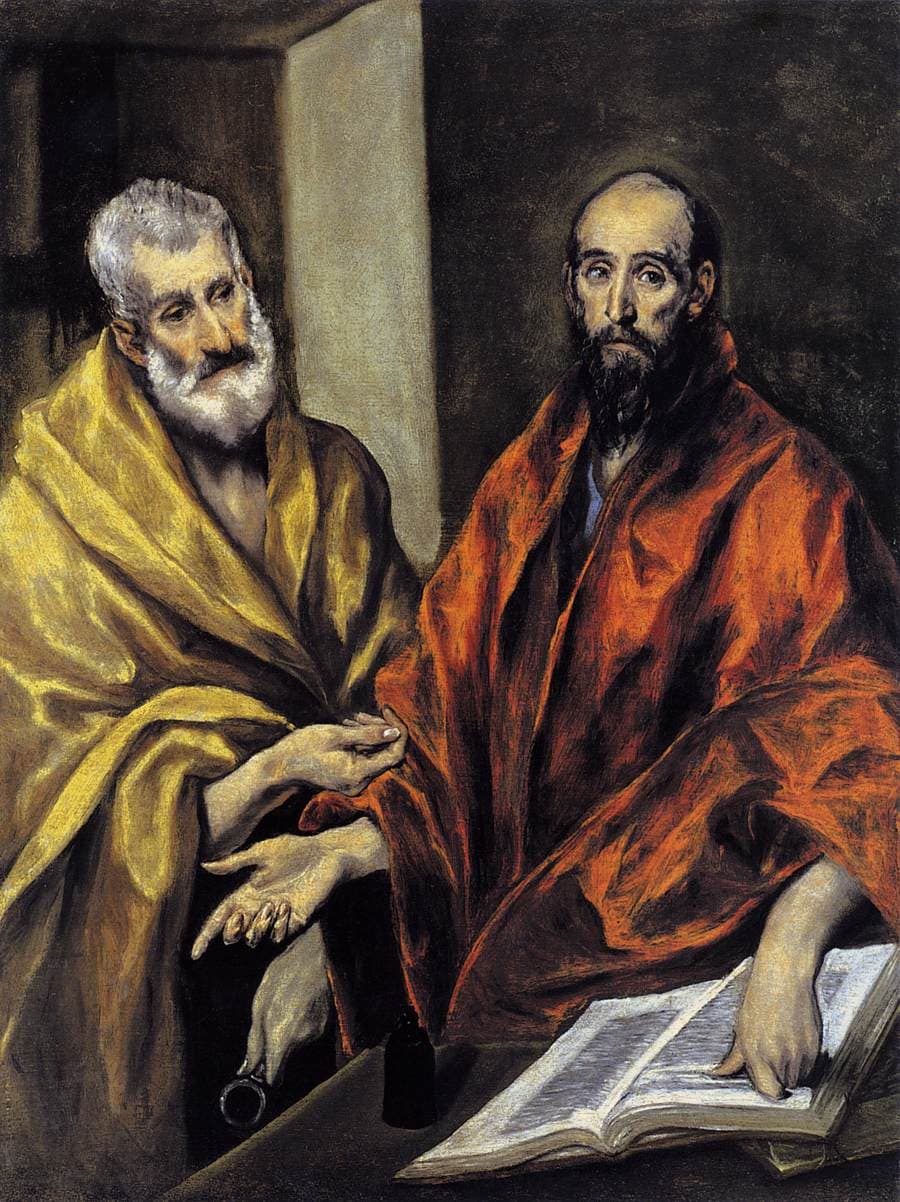
Begin with John 17 and discuss why Jesus prays for unity. Ask what the passage invites each of you to reconsider in your own conduct. If you want to explore the early Church further, our biographies of Saint Peter and Saint Paul the Apostle offer places to begin, with sources for further reading.
3. Serve a real need in your community
Ask whether your parish works with other churches on a food pantry, shelter, or local service project. Learn what help is needed and make a commitment you can sustain. Working together gives people an opportunity to know one another beyond labels, while offering something useful to neighbors.
4. Speak about disagreements with care
Before sharing a claim about another Christian community, check whether it accurately represents that community's teaching. If you have repeated something unfair, correct it. When discussing Catholic practices such as asking saints for their prayers, explain what Catholics mean and leave space for follow-up questions.
When is the Week of Prayer for Christian Unity?
In the United States, the Week of Prayer for Christian Unity is observed each year from January 18 to 25. The USCCB describes the annual observance as an occasion for Christians to pray across denominational lines. Check your parish or diocesan calendar for local gatherings.
Prayer for unity can continue throughout the year. Choose a regular moment to pray for Christians in your community, including those whose traditions you understand least.
An original prayer for Christian unity
Lord Jesus, you prayed that your followers would be one. Give us patience to listen, courage to speak truthfully, and humility to recognize our own failings. Heal the divisions among Christians. Guide our prayer, study, and service toward the unity you desire, so that our lives may bear faithful witness to your love. Amen.
Artwork: El Greco, Saints Peter and Paul. Public-domain reproduction via Wikimedia Commons.
