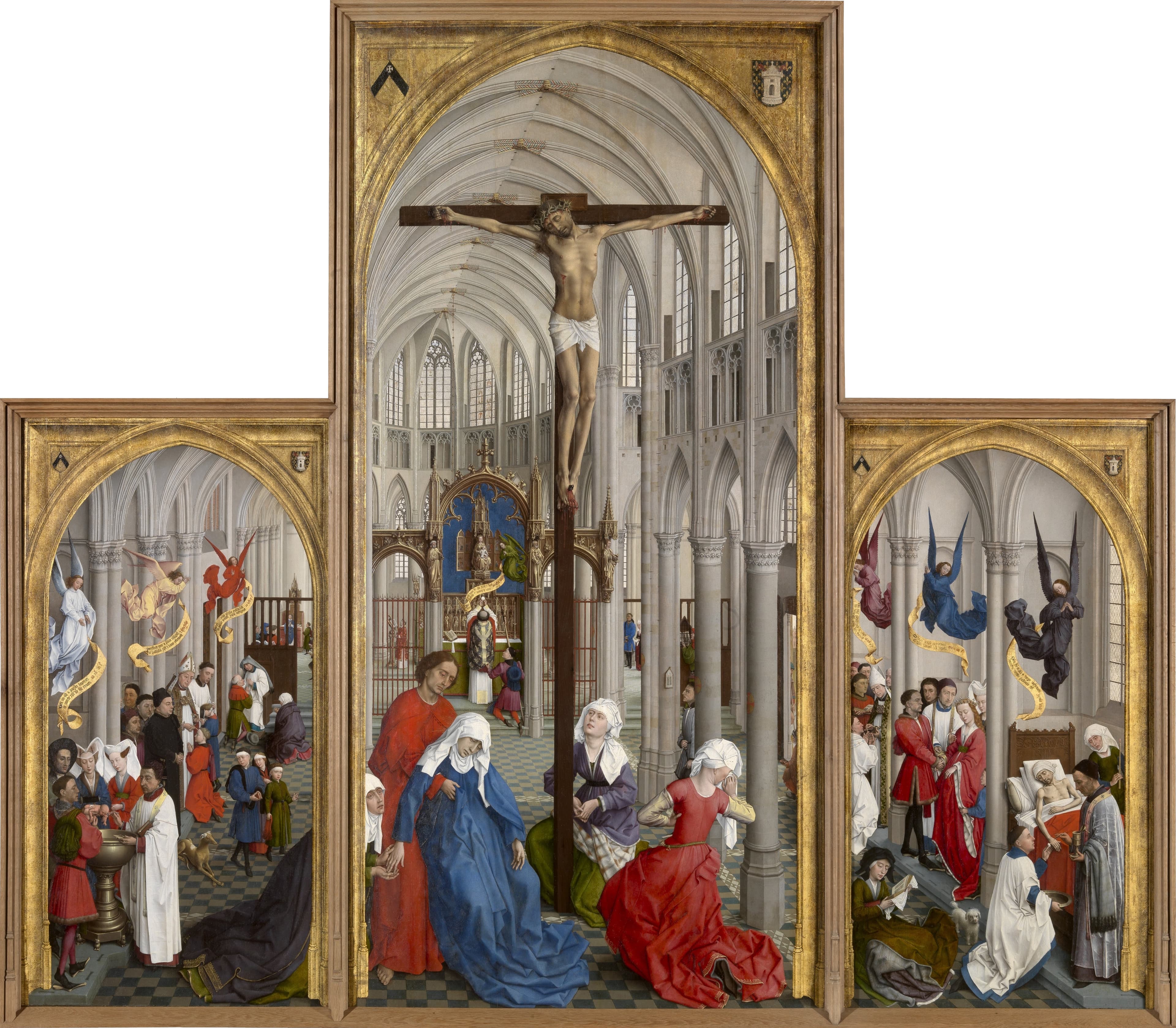
The seven sacraments of the Catholic Church are Baptism, Confirmation, the Eucharist, Penance and Reconciliation, Anointing of the Sick, Holy Orders, and Matrimony. Catholics believe that through these sacraments, Jesus gives his people grace for a life of faith, forgiveness, love, and service.
If you are exploring Catholicism, preparing for a sacrament, or helping a child learn the faith, the list can feel like a collection of unfamiliar ceremonies. Understanding what each sacrament does makes the connections easier to see. Together, they accompany a person through conversion, everyday discipleship, illness, and the commitments that shape a lifetime.
What is a sacrament in the Catholic Church?
A sacrament is an effective sign of God's grace, instituted by Christ and celebrated by the Church. Water, oil, words, and other visible signs communicate a gift that cannot be reduced to what we can see. Catholics believe that Christ acts through the sacraments to share his life with us. The USCCB's overview of the sacraments explains their place in Christian life.
The Church groups them into three categories. Baptism, Confirmation, and the Eucharist are the sacraments of initiation. Reconciliation and Anointing of the Sick are the sacraments of healing. Holy Orders and Matrimony are sacraments at the service of communion: they build up the Church through particular callings to serve others.
1. Baptism: beginning a new life in Christ
Baptism brings a person into the Church, the Body of Christ. It cleanses original sin and any personal sins, and begins a new life with God. For an infant, there are no personal sins to confess; the gift is God's initiative before the child can understand or earn anything.
The USCCB's explanation of Baptism connects this new life with a continuing call to holiness. Baptism has consequences beyond the day of the celebration: learning to pray, belonging to a Christian community, and growing in love become part of the life that follows.
For adults preparing to enter the Church, see our guide to why becoming Catholic takes time.
2. Confirmation: strength to live and share the faith
Confirmation deepens the grace of Baptism and strengthens the baptized person through the gift of the Holy Spirit. Its purpose reaches into ordinary situations: speaking truthfully, serving someone in need, and bearing witness to Christ when faith is difficult to discuss. The USCCB's Confirmation guide emphasizes this connection between receiving the Spirit and serving the Church.
Preparation is therefore an invitation to lasting discipleship. If your parish asks you to choose a patron saint, our Confirmation saint selection guide can help you find someone whose life encourages the kind of faith you hope to grow into.
3. The Eucharist: receiving Christ himself
Catholics believe that at Mass, the bread and wine become the Body and Blood of Jesus Christ while retaining the appearances of bread and wine. Christ is truly present, whole and entire, including his soul and divinity. Holy Communion is the reception of this sacrament.
The USCCB's guide to the Eucharist explains both the Real Presence and the Eucharist's connection to Jesus' gift of himself. This is why Catholics approach Communion with reverence and preparation. Receiving Christ calls us to let his love shape our relationships beyond the church doors.
Curious about reports of extraordinary signs? Our article on what Eucharistic miracles are explains how those reports relate to ordinary Catholic belief about the Eucharist.
4. Reconciliation: receiving forgiveness and beginning again
Also called Penance or Confession, this sacrament addresses sins committed after Baptism. The person repents, confesses sins to a priest, and receives absolution. Through this encounter, God reconciles the person with himself and with the Church. The USCCB's explanation of Penance stresses both mercy and the call to forgive others.
Someone returning after many years may worry about remembering every step. A practical beginning is to tell the priest how long it has been and ask for guidance. Making an appointment can give you more time to talk. You can come honestly, including with the admission that you feel nervous.
5. Anointing of the Sick: grace in serious illness
Anointing of the Sick offers spiritual strength, peace, and courage to those facing serious illness or the frailty of old age. A priest administers this sacrament. Physical healing may follow if God wills it, but the sacrament does not promise recovery from every illness.
One common misunderstanding is that a person must be close to death to receive it. The USCCB's teaching on Anointing of the Sick explicitly says there is no need to wait that long. If you or a loved one is seriously ill, contact a parish priest or hospital chaplain and ask about receiving the sacrament.
6. Holy Orders: ordained ministry in the Church
Holy Orders continues the apostolic ministry entrusted by Christ to his apostles. It has three degrees: bishop, priest, and deacon. The Catechism's introduction to Holy Orders, paragraph 1536, identifies these distinct forms of ordained service.
The USCCB's guide to Holy Orders describes a vocation as a call and gift from God that requires discernment. For someone wondering about ordained ministry, a conversation with a parish priest or diocesan vocation director is a useful first step. There is room to ask questions before knowing where that discernment will lead.
7. Matrimony: a lifelong covenant of love
In Catholic teaching, marriage is a lifelong covenant between a man and a woman, directed toward the good of the spouses and the welcoming and upbringing of children. A valid marriage between baptized persons is a sacrament. This understanding appears in Catechism paragraph 1601.
The USCCB's Matrimony guide connects married love with Christ's love for the Church. The wedding begins a commitment lived through ordinary acts: listening, keeping promises, asking forgiveness, and caring for one another. Couples preparing for marriage should contact their parish early to begin preparation and discuss their circumstances.
Which sacrament is the most important?
The Eucharist has a unique central place. The Church calls it the "source and summit" of Christian life because it is Christ himself who is received. Baptism is foundational as the beginning of sacramental life. These descriptions explain different roles within one life of faith.
The Catechism, paragraphs 1210–1211, presents the sacraments as a connected whole in which each has a vital place, with the others directed toward the Eucharist. That helps explain why Catholics treasure all seven while giving the Eucharist particular reverence.
What if I receive a sacrament and do not feel different?
Catholic teaching locates a sacrament's power in Christ's action, rather than in the intensity of the recipient's emotions or the minister's personal holiness. At the same time, the recipient's disposition matters for its fruitfulness. These two truths belong together: grace is God's gift, and people are called to receive and cooperate with that gift. See Catechism 1127–1129.
For example, a sincere confession may be followed by relief, but relief is not the test of whether absolution has been given. Conversely, a moving ceremony does not dispense with the need for repentance, faith, or the preparation appropriate to that sacrament. Ask what response the sacrament calls for afterward: completing a penance, repairing harm where possible, renewing prayer, or keeping a promise in daily life. Avoid making emotional intensity the measure of God's presence.
Which sacraments can be received more than once?
Baptism, Confirmation, and Holy Orders confer an enduring sacramental character. A valid Baptism or Confirmation is not repeated, and ordination to the same degree is not repeated. A deacon's later ordination as a priest is reception of a different degree of Holy Orders. The basis for this permanence is explained in Catechism 1121.
This matters for someone returning to Catholic practice. Years away do not erase a valid Baptism. The question is how to renew life in Christ and receive whatever formation or sacraments are still needed, not how to start over with another Baptism. Other sacraments have their own conditions for reception; calling them repeatable does not mean they can be received indiscriminately.
If you contact a parish after a long absence, explain which sacraments you remember receiving and where. The staff can help locate records and arrange a conversation about Confession, Confirmation if needed, and participation in parish life. An unbaptized adult and a baptized Catholic returning after many years need different kinds of preparation. Giving the parish your actual history makes it easier to help you take the right next step.
Questions people ask about the seven sacraments
Does every Catholic receive all seven sacraments?
No. The seven sacraments belong to the life of the whole Church. Holy Orders and Matrimony concern particular vocations, and Anointing of the Sick concerns serious illness or frailty. Growing in holiness is not a checklist of receiving every sacrament. Ask your parish which preparation is appropriate for your circumstances.
Is praying the Rosary a sacrament?
No. The Rosary is a devotional prayer that helps people reflect on the life of Christ with Mary. It can support a sacramental life, but it is not one of the seven sacraments. Our beginner's guide to the Rosary explains the prayers, beads, and mysteries.
Where should I begin if I am new to Catholicism?
Start with a local parish. Attend Mass, introduce yourself, and ask about learning the faith or preparing for the sacraments. You do not need to arrive with every question answered. Bring the questions you actually have, whether they concern Baptism, returning to Confession, or understanding what happens at Mass.
Artwork: Rogier van der Weyden, Seven Sacraments Altarpiece. Public-domain reproduction via Wikimedia Commons.
