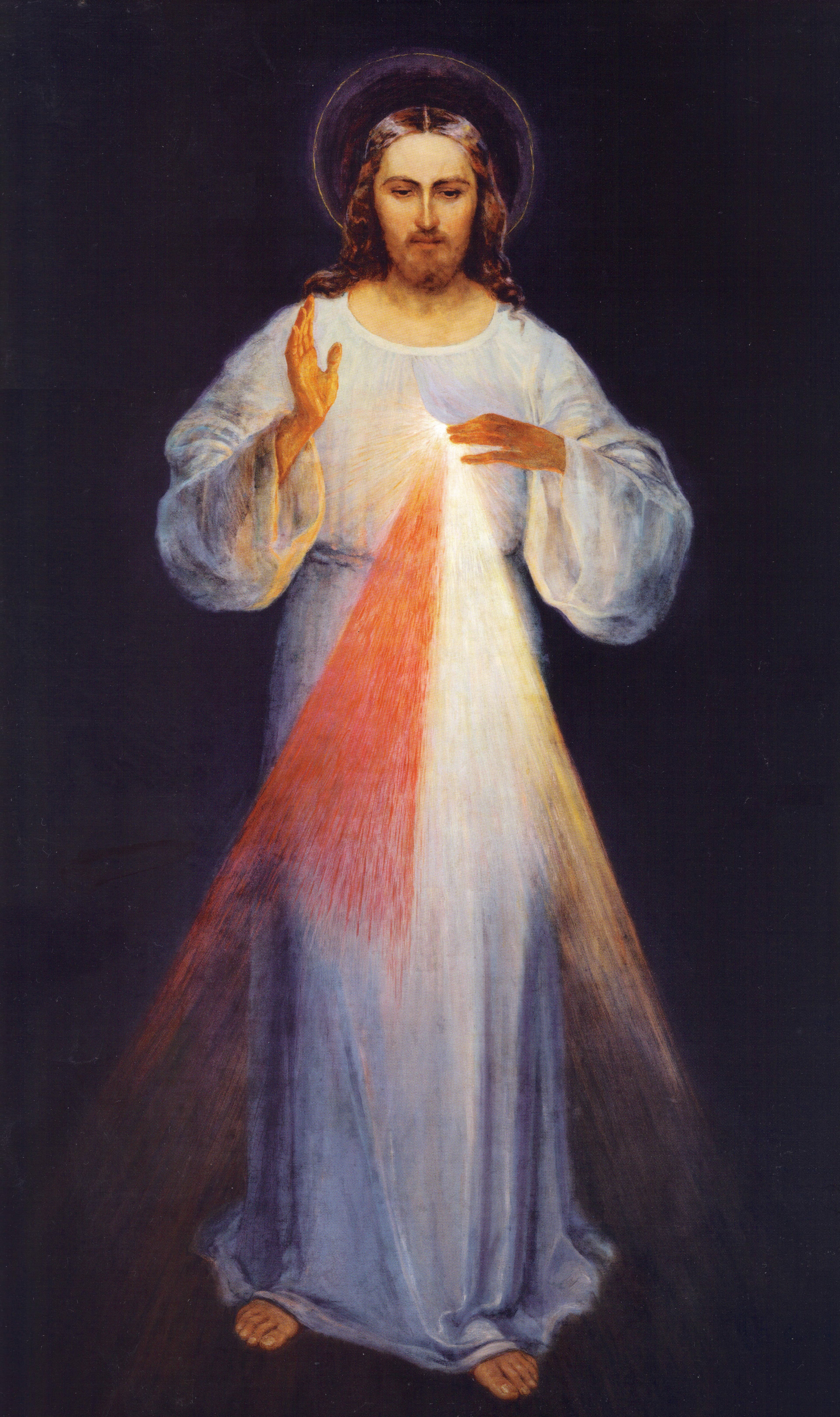
Divine Mercy is God's compassionate love reaching out to people in their sin, suffering, and need. For Catholics, that mercy is revealed above all in Jesus Christ, who gives his life for our salvation and calls us to return to God with trust. The Divine Mercy devotion associated with Saint Faustina Kowalska helps people respond through prayer, repentance, and mercy toward others.
You may recognize the image of Jesus with red and pale rays, the words “Jesus, I trust in You,” or a prayer group gathering at 3 p.m. These practices belong to a devotion centered on Christ. Understanding how they fit together can make it easier to begin praying without feeling that you have to master everything at once.
What does Divine Mercy mean in Catholic teaching?
God's mercy offers forgiveness, healing, and a renewed relationship with him. It also changes how we treat our neighbors. In his homily for Saint Faustina's canonization, Pope John Paul II connected mercy with the wounds of the crucified and risen Christ and with the Christian responsibility to respond to human suffering.
For someone carrying shame about the past, this is an invitation to approach God honestly. Repentance includes acknowledging wrong and being willing to change. Trust means bringing that truth to Christ instead of deciding that your failures place you beyond his care.
Who was Saint Faustina Kowalska?
Saint Faustina was a Polish religious sister who lived from 1905 to 1938. She entered the Congregation of the Sisters of Our Lady of Mercy and worked in ordinary roles, including cooking, gardening, and welcoming visitors. Her Diary records the spiritual experiences and messages she understood Jesus to have entrusted to her. The Vatican's biography of Faustina describes trust in God and active love of neighbor as central to her mission.
John Paul II canonized her on April 30, 2000. For more about her life, visit our Saint Faustina Kowalska biography.
Her experiences belong to the category of private revelation. The Compendium of the Catechism, question 10, explains that private revelations can help people live the faith when they lead to Christ; they do not add to or replace the definitive revelation given in him. Divine Mercy devotion directs attention back to the Gospel and the Church's sacramental life.
What does the Divine Mercy image mean?
The image portrays Jesus with a hand raised in blessing and two rays extending from the area of his heart. In Faustina's account, the red ray represents blood and the pale ray represents water. The Marian Fathers' explanation of the image connects this symbolism with Christ's pierced side and the grace received through Baptism and the Eucharist.
The familiar inscription, “Jesus, I trust in You,” expresses the response the devotion encourages. You can use the image as a focus for prayer: pause, acknowledge what you are carrying, and ask Jesus to help you entrust it to him. Its purpose is to turn your heart toward Christ. The devotion does not require owning an expensive print or reproducing a particular prayer setting.
How to pray the Divine Mercy Chaplet
The Chaplet is prayed using an ordinary five-decade rosary. The beads help keep your place, while the prayers ask the Father for mercy through Jesus' Passion. Use the Marian Fathers' complete Chaplet guide for the full prayer texts.
Begin with the opening prayers
Make the Sign of the Cross, then pray the Our Father, Hail Mary, and Apostles' Creed. The guide also includes optional opening prayers from Faustina's Diary.
Pray the five decades
On each large bead, pray the offering to the Father that begins “Eternal Father.” On each of the ten small beads, pray: “For the sake of His sorrowful Passion, have mercy on us and on the whole world.” Repeat this pattern for five decades.
Conclude the Chaplet
Pray the concluding invocation beginning “Holy God” three times. Optional closing prayers are included in the full guide. If you lose your place, return to the prayer calmly and continue.
Why do Catholics pray Divine Mercy at 3 p.m.?
The 3 p.m. Hour of Mercy recalls Jesus' death on the cross. In Faustina's account, this is a time to turn toward his Passion and ask for mercy. The Marian Fathers' guide to the Hour of Mercy explains that even a brief prayer can fit this practice when work or other responsibilities prevent a longer observance.
The Chaplet can be prayed at any time. It is a fitting prayer at 3 p.m., but the Hour of Mercy and the Chaplet are distinct practices. If you are caring for a child, working, or traveling, you can briefly remember Christ's love and pray the Chaplet later. A reminder should support prayer, not become another source of anxiety.
When is Divine Mercy Sunday?
Divine Mercy Sunday is the Second Sunday of Easter, one week after Easter Sunday. Its calendar date therefore changes each year. John Paul II announced this designation for the whole Church during Faustina's canonization in 2000. The USCCB's Easter guide explains the celebration and associated devotions.
Mass, Confession, prayer, and works of mercy are meaningful ways to prepare. Ask your parish about its schedule rather than assuming that every church offers a special afternoon service. A Divine Mercy novena offers nine days of prayer with different intentions, helping you pray for people beyond your immediate concerns.
The Church also grants a plenary indulgence for Divine Mercy Sunday under specified conditions. The USCCB explains the required devotional act and the usual conditions, including Confession, Communion, prayer for the pope's intentions, and complete detachment from sin. An indulgence concerns temporal punishment for sins already forgiven; it does not replace sacramental forgiveness.
Are the promise in Faustina's Diary and the indulgence the same?
They should be distinguished. The Marian Fathers explain the extraordinary grace associated with Faustina's account in terms of worthy Communion on Divine Mercy Sunday, Confession beforehand, and trust in Christ's mercy. This belongs to the devotional message recorded in her Diary. The Church's plenary indulgence is a separate grant with formally stated conditions. Read the Marian Fathers' explanation of the distinction.
For the indulgence, the 2002 decree specifies participation in Divine Mercy prayers or devotions in a church or chapel, or recitation of the Our Father and Creed before the Blessed Sacrament with an invocation to the merciful Jesus. The usual conditions and detachment from sin also apply. The decree includes provisions for people who cannot attend, such as the seriously ill and their caregivers. Consult the actual decree with your priest if that is your situation.
A special 3 p.m. gathering is therefore not a substitute for Confession or Communion, and attending one is not itself the full set of conditions. Nor should the distinction become a reason to postpone repentance until a particular Sunday. Begin with the sacramental life available to you now, and seek guidance rather than relying on a social-media checklist of promises.
Why the Easter Gospel matters to this devotion
Read John 20:19–29 alongside the Divine Mercy image. The risen Jesus comes to frightened disciples, shows his wounds, gives peace, and sends them. He breathes the Holy Spirit upon them and entrusts them with the ministry of forgiveness. Later Thomas encounters the wounded, living Lord. Mercy is rooted here in Christ's death and Resurrection, not in an image or prayer detached from the Gospel.
For an original reflection, notice the movement from fear toward encounter and mission. Ask: Is there forgiveness I need to seek? Is someone waiting for a truthful apology or a practical act of care? These questions connect trust in Christ with a response, while leaving another person's freedom and needed boundaries intact.
How can I live Divine Mercy each day?
Begin with one honest prayer and one concrete act of care. You might apologize for a harsh remark, listen to someone you usually rush past, or ask an isolated neighbor whether they need help. The USCCB's guide to the corporal works of mercy offers practical ways to respond to needs such as hunger, illness, and lack of shelter.
If you have been away from Confession, contact a priest and explain that you would appreciate guidance. Our guide to the seven sacraments explains Reconciliation and its place in Catholic life. Let prayer lead to a next step you can actually take, including receiving the help and forgiveness you need yourself.
Common questions about Divine Mercy
Is the Divine Mercy Chaplet the same as the Rosary?
No. Both can use the same beads, but they have different prayers and structures. The Rosary includes meditation on the mysteries of Christ's life with Mary; the Chaplet petitions for mercy through Christ's Passion. Read our guide to the Rosary for that devotion's prayers and meaning.
Can I pray the Chaplet for someone else?
Yes. You can bring the needs of family, friends, those who are suffering, and people you have never met to prayer. Its repeated appeal includes the whole world. Pray with trust while leaving the outcome in God's hands; completing a devotion does not guarantee the particular result you want.
Do I need to wait for Divine Mercy Sunday to begin?
No. You can begin today. Open the prayer guide, learn the Chaplet at a comfortable pace, and choose one way to show mercy to another person. Our daily prayer guide can help you make room for prayer in an ordinary week.
Artwork: Eugeniusz Kazimirowski, Divine Mercy, 1934. Public-domain reproduction via Wikimedia Commons.
