Catholic saint biography
St. Faustina Kowalska
- Commemoration:
- October 5
- Lived:
- 1905–1938 — Głogowiec, Poland
Optional memorial in the General Roman Calendar on October 5; Divine Mercy Sunday is a separate observance.
Why dates and liturgical observances can differ
Read the sources for this biography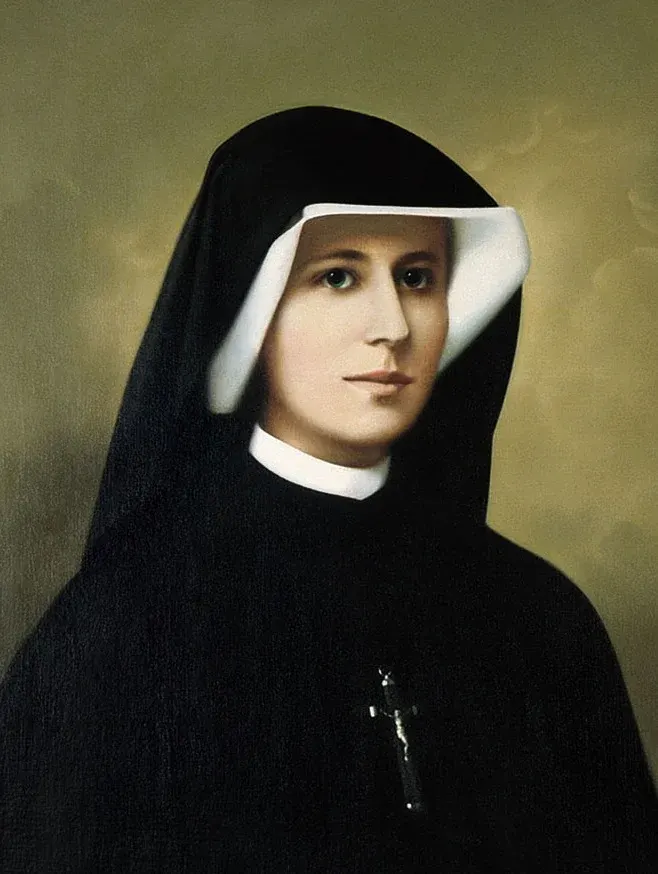
Biography
Faustina Kowalska was a Polish religious sister whose spiritual diary became central to Catholic devotion to Divine Mercy. Born Helena in 1905, she spent much of her life doing ordinary domestic work.
Her family had limited means, and her formal schooling was brief. Before entering religious life, she worked in households to support herself and assist her parents. In 1925 she joined the Sisters of Our Lady of Mercy and received the name Maria Faustina.
Assignments in several convents included cooking, gardening, and receiving visitors at the door. Alongside these duties she recorded experiences she understood as encounters with Christ. Her diary connected trust in God's mercy with active mercy toward other people.
The image, chaplet, and other practices associated with Divine Mercy spread through this spiritual legacy. They belong to Catholic private revelation and devotion, not additional books of Scripture. Faustina died of tuberculosis in Kraków on October 5, 1938. Canonized in 2000, she is remembered for a message whose international reach contrasts with the limited public prominence of her own lifetime.
Context & contribution
Her distinction between gifts and holiness
The Vatican biography draws attention to Faustina's own distinction between extraordinary spiritual gifts and holiness. In her understanding, visions or raptures did not themselves make a person perfect; the decisive matter was conformity of the will to God. This is a significant safeguard against reading her diary merely as a collection of marvels.
The same account connects the devotional practices with active love of one's neighbor. The image, chaplet, and prayer at the hour of mercy belong within that ethical relationship. Her teaching therefore asks readers to consider conduct toward others when assessing what participation in the devotion means.
Explore the sources for this section
AI-assisted source comparison updated 2026-09-26. Editorial approach
From the Saint Discovery blog
Keep exploring your faith
Practical guides to prayer, the saints, and living the Catholic faith.
How to Read Saint Faustina's Diary: A Catholic Beginner's Guide
New to Saint Faustina's Diary? Learn how to read it with the Gospel, understand private revelation, and turn reflection on Divine Mercy into daily action.
Connected to this saintRead the article Prayer & reflectionWhat Is Divine Mercy? Meaning, Chaplet, and Sunday
What is Divine Mercy? Learn its Catholic meaning, Saint Faustina’s role, how to pray the Chaplet, and the meaning of Divine Mercy Sunday and 3 p.m.
Connected to this saintRead the articleFrom reading to reflection
What will you carry with you?
After reading about St. Faustina Kowalska, take a moment to consider:
- Compare a fascination with Faustina's reported experiences with her stated measure of holiness. What evidence of mercy would be visible in someone's daily conduct?
These are reflection prompts from Saint Discovery, not quotations from the saint.
Sources and further reading
Biography source comparison recorded on . This is an AI-assisted comparison, not independent human or ecclesiastical approval.
What the recorded review covers
AI-assisted expansion checked against cited sources; historical traditions distinguished from documented evidence; not ecclesiastical approval
A source list helps you check an account; it does not establish that every claim is certain. Follow the biography’s qualifications about historical evidence, traditions and feast calendars.
Suggest a correction to this biography
How we research these pages and handle corrections · Directory corrections log
More lives to explore
Suggestions based on the site’s quiz themes, not a historical relationship or a measure of holiness.