The seven spiritual works of mercy are ways Catholics care for another person's spiritual needs: counsel the doubtful, instruct the ignorant, admonish sinners, comfort the sorrowful, forgive injuries, bear wrongs patiently, and pray for the living and the dead. They invite us to bring truth, patience, forgiveness, and prayer into ordinary relationships.
You do not need a perfect answer to every religious question before you can practice mercy. You do need to notice the person in front of you. This guide explains the traditional names and offers original examples for home, friendship, and parish life, including situations where speaking less can help more.
What makes these works spiritual?
The Catechism, paragraph 2447, describes works of mercy as charitable responses to both spiritual and bodily needs. Spiritual care attends to questions of faith, sorrow, wrongdoing, forgiveness, and our relationship with God. The USCCB's spiritual works of mercy guide presents the seven together.
These works belong alongside practical assistance. Someone who is grieving may need both a patient listener and help getting dinner ready. A prayer should not become an excuse to overlook a need you can meet. Our guide to the corporal works of mercy explores that companion part of Catholic service.
1. Counsel the doubtful: help someone consider a real question
Counsel begins by understanding what someone is uncertain about. A friend may be asking whether a Catholic teaching is true, wondering how to pray, or struggling to trust after disappointment. Those questions call for different conversations.
Try asking what part is hardest to understand before offering a resource. If you do not know the answer, say so and offer to seek a reliable explanation together. Arrange a follow-up rather than leaving the person with a stack of links. A sponsor can use this approach when a candidate brings questions about Confirmation; our Confirmation saint guide can support a conversation about choosing a patron.
2. Instruct the ignorant: share knowledge without humiliating anyone
The traditional name describes a lack of knowledge, not a person's intelligence or worth. Teaching becomes merciful when it helps someone understand and leaves them free to ask another question.
For example, a child asks why Catholics make the Sign of the Cross. Instead of testing what the child already knows, explain one point clearly, demonstrate slowly, and let the child try. An adult entering a parish for the first time deserves the same patience. Check a reliable source before explaining something you only half remember. If you make a mistake, correct it openly. Learning alongside someone can be more useful than trying to appear expert.
3. Admonish sinners: seek restoration with humility
This work concerns helping someone turn away from wrongdoing. It is a serious responsibility, not permission to police every preference or publicly embarrass another person. Galatians 6:1, in the USCCB NABRE text, joins correction with gentleness and attention to our own vulnerability to temptation.
Consider an ordinary example: a friend passes along a damaging claim about someone without checking it. When appropriate, speak privately, identify the problem plainly, and ask them to stop spreading it. Suggest a concrete repair, such as correcting the message with the people who received it. Keep the focus on truthful conduct and the person harmed. Avoid turning the conversation into an account of your own superiority.
4. Comfort the sorrowful: give someone room to be heard
Comfort does not require explaining why a painful event happened. In his October 12, 2016 audience on works of mercy, Pope Francis emphasizes stopping, listening, and giving time to someone who is afflicted.
An original example of a helpful offer is: “Would you like company, or would a quieter day be better?” Respect the answer. Remember the person after the first wave of messages has passed. Avoid insisting that grief should be over or that a particular prayer must produce immediate relief. Dependable presence can include helping with an ordinary task while leaving space for silence.
5. Forgive injuries: bring hurt to God without pretending it vanished
Forgiveness asks us to turn away from revenge and seek the other's good. It can be difficult even when we sincerely want to begin. The Catechism, paragraphs 2842–2844, grounds forgiveness in the Holy Spirit's action and recognizes that feeling hurt or remembering an offense is not entirely within our control.
Start honestly in prayer: name what happened and ask for help responding without retaliation. Forgiving does not make wrongdoing acceptable or automatically restore trust. Where harm continues, seeking protection and appropriate support belongs with concern for human dignity. Do not pressure another person to announce forgiveness on your timetable.
6. Bear wrongs patiently: interrupt the urge to retaliate
Patience concerns how we respond when another person wrongs or irritates us. It is distinct from forgiveness, though the two often belong together. Patience makes room to respond thoughtfully before anger dictates the next action.
If a colleague speaks sharply, pause before sending a cutting reply. Later, describe the difficulty calmly and ask for a better way to work together. Patience can coexist with a clear boundary. It does not require covering up serious harm or refusing help. Begin with an irritation where you can practice a measured response; do not treat someone else's suffering as your exercise in virtue.
7. Pray for the living and the dead: make remembrance concrete
Bring people before God, including those you cannot help directly. The USCCB guide recommends keeping prayer intentions and requesting Mass intentions for the living and the dead. You might keep a few names beside your usual prayer place and return to them regularly.
Ask permission before sharing someone else's private concern with a group. If you promised to pray, choose a time to do it. For questions about prayer after a death, our Catholic guide to praying for the deceased gives a fuller explanation and practical starting points.
Choose one act of mercy for this week
Paul writes, “Bear one another’s burdens” (Galatians 6:2, NABRE). Read the surrounding passage, then consider one relationship where you could listen, teach, correct gently, forgive, respond patiently, or pray more faithfully.
Choose one action and a realistic time. Afterward, ask whether it answered an actual need, respected the person's dignity, and followed through on what you offered. These original reflection prompts can also help a parish class discuss mercy without requiring anyone to disclose a private hardship.
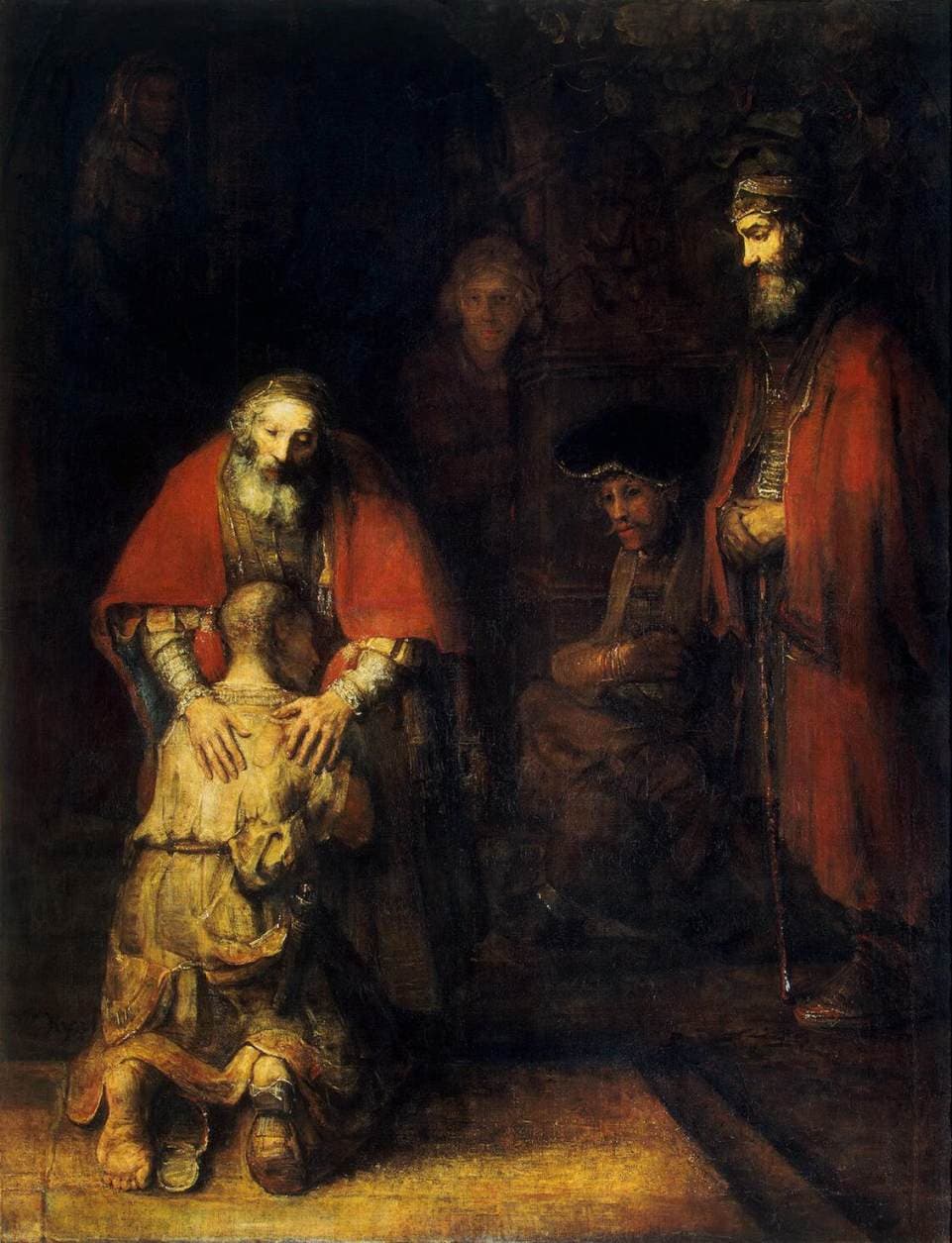
Cover artwork: Rembrandt, The Return of the Prodigal Son, circa 1668, Hermitage Museum. Public-domain reproduction from the Web Gallery of Art via Wikimedia Commons.
