A spiritual communion is a prayer expressing your desire for union with Jesus Christ in the Eucharist when you are not receiving Holy Communion sacramentally. You turn to him in faith and love, ask him to draw you closer, and express your desire to receive him worthily.
You can make this prayer at home or while remaining in your place during Communion at Mass. It is a way to pray in those circumstances, not a replacement for sacramental Communion or a reason to stop attending Mass.
What does spiritual communion mean?
In Ecclesia de Eucharistia, paragraph 34, Saint John Paul II connects spiritual communion with cultivating a lasting desire for the Eucharist. He points to the practice's long place in the Church and to Saint Teresa of Jesus's encouragement of it.
The desire is directed toward Christ himself. Spiritual communion does not mean that the Eucharist is merely a symbol, or that imagining yourself receiving is the same action as receiving the sacrament.
It also differs from Eucharistic adoration. Adoration is worship of Christ present in the Blessed Sacrament; spiritual communion expresses a desire for union with him when you are not receiving. The two can accompany each other, but you do not need to be in an adoration chapel to make this prayer. Our guide to a first adoration visit explains that setting.
A simple way to pray
Begin by turning your attention to Jesus. You might sit quietly at home or remain attentive during the Communion procession at Mass. Acknowledge your faith in his presence in the Eucharist, rather than trying to manufacture a particular feeling.
Then speak honestly about your desire for him. Tell him that you love him and want your life to be more closely united with his. Bring your need for mercy, including anything for which you need to repent, and ask for the grace to respond to him.
Finish with a little silence and a concrete request: patience with someone you care for, courage to seek reconciliation, or help preparing to receive Communion worthily. These are suggestions for personal prayer, not a required ritual or a promise of a particular experience.
If a familiar text helps you pray, a 2020 resource from the Catholic Bishops' Conference of England and Wales provides an act attributed to Saint Alphonsus Liguori. Its movement from faith and love to desire for union offers a useful model. The prayer remains useful beyond that page's historical pandemic setting. You can also learn about the saint through our Alphonsus Liguori biography.
A short original prayer
The following prayer is original to Saint Discovery; it is not a quotation from Saint Alphonsus or an official liturgical text.
Jesus, I believe you are truly present in the Blessed Sacrament. I love you and long to receive you. Meet me in this time of waiting, and turn my heart toward you. Help me repent of my sins and prepare to receive you worthily. Let my desire for you become love for the people you place before me. Amen.
You may find it helpful to pause after one sentence rather than hurry through the whole prayer. The aim is to mean what you are saying, not to complete a set number of repetitions.
If you are at Mass but are not receiving
Remaining in your place does not make your participation pointless. In Sacramentum Caritatis, paragraph 55, Benedict XVI teaches that participation at Mass remains meaningful and fruitful even when someone cannot receive sacramental Communion. He recommends cultivating a desire for union with Christ through spiritual communion.
Continue listening, joining the responses and praying with the Church. During the distribution of Communion, you can make your prayer quietly. You do not need to explain your situation to the people around you.
There are different reasons someone might not receive. Respect others' privacy, and bring questions about your own preparation or circumstances to a priest.
Does this replace Confession?
No. Spiritual communion should encourage a sincere return to Christ, not become a way to avoid reconciliation.
The Catechism, paragraph 1385, directs someone conscious of grave sin to receive the sacrament of Reconciliation before coming to Communion. Saying a prayer of spiritual communion does not by itself remove that need.
If this is why you are not receiving, you can still turn to Jesus, acknowledge your need for forgiveness, and ask for help taking the next step. Contact a priest about Confession rather than assuming that you must first solve every difficulty alone. Our guide to Confession after a long time away explains how to begin that conversation.
Does it replace Sunday Mass?
A private prayer of spiritual communion does not replace the Sunday Mass obligation for someone who is obliged and able to attend. Being unable to receive Communion is not, by itself, a reason to stay away from Mass.
Illness and other serious circumstances are a different question. The Catechism, paragraphs 2181–2183, recognizes serious reasons that excuse attendance and recommends prayer when participation is impossible. Ask your pastor if you are unsure how this applies to you.
If you are homebound, a spiritual communion can form part of your prayer. You might bring a family member's needs to Christ, listen to the day's readings, and pray for your parish. Contact the parish about whether someone can bring you Holy Communion; you do not have to rely solely on praying alone.
For help planning the wider day, see our guide to keeping Sunday holy.
Let the prayer lead to a next step
The practice points toward the Eucharist and a life more closely united with Christ. For one reader, the next step may be arranging Confession. For another, it may be asking about Communion visits during a long illness. Someone able to receive may use the prayer during the week to renew their desire for the next Mass.
Choose the step that fits your circumstances. If you do not yet know what it is, bring that question to your parish priest. The prayer gives you words for your longing while you seek the support and sacramental life you need.
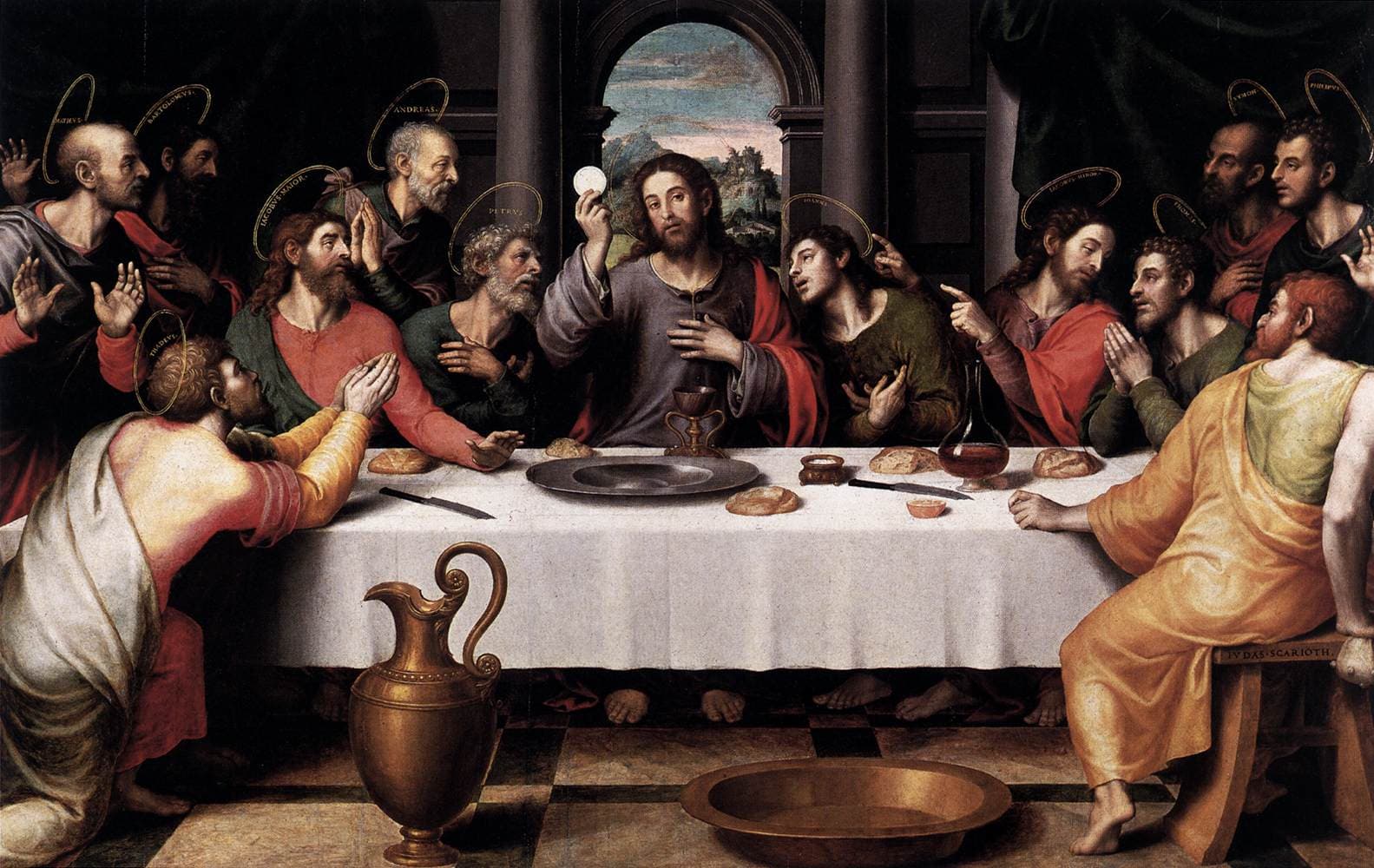
Artwork: Juan de Juanes's The Last Supper, dated 1555–1562 by the Museo Nacional del Prado, depicts Christ holding a host among the apostles. This later devotional painting accompanies the article's Eucharistic theme; it does not depict someone making a spiritual communion. The Wikimedia Commons file page identifies the Web Gallery of Art reproduction as public domain.
