Catholic saint biography
St. William of Eskil
- Commemoration:
- April 6
- Lived:
- Twelfth century–1202 — France; ministry in Denmark
Why dates and liturgical observances can differ
Read the sources for this biography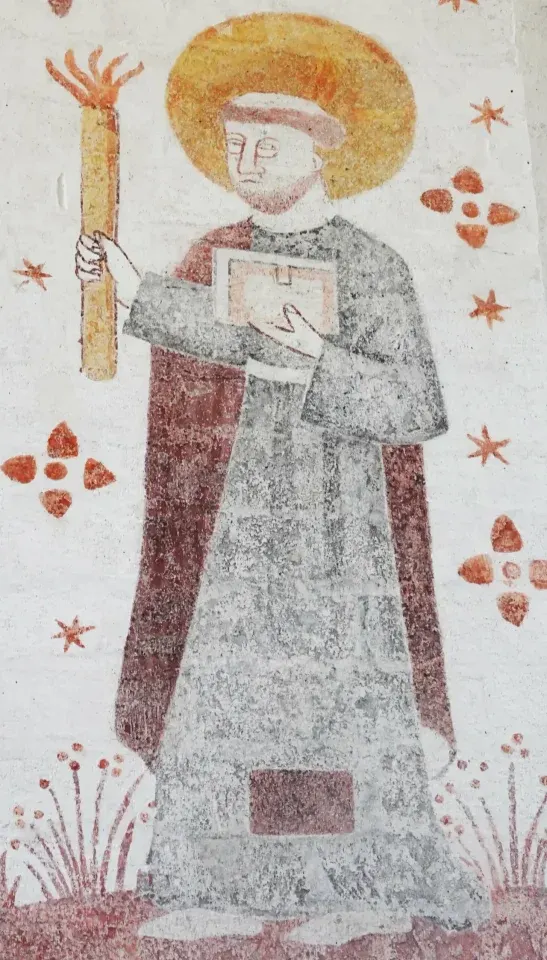
Biography
William of Eskil, also called William of Paris or Vilhelm of Æbelholt, was a French canon who became an influential abbot in Denmark. His formation at Sainte-Geneviève in Paris preceded Bishop Absalon's invitation to help reform the community on Eskilsø in Roskilde Fjord.
The undertaking met resistance. The Danish Catholic account records that his three French companions returned home, while William remained at Absalon's encouragement. Difficult conditions on the island led to the community's relocation to Æbelholt around 1175. There the foundation received papal confirmation and grew in importance.
William's learning attracted students in Latin, Scripture, and canon law. His generosity toward poor people seeking help at the monastery also placed pressure on its finances. Teaching, almsgiving, and the enforcement of religious discipline thus formed distinct parts of his leadership, sometimes bringing admiration and sometimes opposition.
The Danish Church dates his death to Easter 1203; the older Catholic Encyclopedia gives 1202. Both place his canonization in 1224. His burial at Æbelholt became a focus of pilgrimage, with relics later transferred to the monastery church. April 6 appears in older calendars, while Denmark celebrates him on June 16. His memory continues through Saint William's Church in Hillerød.
Context & contribution
Reform carried by a community's invitation
William's move to Denmark was not an isolated adventure. The historical notice links it with Bishop Absalom's request for help and identifies Saxo Grammaticus as the messenger sent to Paris. William had already experienced the change from secular to regular canonical life at Sainte-Geneviève before being asked to assist another community.
That sequence gives his mission a practical shape: experience acquired in one house became useful to people elsewhere who wanted to renew their common life. The surviving short account does not provide a detailed daily program of his reforms. What it does emphasize is fidelity to an existing rule, making this a story of recovering a shared commitment rather than inventing a new order.
Explore the sources for this section
AI-assisted source comparison updated 2026-09-26. Editorial approach
From the Saint Discovery blog
Keep exploring your faith
Practical guides to prayer, the saints, and living the Catholic faith.
Why Do Catholics Pray to Saints? Intercession Explained
Why do Catholics pray to saints? Learn how intercession differs from worship, how it relates to Jesus, and a simple way to ask a saint to pray for you.
A next step with your saintRead the article Living the seasonsHow to Celebrate Your Patron Saint's Feast Day at Home
Celebrate your patron saint's feast day with prayer, a short biography, and an act of kindness. A practical plan for families, sponsors, and individuals.
A next step with your saintRead the articleFrom reading to reflection
What will you carry with you?
After reading about St. William of Eskil, take a moment to consider:
- Name one commitment your group already shares but struggles to practice. What help would an experienced person from outside the group bring?
These are reflection prompts from Saint Discovery, not quotations from the saint.
Sources and further reading
Biography source comparison recorded on . This is an AI-assisted comparison, not independent human or ecclesiastical approval.
What the recorded review covers
AI-assisted expansion using the linked historical and ecclesiastical sources; devotional traditions distinguished from documented history.
A source list helps you check an account; it does not establish that every claim is certain. Follow the biography’s qualifications about historical evidence, traditions and feast calendars.
Suggest a correction to this biography
How we research these pages and handle corrections · Directory corrections log
More lives to explore
Suggestions based on the site’s quiz themes, not a historical relationship or a measure of holiness.