Catholic saint biography
St. Anicetus
- Commemoration:
- April 20
- Lived:
- Second century — Syria; Rome
April 20 in Vatican News; April 17 occurs in older references.
Why dates and liturgical observances can differ
Read the sources for this biography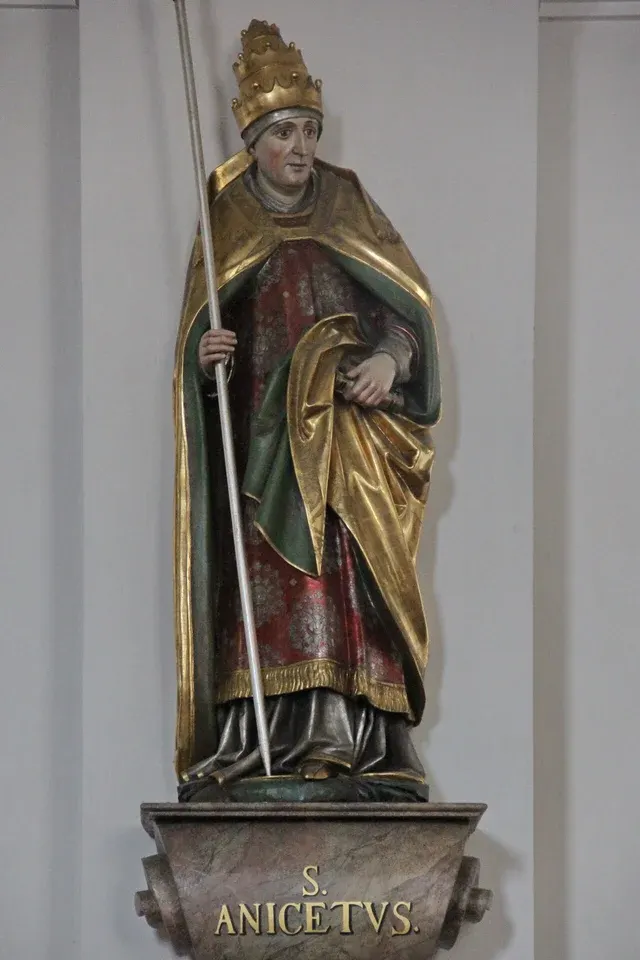
Biography
Anicetus was a second-century bishop of Rome, originally from Syria. Exact dates for his pontificate differ in early chronologies, so a narrowly specified sequence of years can imply more certainty than the evidence supports.
The disagreement concerned whether the Paschal celebration should follow the fourteenth day of the Jewish month of Nisan or the Sunday practice maintained at Rome. Polycarp represented an inherited tradition of the churches of Asia Minor. Neither bishop persuaded the other to abandon his community’s custom.
Their continued communion is an important part of the episode. It demonstrates that this early disagreement was not immediately treated as grounds for breaking fellowship. The historian Hegesippus also visited Rome during this period, providing another connection between Anicetus’s episcopate and the wider Christian world.
He is especially remembered for discussing the date of Easter with Polycarp of Smyrna. Their communities followed different practices, but they maintained fellowship without resolving the disagreement. Vatican News commemorates him on April 20. Older references also record April 17 and other dates; those differences should be identified rather than silently conflated.
Context & contribution
A dispute about calendars was also about inherited authority
Polycarp and Anicetus each received a Paschal practice from an existing church. Their conversation was therefore more than a scheduling disagreement: changing the date meant reconsidering a community's inherited way of marking the central Christian mystery. Recognizing that dimension explains why neither simply accepted the other's preference.
Their maintained fellowship is significant precisely because persuasion did not produce uniformity. The episode gives a historically specific example of leaders recognizing a shared faith while practices differed. It should not be expanded into a claim that every early doctrinal or disciplinary dispute was treated the same way. Its value lies in the particular response preserved in the account.
Explore the sources for this section
AI-assisted source comparison updated 2026-09-26. Editorial approach
From the Saint Discovery blog
Keep exploring your faith
Practical guides to prayer, the saints, and living the Catholic faith.
Why Do Catholics Pray to Saints? Intercession Explained
Why do Catholics pray to saints? Learn how intercession differs from worship, how it relates to Jesus, and a simple way to ask a saint to pray for you.
A next step with your saintRead the article Living the seasonsHow to Celebrate Your Patron Saint's Feast Day at Home
Celebrate your patron saint's feast day with prayer, a short biography, and an act of kindness. A practical plan for families, sponsors, and individuals.
A next step with your saintRead the articleFrom reading to reflection
What will you carry with you?
After reading about St. Anicetus, take a moment to consider:
- Explain the Paschal disagreement from each bishop's viewpoint before discussing their continued fellowship. What would be lost by describing either side as merely stubborn?
These are reflection prompts from Saint Discovery, not quotations from the saint.
Sources and further reading
Biography source comparison recorded on . This is an AI-assisted comparison, not independent human or ecclesiastical approval.
What the recorded review covers
AI-assisted expansion checked against retrieved historical and institutional sources; traditions distinguished from documented history; not ecclesiastical approval
A source list helps you check an account; it does not establish that every claim is certain. Follow the biography’s qualifications about historical evidence, traditions and feast calendars.
Suggest a correction to this biography
How we research these pages and handle corrections · Directory corrections log
More lives to explore
Suggestions based on the site’s quiz themes, not a historical relationship or a measure of holiness.