Catholic saint biography
St. John Climacus
- Commemoration:
- March 30
- Lived:
- Sixth–seventh centuries; chronology disputed — Sinai; birthplace uncertain
Also honored on the fourth Sunday of Great Lent in Byzantine tradition.
Why dates and liturgical observances can differ
Read the sources for this biography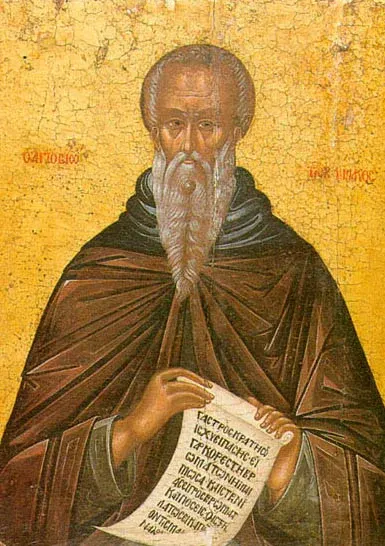
Biography
Saint John Climacus was a monk and abbot of Mount Sinai whose spiritual teaching became influential throughout Eastern Christianity. His name refers to his best-known book, The Ladder of Divine Ascent.
A brief early life describes his formation under an experienced monk, an extended period of solitude, and eventual service as a superior. His solitude did not mean complete withdrawal from others: people sought his guidance, and he remained connected with neighboring monastic communities.
Written at the request of another abbot, the Ladder presents thirty stages of spiritual growth. It addresses renunciation, destructive habits, humility, prayer, and love. The sequence is a work of monastic spiritual direction, intended to help readers examine their dispositions and responsibilities rather than measure holiness mechanically.
Church and historical sources differ about the dates of John's life, so precise birth and death years should be treated cautiously. His enduring influence is more securely traced through his writing and its continuing place in Lenten and monastic reading. The image of ascent expresses sustained transformation, culminating in love rather than the mere accomplishment of severe religious exercises.
Context & contribution
Redirecting desire rather than erasing it
Benedict XVI's reading of the Ladder emphasizes that human passions are not simply evil in themselves. Their moral direction depends on how they are used; disciplined desire can become energy for love of God. This distinction helps prevent John's demanding ascetic language from being reduced to hostility toward every feeling or human attachment.
Discernment is central to that transformation. The same outward action can arise from different motives, so the monk must examine what is happening within it. John's treatment of prayer likewise moves from bodily expressions toward prayer of the heart. The work concerns the formation of attention and desire, not merely the accumulation of difficult practices.
Explore the sources for this section
AI-assisted source comparison updated 2026-09-26. Editorial approach
From the Saint Discovery blog
Keep exploring your faith
Practical guides to prayer, the saints, and living the Catholic faith.
What Is the Domestic Church? John Paul II on Faith at Home
What Catholics mean by the domestic church, how John Paul II explained family life, and practical ways to begin with prayer, forgiveness and welcome.
Bring reflection into prayerRead the article Prayer & reflectionHow to Make a Spiritual Communion When You Cannot Receive
Learn how to make a spiritual communion, with a short original prayer and clear guidance on Mass, Confession, and times when you cannot receive.
Bring reflection into prayerRead the articleFrom reading to reflection
What will you carry with you?
After reading about St. John Climacus, take a moment to consider:
- Choose an ordinary strong desire, such as the wish to excel. Using John's distinction, discuss how its direction and underlying motive could make it constructive or destructive.
These are reflection prompts from Saint Discovery, not quotations from the saint.
Sources and further reading
Biography source comparison recorded on . This is an AI-assisted comparison, not independent human or ecclesiastical approval.
What the recorded review covers
AI-assisted expansion checked against cited sources; historical traditions distinguished from documented evidence; not ecclesiastical approval
A source list helps you check an account; it does not establish that every claim is certain. Follow the biography’s qualifications about historical evidence, traditions and feast calendars.
Suggest a correction to this biography
How we research these pages and handle corrections · Directory corrections log
More lives to explore
Suggestions based on the site’s quiz themes, not a historical relationship or a measure of holiness.