Catholic saint biography
St. Thomas More
- Commemoration:
- June 22
- Lived:
- 1478–1535 — London, England
Why dates and liturgical observances can differ
Read the sources for this biography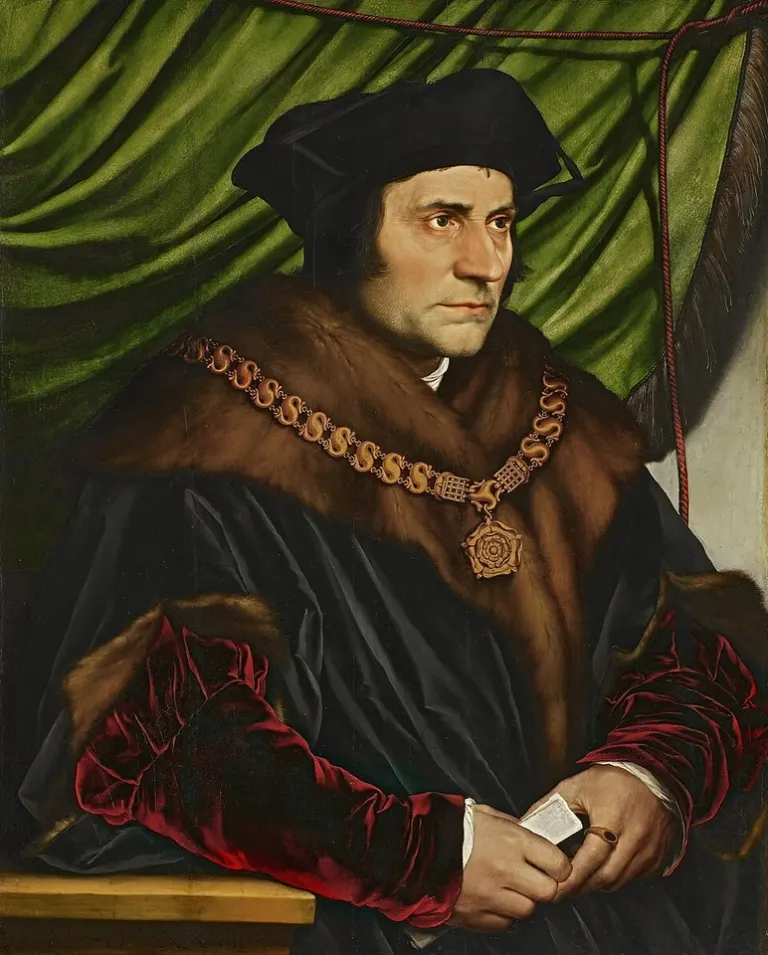
Biography
Thomas More was an English lawyer, humanist, family man, and statesman who became Lord Chancellor under Henry VIII. His public career developed alongside sustained study and close attention to the education of his children. Conflict arose when royal policy asserted control over the Church in England.
His humanist interests included translation, poetry, and reflection on political life. Utopia, his best-known book, uses an imagined society to provoke questions about justice and human conduct. Its tensions invite discussion rather than functioning as a simple blueprint for a state.
More also took his daughters’ education seriously, providing opportunities comparable to those of his son. His final imprisonment lasted about fifteen months. These dimensions of study, family responsibility, and costly conscience help explain his continuing importance to readers concerned with the relationship between private conviction and public office.
More resigned the chancellorship and ultimately refused the demands placed on his conscience concerning the king’s religious authority. He was executed in London in 1535. His life belongs to the complex religious politics of Tudor England, while his martyrdom is particularly remembered as a witness to conscience. The Catholic calendar commemorates him with John Fisher on June 22.
Context & contribution
Conscience without an uncritical portrait
John Paul II’s declaration of More as patron of statesmen and politicians links his witness to the relationship between conscience and public responsibility. The same document acknowledges that his conduct toward heretics reflected the limits of his historical culture. Both points belong in a responsible reading of his legacy.
More should therefore not be presented as if all his actions matched a modern account of religious liberty. His refusal of an oath and his earlier exercise of authority raise related but distinct questions. The most useful study holds admiration and historical scrutiny together, rather than allowing either a heroic image or a single controversy to replace the person.
Explore the sources for this section
AI-assisted source comparison updated 2026-09-26. Editorial approach
From the Saint Discovery blog
Keep exploring your faith
Practical guides to prayer, the saints, and living the Catholic faith.
Why Do Catholics Pray to Saints? Intercession Explained
Why do Catholics pray to saints? Learn how intercession differs from worship, how it relates to Jesus, and a simple way to ask a saint to pray for you.
A next step with your saintRead the article Living the seasonsHow to Celebrate Your Patron Saint's Feast Day at Home
Celebrate your patron saint's feast day with prayer, a short biography, and an act of kindness. A practical plan for families, sponsors, and individuals.
A next step with your saintRead the articleFrom reading to reflection
What will you carry with you?
After reading about St. Thomas More, take a moment to consider:
- How can you honor More’s refusal to violate his conscience while critically examining his treatment of people who disagreed with him?
These are reflection prompts from Saint Discovery, not quotations from the saint.
Sources and further reading
Biography source comparison recorded on . This is an AI-assisted comparison, not independent human or ecclesiastical approval.
What the recorded review covers
AI-assisted expansion using the linked historical and ecclesiastical sources; devotional traditions distinguished from documented history.
A source list helps you check an account; it does not establish that every claim is certain. Follow the biography’s qualifications about historical evidence, traditions and feast calendars.
Suggest a correction to this biography
How we research these pages and handle corrections · Directory corrections log
More lives to explore
Suggestions based on the site’s quiz themes, not a historical relationship or a measure of holiness.