Catholic saint biography
St. Michael the Archangel
- Commemoration:
- September 29
- Lived:
- Biblical angelic figure
Roman feast with Gabriel and Raphael; Eastern angelic commemorations follow other dates.
Why dates and liturgical observances can differ
Read the sources for this biography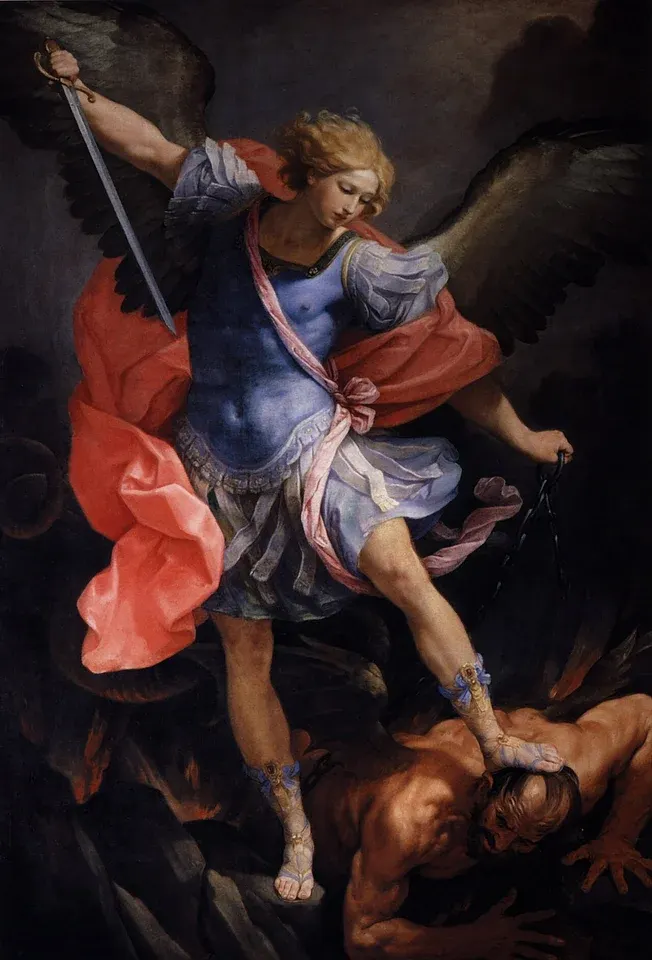
Biography
Michael is an angelic figure in Scripture, not a human saint with a birthplace or lifetime. In Daniel he appears as a heavenly protector, and Revelation describes him leading the angels in conflict with the dragon. Christian tradition draws on these texts to understand him as a defender against evil.
The biblical passages portray a heavenly servant acting under God's authority. His role is therefore not that of a rival divine power. The conflict imagery in Revelation belongs to the book's symbolic account of evil's defeat and should not be read as an ordinary military campaign located on a modern map.
His name is commonly interpreted as a question affirming God's incomparable greatness. Churches and shrines dedicated to him reflect the wide reach of this devotion. In the Roman calendar he is celebrated with Gabriel and Raphael on September 29. Later apparition stories and devotional prayers belong to the history of his veneration rather than a human biography.
Christian art commonly represents him defeating a dragon or opposing evil, making the scriptural imagery immediately recognizable. Later shrines and prayers show how that figure entered local religious cultures. Their histories can be studied, but there is no childhood, earthly career, or date of death to reconstruct for an angel.
Context & contribution
The restraint of Michael in Jude
The Letter of Jude offers a less familiar portrait of Michael than the warrior of Revelation. In a dispute with the devil over Moses' body, Michael refrains from delivering an abusive judgment on his own authority and appeals to the Lord. Jude uses the contrast to criticize reckless speech by human opponents.
The USCCB commentary connects this episode with a Jewish tradition known through the Assumption of Moses. Studying it shows how an angelic figure could serve an argument about human conduct, not merely supply imagery of heavenly combat. Michael's authority is presented together with restraint, and the passage's literary setting helps explain why that restraint matters to the letter's readers.
Explore the sources for this section
AI-assisted source comparison updated 2026-09-26. Editorial approach
From the Saint Discovery blog
Keep exploring your faith
Practical guides to prayer, the saints, and living the Catholic faith.
Archangels’ Feast: September 29, Names & Biblical Roles
Michael, Gabriel and Raphael share a September 29 feast. Learn what their names mean, where they appear in Scripture, and how to observe the day at home.
Connected to this saintRead the article Meet the saintsWhy Is Saint Luke's Symbol an Ox? Meaning and Biblical Roots
Discover why Saint Luke's symbol is a winged ox, its biblical roots, and how the image connects his Gospel with priesthood and sacrifice.
Go deeper into ScriptureRead the articleFrom reading to reflection
What will you carry with you?
After reading about St. Michael the Archangel, take a moment to consider:
- Read Jude 8–10 and explain how Michael's restraint functions as an argument against the conduct being criticized, rather than treating the episode as an isolated adventure.
These are reflection prompts from Saint Discovery, not quotations from the saint.
Sources and further reading
Biography source comparison recorded on . This is an AI-assisted comparison, not independent human or ecclesiastical approval.
What the recorded review covers
AI-assisted expansion of the existing source-reviewed biography with comparison to retrieved cited sources; not ecclesiastical approval
A source list helps you check an account; it does not establish that every claim is certain. Follow the biography’s qualifications about historical evidence, traditions and feast calendars.
Suggest a correction to this biography
How we research these pages and handle corrections · Directory corrections log
More lives to explore
Suggestions based on the site’s quiz themes, not a historical relationship or a measure of holiness.