Catholic saint biography
St. Andrew Dũng Lạc
- Commemoration:
- November 24
- Lived:
- About 1795–1839 — Vietnam
Why dates and liturgical observances can differ
Read the sources for this biography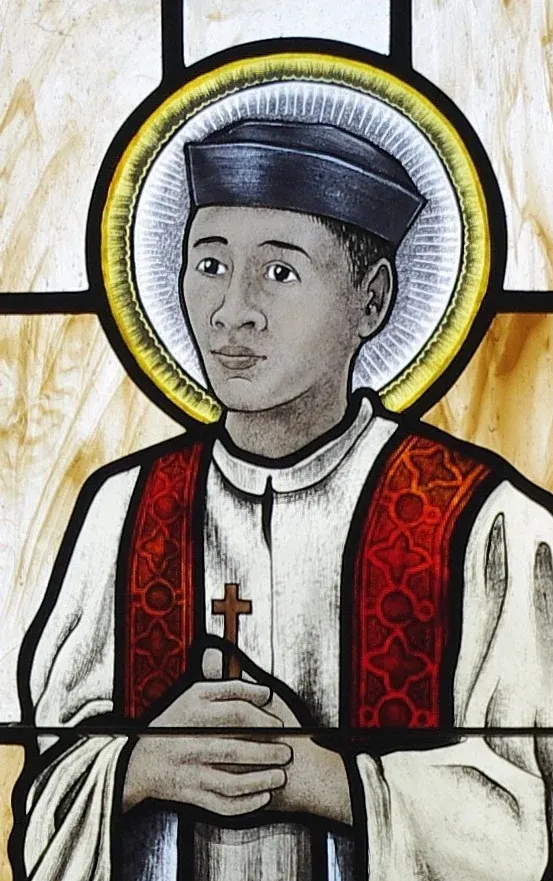
Biography
Andrew Dũng Lạc grew up in a poor family in northern Vietnam and encountered Christianity after moving to Hanoi. A catechist provided him with housing and instruction; he received baptism and was ordained a priest in 1823.
His vocation grew through the care of a local Christian rather than an isolated encounter with a foreign missionary. That beginning reflects the importance of Vietnamese catechists and households in transmitting the faith. As a priest, his preaching and simple manner of life became part of the same work.
Believers sheltered priests and raised ransom money at considerable personal risk. His repeated arrests show how precarious ministry had become: release did not mean lasting safety. His martyrdom should be read within this network of lay courage and mutual assistance, not solely as the story of one priest.
During persecution under Emperor Minh Mạng, parishioners secured his release from an initial arrest. He changed his name and continued his ministry, but was arrested again with the priest Peter Thi. They were executed in Hanoi on December 21, 1839. Andrew belongs to the 117 Vietnamese martyrs canonized in 1988. Their shared November 24 memorial is distinct from his individual death anniversary.
Context & contribution
A representative name preserves a larger community
Andrew's name heads a collective memorial whose members lived across several generations. This is a convention of commemoration, not a claim that he directed all the other martyrs or that every death occurred during his ministry. Reading the group through a single biography therefore requires attention to the people outside its central narrative.
His own story illustrates two kinds of formation: a catechist first offered the displaced young newcomer both housing and instruction, and Andrew later taught others as a priest. Practical hospitality and learning were joined at the beginning. That relationship helps explain how a local Christian community could reproduce its leadership even under conditions that repeatedly disrupted public ministry.
Explore the sources for this section
AI-assisted source comparison updated 2026-09-26. Editorial approach
From the Saint Discovery blog
Keep exploring your faith
Practical guides to prayer, the saints, and living the Catholic faith.
Why Do Catholics Pray to Saints? Intercession Explained
Why do Catholics pray to saints? Learn how intercession differs from worship, how it relates to Jesus, and a simple way to ask a saint to pray for you.
A next step with your saintRead the article Living the seasonsHow to Celebrate Your Patron Saint's Feast Day at Home
Celebrate your patron saint's feast day with prayer, a short biography, and an act of kindness. A practical plan for families, sponsors, and individuals.
A next step with your saintRead the articleFrom reading to reflection
What will you carry with you?
After reading about St. Andrew Dũng Lạc, take a moment to consider:
- Write a caption for the collective memorial that explains Andrew's representative role while leaving room for the other martyrs' different lives.
These are reflection prompts from Saint Discovery, not quotations from the saint.
Sources and further reading
Biography source comparison recorded on . This is an AI-assisted comparison, not independent human or ecclesiastical approval.
What the recorded review covers
AI-assisted expansion checked against retrieved historical and institutional sources; traditions distinguished from documented history; not ecclesiastical approval
A source list helps you check an account; it does not establish that every claim is certain. Follow the biography’s qualifications about historical evidence, traditions and feast calendars.
Suggest a correction to this biography
How we research these pages and handle corrections · Directory corrections log
More lives to explore
Suggestions based on the site’s quiz themes, not a historical relationship or a measure of holiness.