Catholic saint biography
St. Rose of Viterbo
- Commemoration:
- September 4
- Lived:
- Thirteenth century — Viterbo, Italy
Why dates and liturgical observances can differ
Read the sources for this biography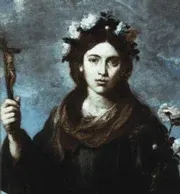
Biography
Rose of Viterbo was a young laywoman associated with Franciscan spirituality during the political conflicts of thirteenth-century Italy. Traditional accounts describe her preaching repentance in Viterbo and being expelled with her family while the city was under imperial influence. She later returned and continued a life of prayer.
Her story belongs to conflict between imperial and papal interests during the reign of Frederick II. Preaching in the streets could therefore carry political consequences as well as religious meaning. Her family's reported exile gives this setting a personal dimension.
The tradition also tells of her desire to enter a convent and her continued prayer at home when that did not happen. Reports of childhood miracles and spectacular public wonders belong to later hagiography. Her lasting local veneration is more securely visible than a detailed reconstruction of those episodes.
The chronology and many extraordinary episodes in her life remain uncertain; the historical sources do not support treating every later story as established fact. She died while still young, and her memory became deeply connected with Viterbo. Her September celebration commemorates the translation of her remains and the city’s enduring devotion to her.
Context & contribution
A young voice within a divided city
Rose’s preaching is remembered within Viterbo’s conflict over imperial and papal authority. Her expulsion with her parents shows how public religious speech could affect an entire household. This setting helps explain the civic character of her later memory, rather than treating her life as a sequence of isolated wonders.
The principal historical sources do not provide a secure chronology, as the Catholic Encyclopedia itself acknowledges. Exact ages and dates in popular retellings therefore require caution. The enduring picture is of a young woman’s public religious witness and a city’s remembrance of it, with legendary episodes clearly distinguished from firm documentation.
Explore the sources for this section
AI-assisted source comparison updated 2026-09-26. Editorial approach
From the Saint Discovery blog
Keep exploring your faith
Practical guides to prayer, the saints, and living the Catholic faith.
How to Make a Spiritual Communion When You Cannot Receive
Learn how to make a spiritual communion, with a short original prayer and clear guidance on Mass, Confession, and times when you cannot receive.
Explore mercy and reconciliationRead the article Prayer & reflectionHow to Pray the Jesus Prayer: A Catholic Beginner's Guide
Learn the Jesus Prayer, its Eastern Christian roots and biblical meaning, with a simple Catholic practice focused on Christ and mercy.
Explore mercy and reconciliationRead the articleFrom reading to reflection
What will you carry with you?
After reading about St. Rose of Viterbo, take a moment to consider:
- What additional evidence would you want before assigning an exact date or age to an event in Rose’s life?
These are reflection prompts from Saint Discovery, not quotations from the saint.
Sources and further reading
- Catholic Encyclopedia: Rose of Viterbo ↗
- Franciscan Sisters of Perpetual Adoration: September 4 feast of Rose of Viterbo ↗
Biography source comparison recorded on . This is an AI-assisted comparison, not independent human or ecclesiastical approval.
What the recorded review covers
AI-assisted expansion using the linked historical and ecclesiastical sources; devotional traditions distinguished from documented history.
A source list helps you check an account; it does not establish that every claim is certain. Follow the biography’s qualifications about historical evidence, traditions and feast calendars.
Suggest a correction to this biography
How we research these pages and handle corrections · Directory corrections log
More lives to explore
Suggestions based on the site’s quiz themes, not a historical relationship or a measure of holiness.