The Jesus Prayer is a short prayer that calls on Jesus Christ and asks for his mercy. A familiar form is: “Lord Jesus Christ, Son of God, have mercy on me, a sinner.” The Catechism, paragraph 435, gives this wording and identifies it as the Eastern prayer of the heart. These are traditional prayer words, not a quotation of one Bible verse.
You can begin by praying the words slowly, attending to the Lord you are addressing. You do not need to master a technique before asking for mercy. A quiet minute at the beginning of the day is enough room to start learning.
Can Catholics pray the Jesus Prayer?
Yes. The Catholic Catechism includes it, and the U.S. bishops' prayer formation resources offer an introduction by Bishop David Ricken. This prayer can belong within a Catholic's ordinary life of worship and personal prayer.
Receive it with respect for the Christian East. Catechism 2667 traces a common form through spiritual writers of Sinai, Syria, and Mount Athos, while noting forms in both East and West. Its history is larger than any modern guide or personal routine.
For a newcomer, that is a reason to learn patiently. If you want to explore the tradition more deeply, seek guidance from a priest familiar with Eastern Christian spirituality rather than treating a short introduction as the whole tradition.
What do the words mean?
The first part names the person to whom you pray: Jesus Christ, the Son of God. The second acknowledges your need and asks for mercy. The prayer holds faith and humility together; Catechism 2667–2668 connects this invocation with the Savior's mercy and attentive prayer.
Try noticing the movement of the sentence. You begin with Jesus, rather than with a lengthy account of yourself. You then bring your need before him without pretending to be self-sufficient. This can give a wandering mind a clear place to return.
Calling yourself a sinner is an invitation to honesty. In personal reflection, connect the words to a real need for conversion: an apology you owe, resentment you are nurturing, or a responsibility you keep avoiding. Let that honesty lead toward a faithful next step.
Where does it come from in Scripture?
The prayer gathers biblical themes into a brief invocation. In Luke 18:9–14, Jesus contrasts a Pharisee's self-congratulation with a tax collector's humble appeal for mercy. In Mark 10:46–52, Bartimaeus calls to Jesus for help, persists despite discouragement, receives his sight, and follows him. These are summaries of the passages, not direct quotations.
Read one of those passages before praying. Notice the person asking for help and the way Jesus responds. Then bring the prayer into that encounter. This gives the familiar words a setting and keeps Scripture close to your practice.
You can also return to our beginner's guide to Lectio Divina when you want a fuller way to read a passage prayerfully.
A simple way to begin
Choose a brief, realistic moment when you can give your attention to prayer. Sit or stand comfortably and set aside your phone. If an icon of Christ helps you recollect yourself, place it where you can see it without studying every detail.
Pray the full sentence slowly. Allow a little silence, then say it again if you wish. Listen to the words you are offering instead of hurrying to finish a sequence.
When you notice a distraction, return to the name of Jesus and continue. There is no need to restart a session because your attention wandered. If distractions are your main difficulty, our guide to beginning again during prayer offers further practical suggestions.
At the end, pause briefly. Then return to the work or person waiting for your attention. The exercise suggested here is an introductory practice, not a prescribed Eastern prayer rule.
How many times should I repeat it?
For your first attempts, choose a short period you can keep rather than an ambitious total. You might begin with one quiet minute. Learn to attend to the prayer before setting a larger routine.
Catechism 2668 distinguishes humble, attentive invocation from empty repetition and presents it as a way to pray throughout life. A number alone cannot tell you how attentively you prayed.
A brief invocation before a difficult conversation could become a reminder to listen carefully. When you resume your work, give the task the attention it requires. Carrying prayer into the day should help you meet your responsibilities.
Do I need a special breathing method?
Begin with ordinary breathing and the words of the prayer. You do not need to coordinate every syllable with an inhale or exhale.
The Church's letter On Some Aspects of Christian Meditation, paragraphs 27–28, discusses the Jesus Prayer and bodily rhythm while distinguishing physical sensations from spiritual grace. Its wider teaching emphasizes that communion with God is a gift rather than something a technique can produce.
If you later explore a more developed practice, ask for experienced spiritual guidance. For now, a helpful question after prayer is whether you are willing to act with greater honesty and charity. Feeling unusually peaceful is not a requirement for continuing tomorrow.
An image for your prayer corner
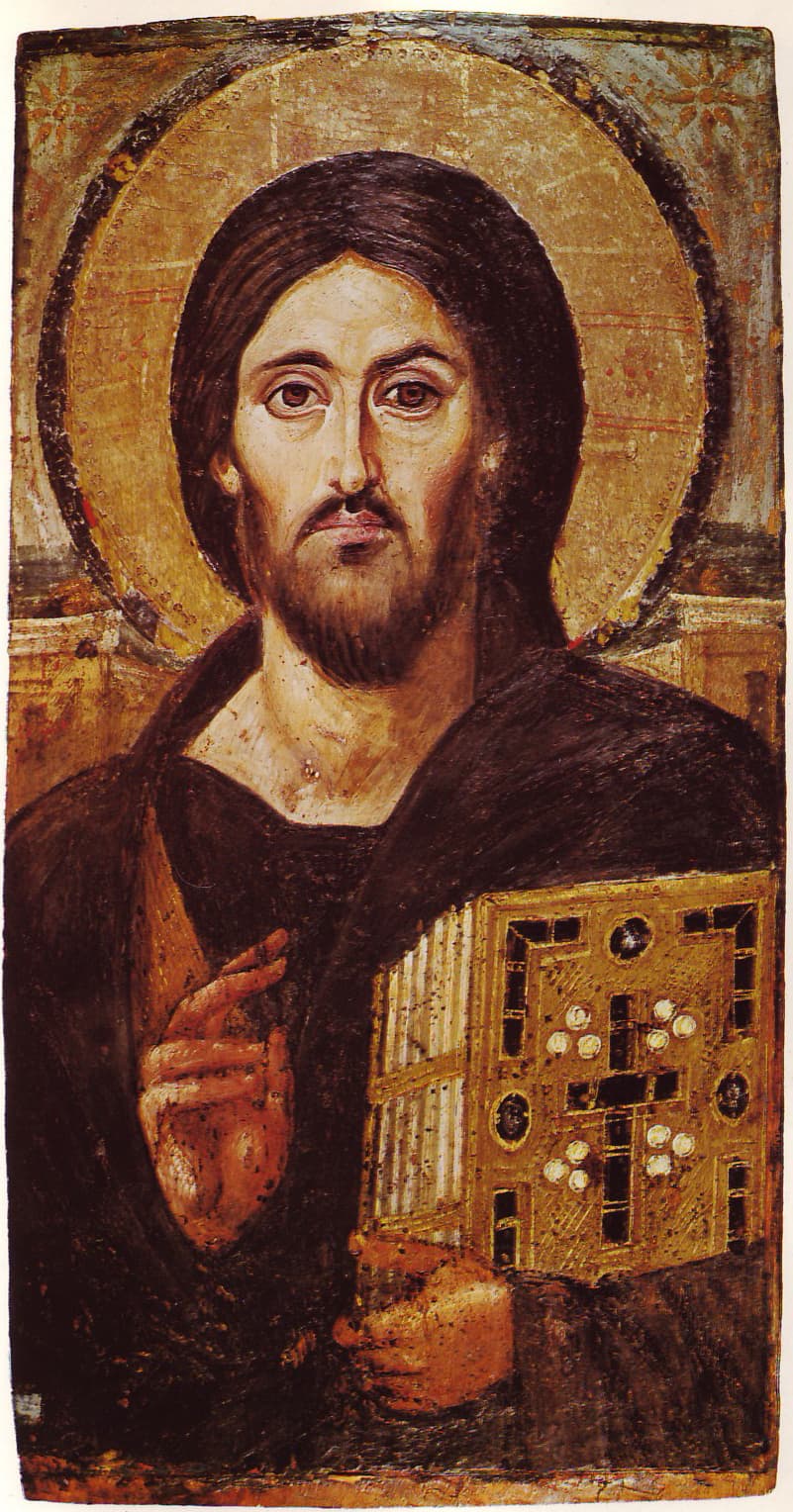
The cover is the sixth-century icon of Christ from Saint Catherine's Monastery in Sinai, reproduced on Wikimedia Commons. Christ is shown holding a decorated book and raising his right hand in blessing. The artist is unknown.

You might use the image simply to recall whom you are addressing. Give your attention to Christ, pray the sentence slowly, and leave room for silence. A small, steady beginning gives you something concrete to bring to your next conversation with a spiritual guide.
Artwork: Christ Pantocrator, sixth century, unknown artist, Saint Catherine's Monastery, Sinai. Public-domain reproduction via Wikimedia Commons, PD-Art/PD-old-100-expired. No editorial alterations; the cover display may crop the image.