Catholic saint biography
St. Columba of Iona
- Commemoration:
- June 9
- Lived:
- 521–597 — Donegal, Ireland
Why dates and liturgical observances can differ
Read the sources for this biography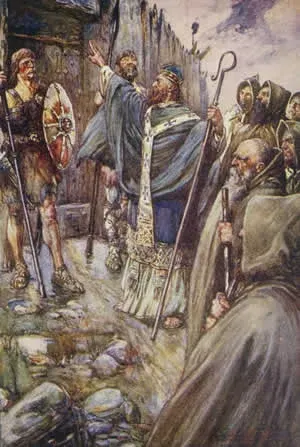
Biography
Columba, also called Colum Cille, trained within the Irish monastic tradition and founded religious communities before crossing to Iona in 563. The island monastery became a center for prayer, learning, and Christian mission in northern Britain. He remained connected with a network of communities in both Ireland and Scotland.
His formation involved several Irish monastic teachers and schools, including the traditions associated with Finnian of Movilla and Finnian of Clonard. Foundations such as Derry and Durrow connected religious study with lasting communities. Columba’s move to Iona therefore grew from an established career as a monastic founder.
The surviving accounts explain his departure from Ireland in different ways. Early witnesses emphasize Christian mission and voluntary exile for Christ; colorful later explanations should not automatically displace that evidence. Iona’s importance was communal, sustained by monks whose worship, learning, and journeys continued after its founder.
Adomnán's later Life preserves memories of his leadership together with numerous miracle stories, which should be read as hagiography rather than uniformly as verifiable historical episodes. Columba's influence extended through his monastic successors and their manuscripts, missions, and worship. He died at Iona in 597. His feast on June 9 remains particularly important in Irish and Scottish Christianity.
Context & contribution
A psalter that preserves a community's learning
The Cathach, traditionally associated with Columba, offers material evidence for the learning of his wider monastic tradition. The scholarly catalogue identifies its origins with the Columban community and traces the influence of its psalm text and headings in Northumbria. Its association with Columba does not establish that he personally copied the surviving manuscript; the copying dispute attached to it survives in a much later legend.
The book also preserves practical scribal techniques: enlarged initials diminish into ordinary letters, and marks guide readers through the text. Later enclosed in a shrine, it became a prized object of the O'Donnell family. Its successive uses connect scriptural study, visual craft, family identity, and devotion within Columba's long reception.
Explore the sources for this section
AI-assisted source comparison updated 2026-09-26. Editorial approach
From the Saint Discovery blog
Keep exploring your faith
Practical guides to prayer, the saints, and living the Catholic faith.
What Is the Domestic Church? John Paul II on Faith at Home
What Catholics mean by the domestic church, how John Paul II explained family life, and practical ways to begin with prayer, forgiveness and welcome.
Bring reflection into prayerRead the article Prayer & reflectionHow to Make a Spiritual Communion When You Cannot Receive
Learn how to make a spiritual communion, with a short original prayer and clear guidance on Mass, Confession, and times when you cannot receive.
Bring reflection into prayerRead the articleFrom reading to reflection
What will you carry with you?
After reading about St. Columba of Iona, take a moment to consider:
- Inspect a digitized Cathach page and identify one device that helps reading; distinguish what the page proves from what the later copying legend claims.
These are reflection prompts from Saint Discovery, not quotations from the saint.
Sources and further reading
Biography source comparison recorded on . This is an AI-assisted comparison, not independent human or ecclesiastical approval.
What the recorded review covers
AI-assisted expansion checked against retrieved historical and institutional sources; traditions distinguished from documented history; not ecclesiastical approval
A source list helps you check an account; it does not establish that every claim is certain. Follow the biography’s qualifications about historical evidence, traditions and feast calendars.
Suggest a correction to this biography
How we research these pages and handle corrections · Directory corrections log
More lives to explore
Suggestions based on the site’s quiz themes, not a historical relationship or a measure of holiness.