Catholic saint biography
St. Philip the Apostle
- Commemoration:
- May 3
- Lived:
- First century — Bethsaida, Galilee
Why dates and liturgical observances can differ
Read the sources for this biography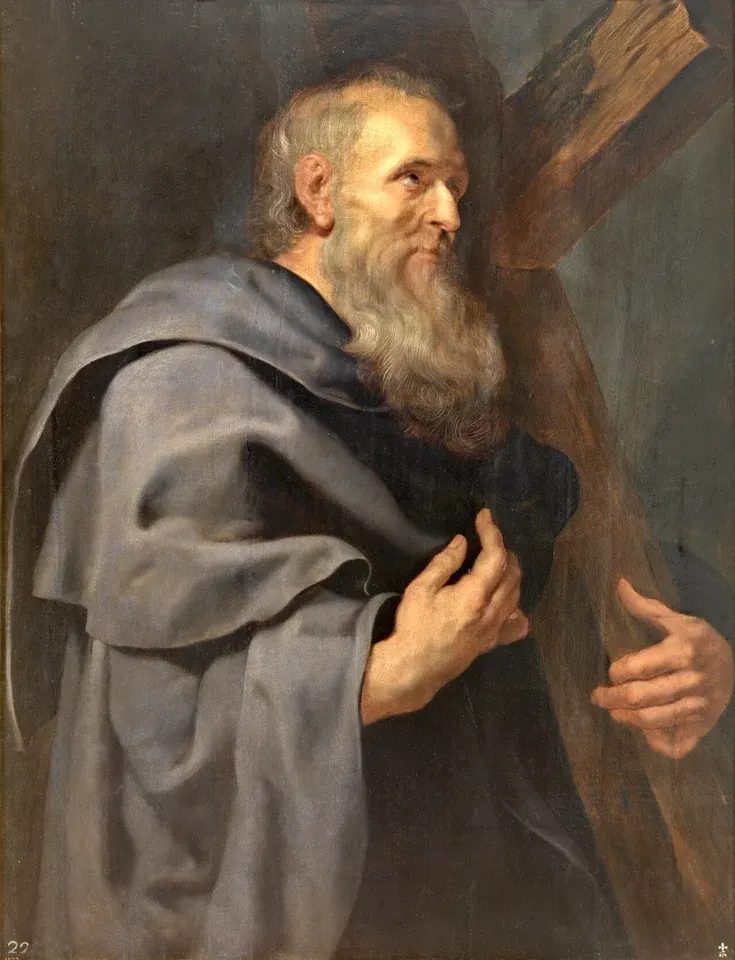
Biography
Philip was one of the Twelve Apostles called by Jesus. John’s Gospel places him in several revealing conversations: before the feeding of the crowd, Jesus asks him about obtaining bread; at the Last Supper, Philip asks to be shown the Father. These episodes connect his discipleship with the gradual discovery of who Jesus is.
Philip came from Bethsaida, the same town associated with Peter and Andrew. His Gospel appearances often involve a request or question. They give his portrait a particular character: someone drawn into faith through conversation, practical difficulty, and the need for further understanding.
The feeding episode places an apparently impossible material need before him; the Last Supper question concerns knowing God. Together they trace the breadth of apostolic formation. Philip the Apostle should also be distinguished from the evangelist Philip whose ministry appears in Acts.
Later Christian tradition associates Philip’s missionary work and martyrdom with Asia Minor, particularly Hierapolis. Those later accounts should be distinguished from the Gospel narratives themselves. The Catholic calendar celebrates Philip with James the Less on May 3, preserving their shared place among the apostolic witnesses.
Context & contribution
Introducing others to Jesus
John’s Gospel also gives Philip a role in bringing other people into contact with Jesus. After his own calling, he approaches Nathanael and answers his skepticism about Nazareth by inviting him to investigate personally. Benedict XVI’s 2006 audience interprets this encounter as witness that leads beyond a secondhand report toward a personal meeting.
In John 12, Greeks visiting Jerusalem for Passover approach Philip because they want to see Jesus. He consults Andrew, and the two bring the request to Jesus together. These episodes show Philip as an intermediary across different encounters: an acquaintance with objections and outsiders seeking access. They also place cooperation with another disciple alongside individual initiative.
Explore the sources for this section
AI-assisted source comparison updated 2026-09-26. Editorial approach
From the Saint Discovery blog
Keep exploring your faith
Practical guides to prayer, the saints, and living the Catholic faith.
Why Is Saint Luke's Symbol an Ox? Meaning and Biblical Roots
Discover why Saint Luke's symbol is a winged ox, its biblical roots, and how the image connects his Gospel with priesthood and sacrifice.
Go deeper into ScriptureRead the article Prayer & reflectionHow to Pray the Jesus Prayer: A Catholic Beginner's Guide
Learn the Jesus Prayer, its Eastern Christian roots and biblical meaning, with a simple Catholic practice focused on Christ and mercy.
Go deeper into ScriptureRead the articleFrom reading to reflection
What will you carry with you?
After reading about St. Philip the Apostle, take a moment to consider:
- Compare John 1:45–46 with John 12:20–22. Draw the chain of introductions in each scene and explain what changes when Philip brings Andrew into the second encounter.
These are reflection prompts from Saint Discovery, not quotations from the saint.
Sources and further reading
Biography source comparison recorded on . This is an AI-assisted comparison, not independent human or ecclesiastical approval.
What the recorded review covers
AI-assisted expansion using the linked historical and ecclesiastical sources; devotional traditions distinguished from documented history.
A source list helps you check an account; it does not establish that every claim is certain. Follow the biography’s qualifications about historical evidence, traditions and feast calendars.
Suggest a correction to this biography
How we research these pages and handle corrections · Directory corrections log
More lives to explore
Suggestions based on the site’s quiz themes, not a historical relationship or a measure of holiness.