Catholic saint biography
St. Afra of Augsburg
- Commemoration:
- August 7
- Lived:
- Died about 304 — Augsburg
August 7 in Augsburg; August 5 also appears in martyrological tradition.
Why dates and liturgical observances can differ
Read the sources for this biography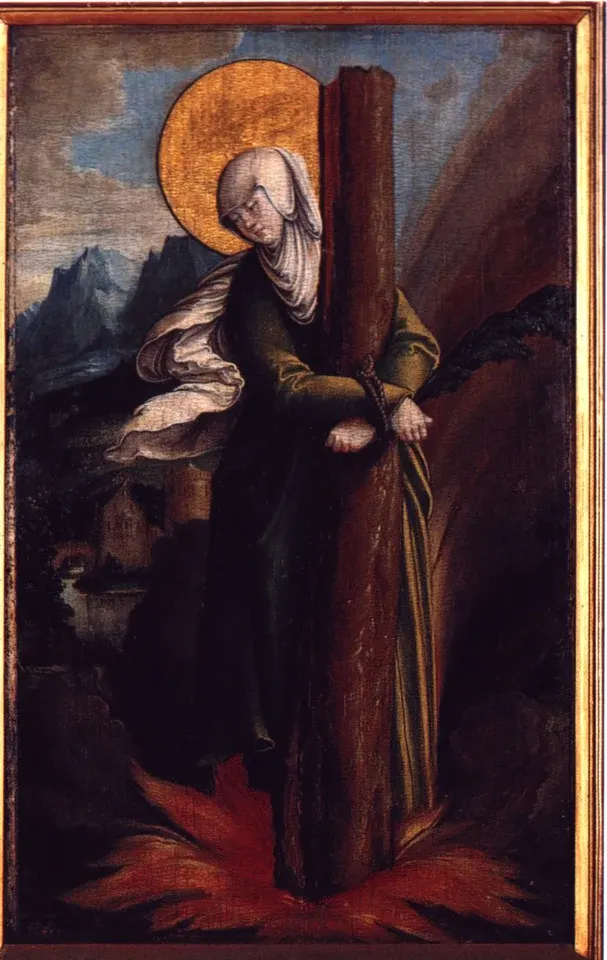
Biography
Afra is an early Christian martyr whose memory is closely connected with Augsburg, the Roman settlement of Augusta Vindelicorum. Her death during the persecution of Diocletian, around 304, and the early veneration of her grave are more firmly grounded than the elaborate stories later told about her conversion.
Ancient martyrological tradition places her suffering and burial at Augsburg. The sixth-century poet and bishop Venantius Fortunatus also refers to her burial place. These witnesses make her important for understanding the presence of Christians in the region before the empire's acceptance of Christianity.
The surviving accounts are not a single contemporary biography. The Catholic Encyclopedia distinguishes an earlier martyrdom narrative from a later conversion story that connects Afra with a visiting bishop and additional members of her household. Those later details should not be used to make confident claims about her occupation or family history.
Afra's shrine became part of Augsburg's continuing Christian identity. The diocese celebrates her on August 7, while August 5 also appears in martyrological tradition. Remembering her responsibly means preserving both the substantial evidence for her veneration and the uncertainty surrounding much of her personal story.
Context & contribution
A grave as evidence for a Christian community
Afra's historical importance includes what her commemoration reveals about Augsburg. A martyr remembered at a specific burial place provides evidence of a Christian presence in the Roman town before Christianity received imperial support. Calendars and the verse of Venantius Fortunatus preserve different kinds of witness to that memory.
The later conversion narrative also tried to explain the origins of Augsburg's church by linking Afra with a visiting bishop. Its purpose helps explain why it accumulated family and travel details. Those details can be studied as a community's account of its beginnings while the earlier evidence for a locally venerated martyr remains distinct.
Explore the sources for this section
AI-assisted source comparison updated 2026-09-26. Editorial approach
From the Saint Discovery blog
Keep exploring your faith
Practical guides to prayer, the saints, and living the Catholic faith.
Why Do Catholics Pray to Saints? Intercession Explained
Why do Catholics pray to saints? Learn how intercession differs from worship, how it relates to Jesus, and a simple way to ask a saint to pray for you.
A next step with your saintRead the article Living the seasonsHow to Celebrate Your Patron Saint's Feast Day at Home
Celebrate your patron saint's feast day with prayer, a short biography, and an act of kindness. A practical plan for families, sponsors, and individuals.
A next step with your saintRead the articleFrom reading to reflection
What will you carry with you?
After reading about St. Afra of Augsburg, take a moment to consider:
- Compare a calendar entry, a reference to a grave, and a later conversion story. What historical question can each answer most responsibly?
These are reflection prompts from Saint Discovery, not quotations from the saint.
Sources and further reading
Biography source comparison recorded on . This is an AI-assisted comparison, not independent human or ecclesiastical approval.
What the recorded review covers
AI-assisted expansion checked against retrieved historical and institutional sources; traditions distinguished from documented history; not ecclesiastical approval
A source list helps you check an account; it does not establish that every claim is certain. Follow the biography’s qualifications about historical evidence, traditions and feast calendars.
Suggest a correction to this biography
How we research these pages and handle corrections · Directory corrections log
More lives to explore
Suggestions based on the site’s quiz themes, not a historical relationship or a measure of holiness.