Catholic saint biography
St. Gregory Palamas
- Lived:
- 1296–1359 — Constantinople, present-day Turkey
Commemorated on the movable Second Sunday of the Great Fast in the Melkite Catholic tradition. No fixed Gregorian date is assigned here; this is not a General Roman Calendar memorial.
The Melkite Catholic Church explicitly celebrates him as a saint. Retained as an Eastern Catholic recognition, not described as a modern Roman canonization.
Read the sources for this biography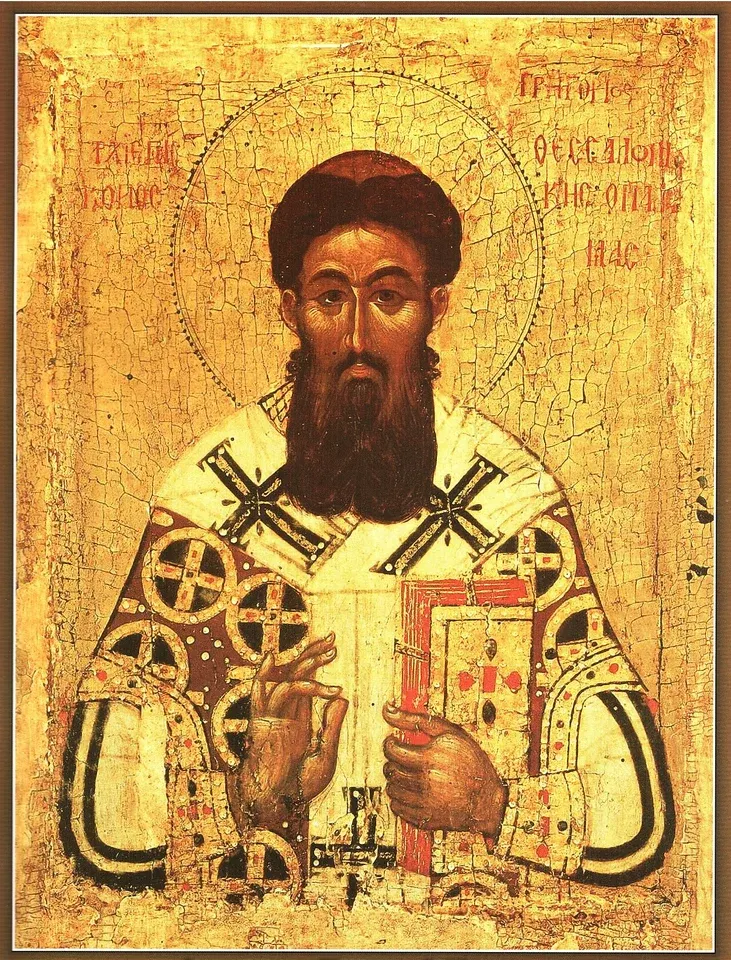
Biography
Gregory Palamas was an Athonite monk and archbishop of Thessalonica whose teaching became central to Orthodox accounts of contemplative prayer. Born in Constantinople in 1296, he chose monastic life rather than an expected public career.
On Mount Athos he learned the disciplined prayer associated with hesychasm. Later priestly service combined solitude with preaching and worship for others. His writings emerged from this practice rather than from purely abstract debate.
Criticism by Barlaam of Calabria led Gregory to defend the hesychasts, notably in his Triads. He distinguished God's unknowable essence from the divine energies through which, in Orthodox theology, people participate in God's life. The debate became entangled with wider ecclesiastical struggles.
Gregory endured imprisonment before councils upheld his position. Made archbishop in 1347, he also experienced captivity during travel. He died in 1359 and was formally recognized as a saint in 1368. Orthodox churches commemorate him on November 14 and during Lent. His inclusion here reflects that Orthodox tradition; his theology and veneration should not be presented as though their history were identical across every Christian communion.
Context & contribution
A rhythm of solitude and public ministry
The OCA account describes a weekly pattern in Palamas's priestly life at Thessalonica: five days devoted to silence and prayer, followed by weekend worship and preaching. It also records his participation in discussions with educated young people. In that portrait, contemplative discipline existed alongside teaching and public relationships rather than requiring their complete abandonment.
His defense of hesychastic prayer also acquired a collective form. The Hagiorite Tome of 1340 expressed the position of Athonite ascetics, placing the controversy within a community's deliberation as well as an individual author's writings. This helps readers understand why debates surrounding Palamas involved monasteries and councils, not merely a private disagreement between two theologians.
Explore the sources for this section
AI-assisted source comparison updated 2026-09-26. Editorial approach
From the Saint Discovery blog
Keep exploring your faith
Practical guides to prayer, the saints, and living the Catholic faith.
What Is the Domestic Church? John Paul II on Faith at Home
What Catholics mean by the domestic church, how John Paul II explained family life, and practical ways to begin with prayer, forgiveness and welcome.
Bring reflection into prayerRead the article Prayer & reflectionHow to Make a Spiritual Communion When You Cannot Receive
Learn how to make a spiritual communion, with a short original prayer and clear guidance on Mass, Confession, and times when you cannot receive.
Bring reflection into prayerRead the articleFrom reading to reflection
What will you carry with you?
After reading about St. Gregory Palamas, take a moment to consider:
- Draw the weekly pattern described in the OCA account, then discuss how silence, liturgy, and conversation could correct or support one another.
These are reflection prompts from Saint Discovery, not quotations from the saint.
Sources and further reading
- Orthodox Church in America: Gregory Palamas ↗
- Melkite Catholic Diocese of Newton: St. Gregory of Palamas ↗
- Melkite Catholic Diocese of Newton: The Fathers Reaffirmed ↗
Biography source comparison recorded on . This is an AI-assisted comparison, not independent human or ecclesiastical approval.
What the recorded review covers
AI-assisted expansion checked against cited sources; historical traditions distinguished from documented evidence; not ecclesiastical approval
A source list helps you check an account; it does not establish that every claim is certain. Follow the biography’s qualifications about historical evidence, traditions and feast calendars.
Suggest a correction to this biography
How we research these pages and handle corrections · Directory corrections log
More lives to explore
Suggestions based on the site’s quiz themes, not a historical relationship or a measure of holiness.