Catholic saint biography
St. Josephine Bakhita
- Commemoration:
- February 8
- Lived:
- c. 1869–1947 — Darfur, Sudan
Roman memorial on February 8.
Why dates and liturgical observances can differ
Read the sources for this biography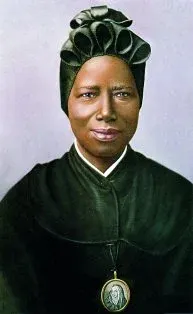
Biography
Josephine Bakhita was born in Darfur and abducted into slavery as a child. Repeated sales and severe abuse separated her from her family and even from memory of her original name. Taken eventually to Italy, she encountered Christianity through the Canossian sisters. When her former employers wanted her to leave, she asserted her wish to remain, and her freedom was legally recognized in 1889.
Her encounter with the Canossians began while she was responsible for a child temporarily placed in their care. Becoming Christian and becoming a religious sister were decisions made after years in which others had denied her the ability to choose. That sequence matters: her vocation should not be narrated as a justification of enslavement.
Baptized in Venice in 1890, she entered the Canossians and spent much of her religious life at Schio, working in ordinary community duties and welcoming visitors. Her testimony preserved a survivor's account of slavery. She died in 1947; her remembrance connects Christian dignity, patient service, and the rejection of treating people as property.
Much of her later influence arose through personal contact rather than public office. Domestic work and welcoming people gave others access to a woman whose testimony challenged the assumption that a person could be owned. Her original family name and exact early chronology cannot be reconstructed with the certainty available for her Italian religious life.
Context & contribution
A remembrance turned toward ending exploitation
Bakhita's February 8 memorial has become the occasion for the Church's international day of prayer and awareness against human trafficking. In the 2024 message for its tenth observance, Francis explicitly connected her suffering and liberation with the need to recognize people whose exploitation remains hidden.
The message asks communities to listen to survivors and address the causes of trafficking through concrete action. This is a documented development of her legacy beyond the convent and the biography: her name anchors an organized public response to human beings being bought, sold, or coerced. Honoring her agency requires attention to present survivors' voices rather than treating their experiences only as symbols.
Explore the sources for this section
AI-assisted source comparison updated 2026-09-26. Editorial approach
From the Saint Discovery blog
Keep exploring your faith
Practical guides to prayer, the saints, and living the Catholic faith.
St. Josephine Bakhita: Hope Without Denying Suffering
Learn what St. Josephine Bakhita teaches about Christian hope, dignity, and freedom, with practical reflection prompts and an original prayer.
Connected to this saintRead the article Prayer & reflectionWhy Do Catholics Pray to Saints? Intercession Explained
Why do Catholics pray to saints? Learn how intercession differs from worship, how it relates to Jesus, and a simple way to ask a saint to pray for you.
A next step with your saintRead the articleFrom reading to reflection
What will you carry with you?
After reading about St. Josephine Bakhita, take a moment to consider:
- Plan one educational discussion for February 8 that centers a survivor-led resource; explain how this follows Bakhita's legacy without speaking on survivors' behalf.
These are reflection prompts from Saint Discovery, not quotations from the saint.
Sources and further reading
Biography source comparison recorded on . This is an AI-assisted comparison, not independent human or ecclesiastical approval.
What the recorded review covers
AI-assisted expansion of the existing source-reviewed biography with comparison to retrieved cited sources; not ecclesiastical approval
A source list helps you check an account; it does not establish that every claim is certain. Follow the biography’s qualifications about historical evidence, traditions and feast calendars.
Suggest a correction to this biography
How we research these pages and handle corrections · Directory corrections log
More lives to explore
Suggestions based on the site’s quiz themes, not a historical relationship or a measure of holiness.