Catholic saint biography
St. Adam
- Commemoration:
- December 24
- Lived:
- Biblical figure; no historical date assigned — The garden of Eden in Genesis
Traditional Christmas Eve commemoration with Eve; this is not a universal Roman-calendar feast.
Why dates and liturgical observances can differ
Read the sources for this biography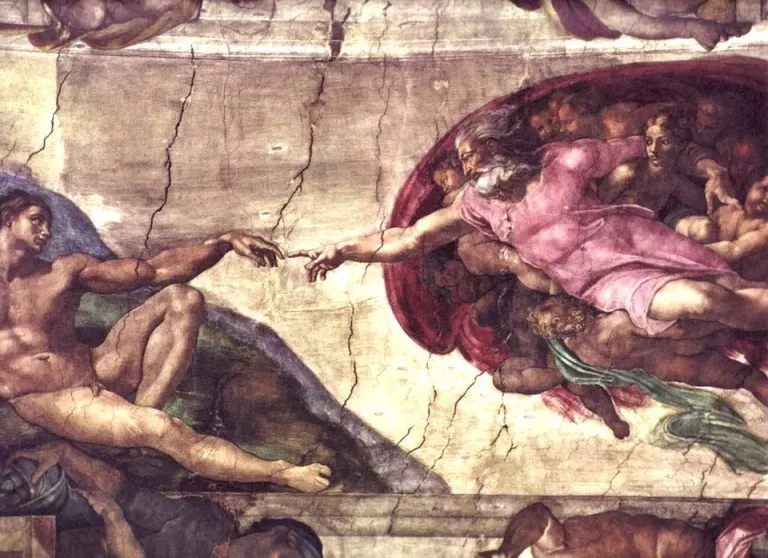
Biography
Adam is the first man in the creation and fall narratives of Genesis. His story addresses humanity's relationship with God, freedom and responsibility, marriage, work, suffering, and death. It is a biblical and theological account rather than a modern biography with independently established dates.
Genesis 3 describes Adam and Eve disobeying God's command concerning the tree in the garden. Their response includes shame, concealment, and blame. When God questions Adam, he points to Eve; she points to the serpent. The narrative links their fractured relationships with painful consequences for human life.
The departure from Eden is not presented simply as a change of address. The couple loses access to the tree of life, and Adam must cultivate the ground outside the garden. Yet God also clothes them before their expulsion. Christian readers have understood the story within the larger biblical movement toward redemption.
The USCCB's explanatory notes describe the Christian interpretation of Genesis 3:15 as an early promise of a redeemer. Some devotional calendars remember Adam and Eve on Christmas Eve, connecting humanity's need for redemption with Christ's birth. That traditional observance is not a universal Roman-calendar feast and does not supply historical birth or death dates.
Context & contribution
Adam in Paul's account of grace
Romans 5 gives Adam a second literary setting beyond Genesis. Paul places humanity's solidarity in sin and death beside the new life offered through Jesus Christ. Adam thus becomes a figure through whom Christians discuss the human condition, rather than a source of recoverable information about an individual's dates or travels.
Paul's comparison is deliberately unequal: grace is presented as exceeding the damage caused by sin. The USCCB's notes also reject using Adam as an excuse for one's own actions. Reading these passages together joins the social reach of wrongdoing with personal responsibility, while making redemption the argument's destination.
Explore the sources for this section
AI-assisted source comparison updated 2026-09-26. Editorial approach
From the Saint Discovery blog
Keep exploring your faith
Practical guides to prayer, the saints, and living the Catholic faith.
Why Is Saint Luke's Symbol an Ox? Meaning and Biblical Roots
Discover why Saint Luke's symbol is a winged ox, its biblical roots, and how the image connects his Gospel with priesthood and sacrifice.
Go deeper into ScriptureRead the article Prayer & reflectionHow to Pray the Jesus Prayer: A Catholic Beginner's Guide
Learn the Jesus Prayer, its Eastern Christian roots and biblical meaning, with a simple Catholic practice focused on Christ and mercy.
Go deeper into ScriptureRead the articleFrom reading to reflection
What will you carry with you?
After reading about St. Adam, take a moment to consider:
- Read Romans 5:12–21 and list the contrasts between Adam and Christ. Which phrases prevent the passage from ending in pessimism?
These are reflection prompts from Saint Discovery, not quotations from the saint.
Sources and further reading
Biography source comparison recorded on . This is an AI-assisted comparison, not independent human or ecclesiastical approval.
What the recorded review covers
AI-assisted expansion checked against retrieved historical and institutional sources; traditions distinguished from documented history; not ecclesiastical approval
A source list helps you check an account; it does not establish that every claim is certain. Follow the biography’s qualifications about historical evidence, traditions and feast calendars.
Suggest a correction to this biography
How we research these pages and handle corrections · Directory corrections log
More lives to explore
Suggestions based on the site’s quiz themes, not a historical relationship or a measure of holiness.