Catholic saint biography
St. Oliver Plunkett
- Commemoration:
- July 1
- Lived:
- 1629–1681 — Ireland
Irish feast; the annual Drogheda festival may be held on a nearby Sunday.
Why dates and liturgical observances can differ
Read the sources for this biography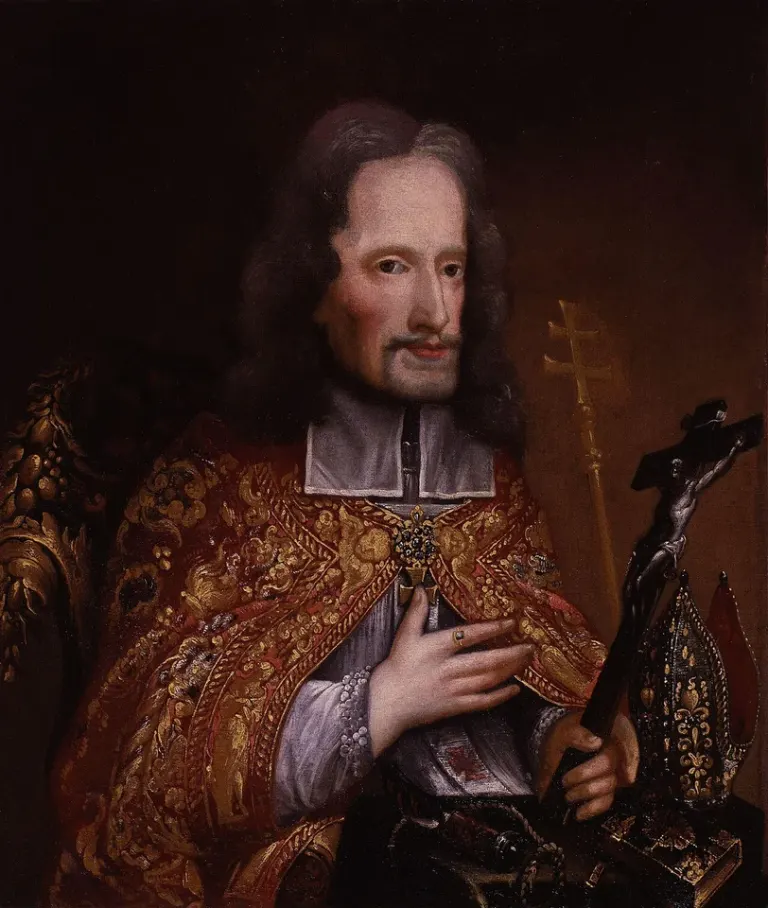
Biography
Oliver Plunkett was archbishop of Armagh and a leading figure in the renewal of Catholic ministry in seventeenth-century Ireland. His work as an educator, organizer, and peacemaker preceded the imprisonment and execution for which he is best known.
Born in 1625, he spent years studying and teaching abroad before becoming archbishop in 1669. Back in Ireland, he undertook pastoral visitations, administered the sacraments, and assembled synods and councils. A school at Drogheda served the education of young people and the preparation of clergy, making formation a practical priority of his episcopate.
He also worked to resolve disputes and developed relationships with Protestant clergy. These efforts matter alongside his martyrdom: they show a bishop attending to the life of his communities rather than simply waiting for confrontation. Changing political conditions curtailed his work after 1673, and by 1678 he was living as a fugitive.
Accusations tied to the supposed Popish Plot led to imprisonment in Dublin and London. Following an unjust trial, he was executed at Tyburn in 1681. Accounts of his final witness emphasize both fidelity to his faith and forgiveness toward those involved in his condemnation.
Beatified in 1920 and canonized in 1975, Plunkett is celebrated on July 1. His shrine at Saint Peter's Church in Drogheda remains a place of pilgrimage. In the Archdiocese of Armagh, his memory joins those of Patrick and Malachy, linking the beginnings of the Irish Church with its endurance through later persecution.
Context & contribution
Pastoral work before the courtroom
Plunkett’s final trial can overshadow the work that made his episcopate important to ordinary communities. Archbishop Eamon Martin’s account emphasizes the formation of clergy, pastoral visits, and attempts to resolve disputes. These were ways to sustain religious life when legal and political conditions could change rapidly.
His relationships with Protestant clergy are especially significant alongside his later prosecution under anti-Catholic accusations. They prevent a simple equation between every religious difference and personal hostility. In teaching his life, place cooperation and institutional renewal beside persecution: otherwise the martyr is remembered only for what was done to him, rather than also for the people and communities he served.
Explore the sources for this section
AI-assisted source comparison updated 2026-09-26. Editorial approach
From the Saint Discovery blog
Keep exploring your faith
Practical guides to prayer, the saints, and living the Catholic faith.
Why Do Catholics Pray to Saints? Intercession Explained
Why do Catholics pray to saints? Learn how intercession differs from worship, how it relates to Jesus, and a simple way to ask a saint to pray for you.
A next step with your saintRead the article Living the seasonsHow to Celebrate Your Patron Saint's Feast Day at Home
Celebrate your patron saint's feast day with prayer, a short biography, and an act of kindness. A practical plan for families, sponsors, and individuals.
A next step with your saintRead the articleFrom reading to reflection
What will you carry with you?
After reading about St. Oliver Plunkett, take a moment to consider:
- Make a short account of Plunkett’s ministry that does not begin with his execution. Which needs of his communities come into view?
These are reflection prompts from Saint Discovery, not quotations from the saint.
Sources and further reading
Biography source comparison recorded on . This is an AI-assisted comparison, not independent human or ecclesiastical approval.
What the recorded review covers
AI-assisted expansion using the linked historical and ecclesiastical sources; devotional traditions distinguished from documented history.
A source list helps you check an account; it does not establish that every claim is certain. Follow the biography’s qualifications about historical evidence, traditions and feast calendars.
Suggest a correction to this biography
How we research these pages and handle corrections · Directory corrections log
More lives to explore
Suggestions based on the site’s quiz themes, not a historical relationship or a measure of holiness.