Catholic saint biography
St. Methodius, Apostle of the Slavs
- Commemoration:
- February 14
- Lived:
- About 815–885 — Thessalonica; active in Moravia and Pannonia
Roman feast with Cyril; June 14 belongs to another Methodius. Eastern calendars also commemorate the brothers together.
Why dates and liturgical observances can differ
Read the sources for this biography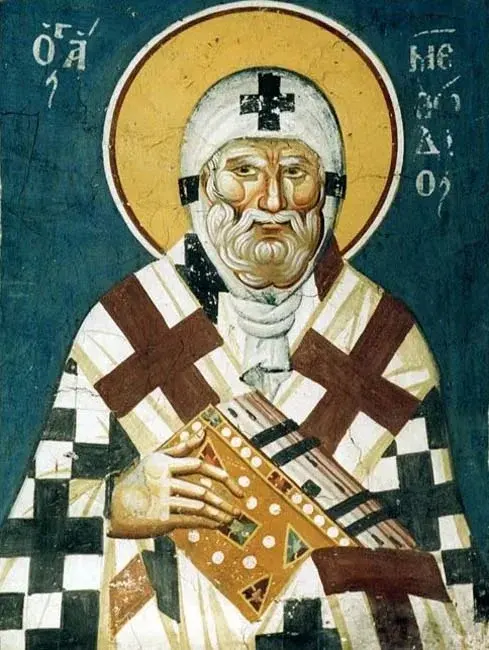
Biography
Methodius and his brother Constantine, later known as Cyril, were Byzantine missionaries sent to the Slavic peoples. Their work joined preaching with the translation of Christian texts and the development of worship in a language understood by their hearers. This brought both support and controversy.
The brothers' Byzantine formation equipped them to move between political and linguistic worlds. Translating worship involved more than substituting words: it required the sustained preparation of texts and people able to use them. Methodius's later leadership continued a shared undertaking after Cyril could no longer take part.
After Cyril's death in Rome in 869, Methodius continued the mission as a bishop and papal representative. He endured opposition and imprisonment while defending the legitimacy of the Slavic liturgical work. John Paul II honored the brothers as copatrons of Europe. Their Roman feast is February 14; this Methodius should not be confused with the patriarch commemorated in June.
Opposition arose in a region where missionary jurisdiction and political influence overlapped. His appeals to Rome show that support for Slavic worship was pursued within ecclesiastical relationships, not as a simple rejection of the wider Church. His legacy combines language, local Christian formation, and the difficulty of cooperation across rival authorities.
Context & contribution
Translation also provided tools for governing a church
Methodius's later translation work extended beyond Scripture and services. Slavorum Apostoli notes his work on patristic writings and the Nomocanon, a collection combining church law with Byzantine civil law. Making such material available supported the ordering of community life as well as preaching and worship.
He also designated his disciple Gorazd as successor, showing concern for continuity after his death. Yet his followers subsequently faced persecution and were forced from their field of work. The contrast between preparation and disruption is central to his legacy: a mission could lose its original institutional setting while its translated texts, trained disciples, and approach to local language continued to bear influence elsewhere.
Explore the sources for this section
AI-assisted source comparison updated 2026-09-26. Editorial approach
From the Saint Discovery blog
Keep exploring your faith
Practical guides to prayer, the saints, and living the Catholic faith.
Why Is St. Thérèse the Patron Saint of Missions?
Why is St. Thérèse patron saint of missions? Discover her support for missionaries and practical ways to participate in the Church's mission from home.
Sharing the faithRead the article Everyday faithWhat Is Evangelization? A Catholic Guide to Sharing the Faith
What is evangelization? Learn the Catholic meaning, the new evangelization, and practical ways to share your faith with respect, confidence, and love.
Sharing the faithRead the articleFrom reading to reflection
What will you carry with you?
After reading about St. Methodius, Apostle of the Slavs, take a moment to consider:
- Consider why a newly organized church would need Scripture, liturgical books, and legal texts; assign a different practical use to each in Methodius's mission.
These are reflection prompts from Saint Discovery, not quotations from the saint.
Sources and further reading
Biography source comparison recorded on . This is an AI-assisted comparison, not independent human or ecclesiastical approval.
What the recorded review covers
AI-assisted expansion of the existing source-reviewed biography with comparison to retrieved cited sources; not ecclesiastical approval
A source list helps you check an account; it does not establish that every claim is certain. Follow the biography’s qualifications about historical evidence, traditions and feast calendars.
Suggest a correction to this biography
How we research these pages and handle corrections · Directory corrections log
More lives to explore
Suggestions based on the site’s quiz themes, not a historical relationship or a measure of holiness.