Catholic saint biography
St. Fructuosus of Tarragona
- Commemoration:
- January 21
- Lived:
- Died 259 — Tarragona, Roman Hispania
January 21 with Augurius and Eulogius; solemnity in Tarragona.
Why dates and liturgical observances can differ
Read the sources for this biography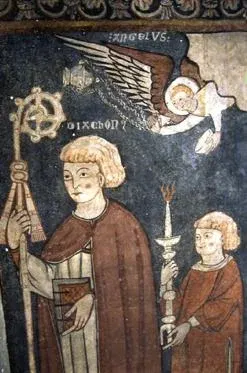
Biography
Fructuosus was bishop of Tarragona and one of the earliest clearly identifiable Christian martyrs of Roman Spain. He died with his deacons Augurius and Eulogius on January 21, 259.
Roman authorities arrested the three in January. Their hearing focused on religious allegiance and the bishop's public office. Fructuosus acknowledged that he was both a Christian and the community's bishop, placing the responsibility of his leadership within the account of his death.
The three were condemned and burned in Tarragona's amphitheater. Their shared martyrdom is important: the narrative concerns a local church represented by its bishop and deacons, not an isolated individual whose companions are incidental.
An early account preserved the event, and later Christian authors extended its memory. Augustine referred to the martyrs in preaching, while Prudentius celebrated them in poetry. These are distinct kinds of testimony and should not all be read as eyewitness records. Their continuing January 21 feast links Tarragona's community to this ancient witness. The surviving evidence supports the arrest, office, companions, and place of execution more clearly than an elaborate reconstruction of Fructuosus's earlier life.
Context & contribution
The praying posture in his imagery
The early martyr account remembers Fructuosus and his deacons praying with outstretched hands, a posture repeated in their representations. This connects an artistic convention with a particular narrative detail rather than an invented portrait.
The short interval between arrest and execution also shapes the surviving story: it records a public confession under interrogation, not a full episcopal career. Readers should resist treating the concentration on his last days as evidence that his earlier pastoral work was insignificant; it reflects what this kind of source chose to preserve.
Explore the sources for this section
AI-assisted source comparison updated 2026-09-26. Editorial approach
From the Saint Discovery blog
Keep exploring your faith
Practical guides to prayer, the saints, and living the Catholic faith.
Why Do Catholics Pray to Saints? Intercession Explained
Why do Catholics pray to saints? Learn how intercession differs from worship, how it relates to Jesus, and a simple way to ask a saint to pray for you.
A next step with your saintRead the article Living the seasonsHow to Celebrate Your Patron Saint's Feast Day at Home
Celebrate your patron saint's feast day with prayer, a short biography, and an act of kindness. A practical plan for families, sponsors, and individuals.
A next step with your saintRead the articleFrom reading to reflection
What will you carry with you?
After reading about St. Fructuosus of Tarragona, take a moment to consider:
- Examine a representation of Fructuosus and his companions and identify how a shared posture conveys their common witness while preserving their separate offices.
These are reflection prompts from Saint Discovery, not quotations from the saint.
Sources and further reading
Biography source comparison recorded on . This is an AI-assisted comparison, not independent human or ecclesiastical approval.
What the recorded review covers
AI-assisted expansion checked against cited sources; historical traditions distinguished from documented evidence; not ecclesiastical approval
A source list helps you check an account; it does not establish that every claim is certain. Follow the biography’s qualifications about historical evidence, traditions and feast calendars.
Suggest a correction to this biography
How we research these pages and handle corrections · Directory corrections log
More lives to explore
Suggestions based on the site’s quiz themes, not a historical relationship or a measure of holiness.