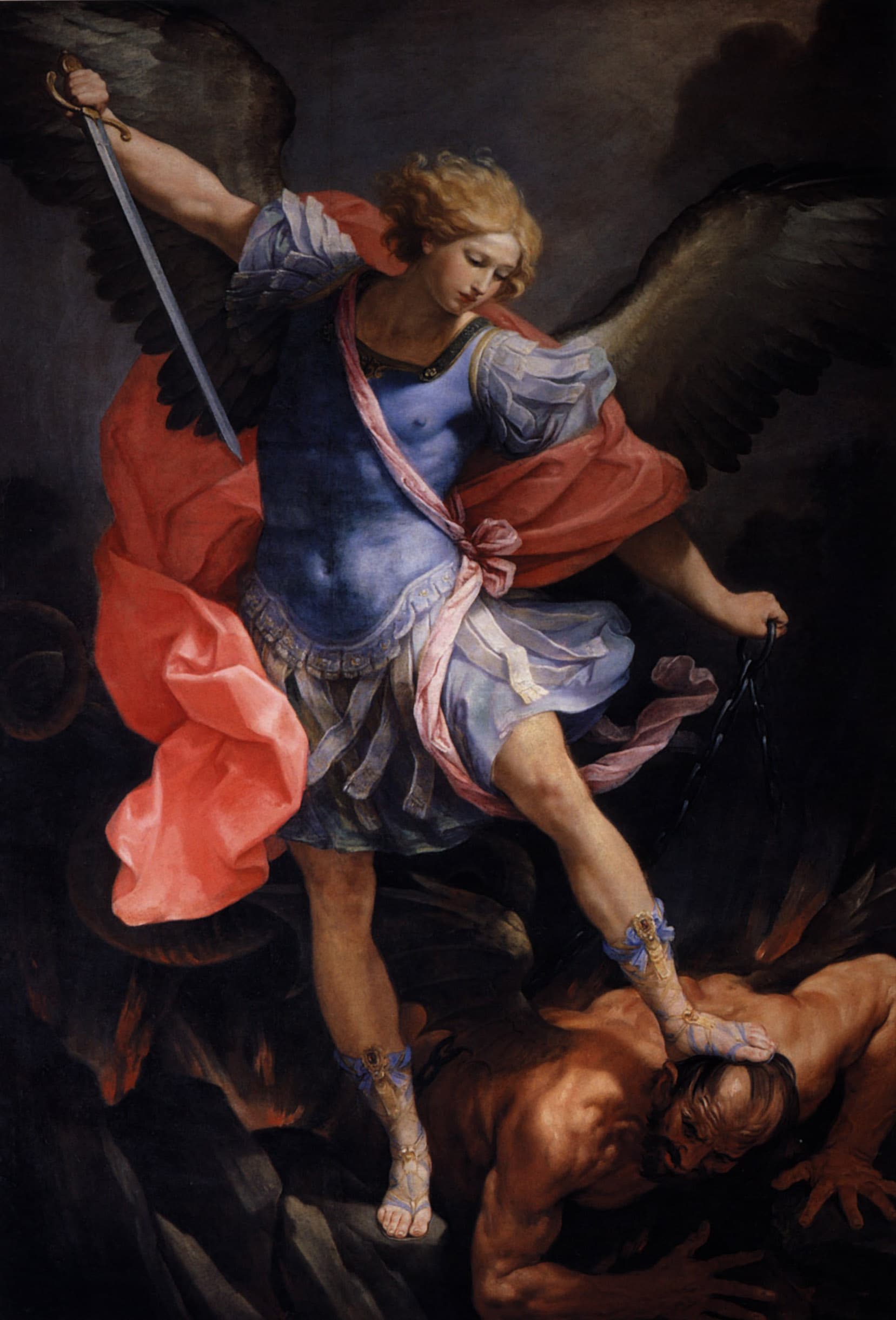
Catholics celebrate Saints Michael, Gabriel, and Raphael on September 29. These three archangels appear by name in Scripture and serve God in distinct ways: Michael fights against evil, Gabriel announces God's saving work, and Raphael accompanies and brings healing. Their feast invites us to trust God, listen to his word, and care for one another.
In 2026, the feast falls on Tuesday, September 29, as the USCCB's daily readings calendar confirms. If you have seen their names in a church window or wondered why angels are called saints, this guide offers a place to begin.
What are archangels in Catholic teaching?
Angels are spiritual creatures made by God, with intelligence and will. They serve him and carry out his purposes. They are not human beings who received wings after death. The Catechism, paragraphs 328–336, places Christ at the center of their life and mission.
The Church honors Michael, Gabriel, and Raphael as archangels. Calling them saints recognizes their holiness; it does not mean they lived earthly biographies like Francis of Assisi or Thérèse of Lisieux. Scripture gives us encounters and missions rather than dates of birth, childhood stories, or human careers.
That difference matters when reading about them online. Begin with the biblical passages and the Church's teaching. A striking story or beautiful painting can encourage reflection, but it should not automatically be treated as a biblical account.
Michael: defending God's people against evil
Michael appears in the Book of Daniel, the Letter of Jude, and the Book of Revelation. In Revelation 12:7–12, he and his angels fight the dragon. The passage places that victory within God's saving action and the triumph of Christ, the Lamb. This reading is among those offered for the feast of the archangels.
In his 2007 homily for the feast, Benedict XVI describes Michael as a defender of God's greatness and a protector of God's people. Devotion to Michael should strengthen fidelity to God rather than encourage fascination with evil.
For a practical reflection, consider a situation in which you need moral courage: refusing a dishonest shortcut, stopping a cruel conversation, or admitting something you have done wrong. Ask for Michael's intercession, then take the next honest step. You can explore the scriptural background in our Saint Michael the Archangel profile.
Gabriel: announcing God's saving work
In Luke 1, Gabriel announces the birth of John the Baptist to Zechariah and the birth of Jesus to Mary. At the Annunciation, the message concerns who Jesus is and what God will accomplish. Mary's response becomes an invitation to consider our own willingness to receive God's word. Read the encounters in Luke 1:11–38.
Gabriel's mission can shape a simple prayer exercise. Read the Annunciation slowly. Notice Mary's question, the angel's answer, and her consent. Then name one responsibility already in front of you that you have been avoiding. You do not need a dramatic message before you can respond faithfully to a clear duty.
Our Saint Gabriel the Archangel profile provides more context. When looking at Annunciation artwork, let the scene lead you back to the Gospel itself rather than treating every painted detail as something Luke describes.
Raphael: accompaniment, healing, and gratitude
Raphael's story unfolds in the Book of Tobit. At the end of the journey, Tobiah recalls the help his companion has given his family. Raphael reveals that God sent him to heal Tobit and Sarah, and directs the family to thank and praise God. He also describes presenting their prayers before the Lord. See Tobit 12:1–20.
The account holds together help, prayer, and gratitude. Raphael serves God's purposes; he does not replace God as the source of healing. Asking his intercession is an act of trust, not a guarantee that illness or family difficulties will disappear on a chosen timetable.
One way to respond to this reading is to accompany someone who feels alone: make a visit, offer a ride, bring a meal, or listen without rushing to solve everything. Our Saint Raphael the Archangel profile can help you continue reading about his place in Scripture.
Do Catholics worship the archangels?
No. A useful passage for understanding the distinction is Revelation 22:8–9. When John falls before the angel, the angel refuses his worship and directs him to God. Honoring an angel's faithful service and asking for intercession must remain within that boundary. Michael is not a rival deity, and Raphael does not possess a separate power of salvation.
Hebrews 1 makes the distinction especially clear: the Son is exalted above the angels, who serve God's purposes. This helps explain why Catholic devotion cannot treat Jesus as simply the greatest angel. Angels are creatures; the eternal Son shares the divine nature. A devotion that obscures that difference has lost the Christian center of the feast.
Why does the feast Gospel focus on Jesus?
The Gospel for September 29 is John 1:47–51. It concludes with Jesus speaking of angels ascending and descending upon the Son of Man. The Church's celebration leads us through the angels' service toward Christ, rather than inviting us to collect secret information about heavenly beings.
Try this original reading exercise with a child or study group: read the Gospel, then look at an image of Michael, Gabriel, or Raphael. Separate what the passage actually says from what the artist supplies. Michael's armor in the cover painting, for example, belongs to the artist's visual presentation. Ask what the picture helps you remember, then return to the text to check the claim. This preserves the value of sacred art while preventing a painted detail from becoming an invented biblical fact.
How can you observe September 29 at home?
Keep the observance manageable. Choose one biblical passage from this guide and read it aloud. If you are praying with children, ask what the angel does and whom the angel serves. Let their questions guide a short conversation; you do not need to explain everything about angels in one sitting.
Next, bring a specific intention to God: courage to resist wrongdoing, readiness to listen, or help for someone who is suffering. Finish by choosing one action you can take that day. A family might write the intention on a card and return to it at dinner.
If your parish offers Mass that day and you can attend, join its celebration. For further ideas, see our guide to celebrating a patron saint's feast day at home. The Saint of the Day page offers another way to keep learning throughout the year.
Is this the same as the guardian angels' feast?
No. The Church celebrates Michael, Gabriel, and Raphael on September 29 and the Holy Guardian Angels on October 2. The Vatican's Directory on Popular Piety and the Liturgy, paragraphs 215–217, distinguishes the observances and encourages grateful, confident devotion.
The same guidance cautions against attributing every setback to demons and every success to angels. It also discourages assigning names to angels beyond the scriptural names Michael, Gabriel, and Raphael. Catholic devotion should deepen prayer, humility, and responsible choices.
An original prayer for the archangels' feast
The following is an original prayer from Saint Discovery, not a quotation from Scripture or an official liturgical text.
Father in heaven, thank you for the angels who serve you. Through the intercession of Saints Michael, Gabriel, and Raphael, help us resist evil, listen to your word, and accompany those who need care. Teach us to receive your help with gratitude and follow Jesus in the ordinary duties of this day. Amen.
Artwork: Guido Reni, Archangel Michael Defeats Satan. Public-domain artwork and reproduction, via Wikimedia Commons.
