Catholic saint biography
St. Stanislaus of Kraków
- Commemoration:
- April 11
- Patron Saint of:
- Poland
- Lived:
- Eleventh century; died 1079 — Poland
April 11 in the General Roman Calendar; May 8 in Poland.
Why dates and liturgical observances can differ
Read the sources for this biography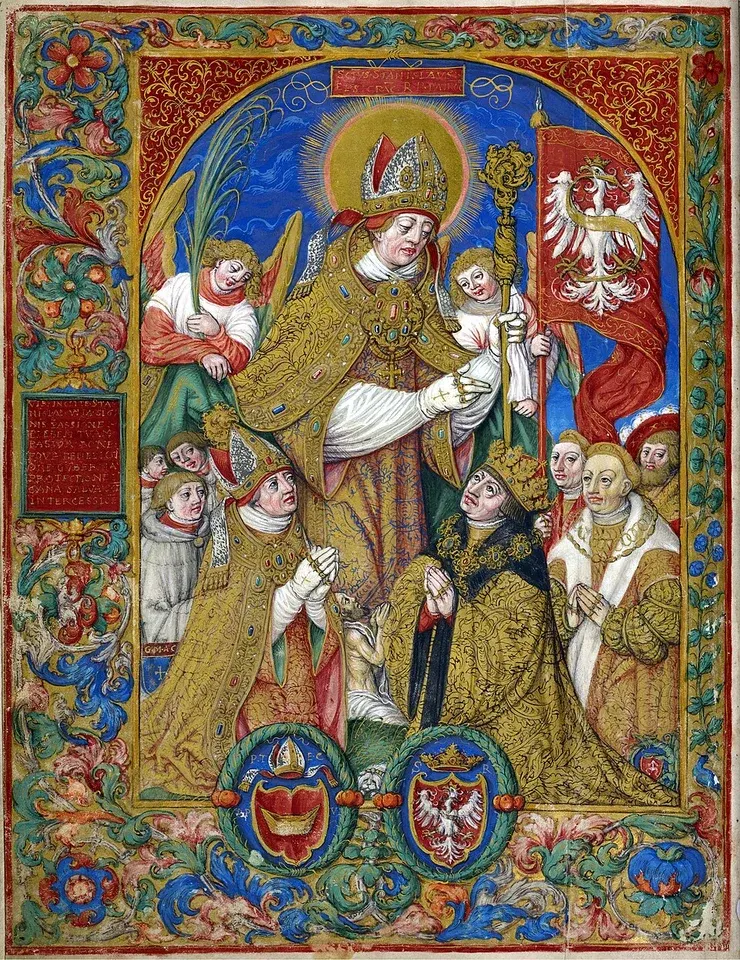
Biography
Stanislaus was bishop of Kraków during the reign of King Bolesław II. His conflict with the king culminated in his killing in 1079, and he came to be honored as a martyr and an important patron of Poland. His memory is closely associated with the responsibilities of a bishop confronting royal power.
The traditional portrait presents a pastor willing to admonish both the powerful and ordinary members of his diocese. Later narratives connect his confrontation with disputes over property and the king’s treatment of subjects. These explanations belong to the developing account of his martyrdom and should not be treated as settled contemporary evidence.
His remains were transferred to Kraków’s cathedral, which became a focus of devotion. Pope Innocent IV canonized him at Assisi in 1253. That recognition helped establish his wider place in Catholic worship, while Polish memory continued to connect him with the moral limits of royal authority.
No contemporary full biography survives, and later lives include legendary material. The precise causes of the conflict and details of his death therefore require caution rather than a seamless dramatic retelling. His current general Roman-calendar memorial is April 11; Poland also preserves a prominent May 8 celebration.
Context & contribution
A national memory with a difficult source history
The absence of a contemporary biography is a central limitation in reconstructing Stanislaus’s conflict with Bolesław. The Catholic Encyclopedia notes that the later life includes substantial legendary material. Exact speeches, motives, and dramatic scenes should therefore be distinguished from the basic historical conflict and the later cult.
The transfer of his remains to Kraków’s cathedral and his canonization belong to the history of how he became a public symbol. That reception is important in its own right. It does not remove the need to assess the earlier narrative carefully, especially when the story is used to explain church and political authority.
Explore the sources for this section
AI-assisted source comparison updated 2026-09-26. Editorial approach
From the Saint Discovery blog
Keep exploring your faith
Practical guides to prayer, the saints, and living the Catholic faith.
Why Do Catholics Pray to Saints? Intercession Explained
Why do Catholics pray to saints? Learn how intercession differs from worship, how it relates to Jesus, and a simple way to ask a saint to pray for you.
A next step with your saintRead the article Living the seasonsHow to Celebrate Your Patron Saint's Feast Day at Home
Celebrate your patron saint's feast day with prayer, a short biography, and an act of kindness. A practical plan for families, sponsors, and individuals.
A next step with your saintRead the articleFrom reading to reflection
What will you carry with you?
After reading about St. Stanislaus of Kraków, take a moment to consider:
- Separate one claim about Stanislaus’s lifetime from one fact about his later commemoration. What evidence would each require?
These are reflection prompts from Saint Discovery, not quotations from the saint.
Sources and further reading
Biography source comparison recorded on . This is an AI-assisted comparison, not independent human or ecclesiastical approval.
What the recorded review covers
AI-assisted expansion using the linked historical and ecclesiastical sources; devotional traditions distinguished from documented history.
A source list helps you check an account; it does not establish that every claim is certain. Follow the biography’s qualifications about historical evidence, traditions and feast calendars.
Suggest a correction to this biography
How we research these pages and handle corrections · Directory corrections log
More lives to explore
Suggestions based on the site’s quiz themes, not a historical relationship or a measure of holiness.