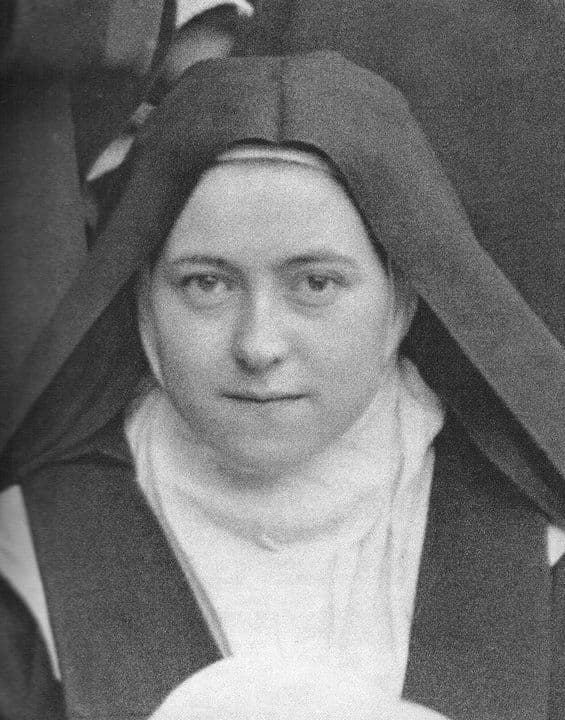
Saint Thérèse of Lisieux is a patron saint of missions because she devoted her contemplative life to helping others know and love Jesus. She supported missionaries through prayer, correspondence, and the offering of her daily life to God. Her example shows how someone can participate in the Church's mission while living in one place. Pope Francis explains this connection in his June 7, 2023 audience on Thérèse and evangelization.
Her story raises a useful question: What can I contribute if I cannot travel, preach publicly, or take on a large project? Understanding her patronage gives that question a concrete answer, grounded in her actual relationships with people carrying out missionary work.
When was Thérèse named patroness of missions?
Pope Pius XI proclaimed Thérèse universal patron of the missions, alongside Saint Francis Xavier, on December 14, 1927. The Vatican's official biography records that date and her canonization on May 17, 1925. Patronage of missions is a distinct recognition from canonization, which came earlier.
Thérèse entered the Carmel of Lisieux in 1888 and died in 1897 at twenty-four. Within her community, she carried out ordinary responsibilities and helped guide novices. The same biography describes her special responsibility to accompany two missionary brothers through prayer and sacrifice. Her missionary concern grew within that life of contemplation and service.
For the broader story of her family, vocation, and spiritual teaching, read our Saint Thérèse of Lisieux biography. Here, the focus is the connection between her enclosed religious life and the Church's work beyond the monastery.
Her support for missionaries was personal
Thérèse's spiritual brothers included Father Roulland and Bellière, who was preparing for priesthood during their correspondence. Cardinal Lucas Moreira Neves discusses these relationships in a homily published by the Vatican for the Jubilee of the Clergy. Their letters reveal an ongoing concern for particular people and their vocations.
The homily cites her June 23, 1896 letter to Roulland, in which she connects becoming a Carmelite with working alongside him for the salvation of souls. It also describes how she encouraged Bellière toward confidence and love when considering his faults. These are identifiable examples from her correspondence, rather than a general legend about a saint who liked missions.
There is a practical lesson in that specificity. Someone who is teaching, serving, or discerning a vocation may need more than our broad approval of their work. Remembering a name, listening to a difficulty, and following up can turn goodwill into a dependable relationship.
Why prayer belongs to the Church's mission
Thérèse understood her love for Christ as a concern for others. In C'est la confiance, paragraphs 9–10, Pope Francis explains that she saw her consecration to God as inseparable from the good of her brothers and sisters. Her desire was for others to encounter Jesus, and evangelization meant attraction rather than coercion.
Later in the same document, paragraphs 38–40 describe her reflection on the Church as a body with different members, drawing on chapters 12 and 13 of First Corinthians. She recognized love as the source of the Church's different vocations. That insight helped her understand how her own vocation belonged within a mission larger than any single person's activity.
We should receive this as a teaching about communion and love, without pretending we can calculate how many conversions a particular prayer produces. Prayer entrusts people to God. Practical support responds to needs we can actually see. Both can belong to a generous Christian life.
Four ways to support missions from home
The following suggestions are original applications inspired by Thérèse's example. They are not a devotional formula she prescribed. Choose one that fits your responsibilities and the needs of the people you hope to support.
Pray for a named person and a real need
Ask your parish whether there is a missionary, catechist, or partner community whose needs you can remember in prayer. Use the information they share publicly or give you permission to use. A specific intention might concern a teacher preparing lessons, a priest learning a language, or a community rebuilding its place of worship.
Set a modest rhythm, such as remembering that intention during an existing morning or evening prayer. Keep private situations private. After a week, ask whether there is an updated intention rather than assuming that the same need continues indefinitely.
Offer encouragement that does not demand a reply
Write a short message through a contact channel the person or organization has provided. Explain that you are grateful for their work and are remembering their stated intention. Keep it warm and brief, especially if they have limited time or internet access.
Avoid making your encouragement another task they must complete. You can offer to help with a specific, manageable need, while letting them decide whether your offer would be useful. Dependable follow-through matters more than an impressive promise.
Pair your intention with an appropriate action
Ask what help is actually needed before organizing a collection or sending supplies. Your parish may already have a way to support its mission partners. Choose an action that fits your time and circumstances, whether helping with preparation, volunteering locally, or making a contribution you can afford.
Afterward, reflect on whether the action served the recipient's stated need. Listening first can prevent us from confusing what we enjoy giving with what another community has asked to receive.
Practice a welcoming witness where you live
Notice a person who has asked a question about Catholic faith or seems uncertain about joining a parish activity. Listen to their actual question. Offer a resource or invitation if they welcome it, and leave room for them to decline.
Our Catholic guide to evangelization explores this relationship between witness, conversation, and respect. A patient encounter can be a worthwhile beginning even when you cannot see an immediate result.
Remembering Thérèse on October 1
The USCCB calendar identifies October 1 as the Memorial of Saint Thérèse of the Child Jesus, Virgin and Doctor of the Church. You can mark the day by learning about one mission your parish supports and choosing a realistic way to accompany it.
If you are considering Thérèse as a Confirmation patron, discuss her missionary concern with your sponsor. Ask which person or community you could support consistently. Our article on Thérèse's Little Way in daily life can help you connect that concern with ordinary responsibilities.
An original prayer for missionaries
This is an original prayer: Lord Jesus, strengthen those who share your Gospel and serve their communities. Give them patience, wisdom, and companions who care for them. Help me listen to their needs and respond faithfully. Saint Thérèse, pray for missionaries and for all who support them. Amen.