Evangelization means sharing the Good News of Jesus Christ and inviting people to respond to him in faith. For Catholics, it involves both proclaiming the Gospel and living a life shaped by it, within the community of the Church. It begins with our own continuing conversion and reaches outward in love for others. The U.S. bishops explain evangelization in Go and Make Disciples.
You may picture a missionary traveling overseas or someone speaking to a crowd. Those are real possibilities, but evangelization can also begin in a family conversation, a friendship, or a thoughtful invitation to explore the faith.
Why do Catholics evangelize?
At the end of Matthew’s Gospel, the risen Jesus commissions his disciples to make disciples of all nations, baptizing and teaching them. He also promises his abiding presence. Catholic evangelization grows from this mission: sharing the life we have received from Christ. Read Matthew 28:16–20.
This calling belongs to the whole Church. In Evangelii Gaudium, section 120, Pope Francis explains that every baptized person participates as a missionary disciple. Sharing the faith is therefore part of ordinary Christian life, with each person contributing according to their circumstances and gifts. Read Evangelii Gaudium.
What message are we sharing?
The center is Jesus Christ. In 1 Corinthians 15:3–5, Paul summarizes the message he received and passed on: Christ died for our sins, was buried, rose from the dead, and appeared to his followers. This proclamation stands at the heart of Christian faith. Read 1 Corinthians 15.
A conversation can begin simply: explain who Jesus is and why following him matters in your life. Then leave room for the other person’s questions. Our guide to the story of salvation can help connect this central message with the wider biblical story.
Is living a good example enough?
An authentic Christian life matters deeply. Paul VI emphasizes the power of witness in Evangelii Nuntiandi, while also teaching that evangelization includes speaking about Jesus and his saving message. Actions and words belong together. See Evangelii Nuntiandi, sections 21–22 and 41–42.
Kindness can open a conversation, but people cannot automatically infer everything you believe from seeing you help someone. When an appropriate opportunity arises, you can name the faith that motivates you. At the same time, service should remain sincere even when no religious conversation follows.
Evangelization and proselytism: what is the difference?
The word proselytism has been used differently across history. In its negative modern sense, it describes promoting religion through methods or motives that violate a person’s freedom and dignity. The Church distinguishes this from freely proposing the Gospel and respecting a person’s response. See the Doctrinal Note on Some Aspects of Evangelization, especially section 12 and note 49.
In practice, avoid pressure, manipulation, or treating a friendship as a recruitment project. An invitation should leave the other person free to decline. You can hold your convictions clearly while listening carefully and respecting someone whose response differs from what you hoped.
What is the new evangelization?
The new evangelization includes renewed attention to people and communities with Christian roots who have become distant from active faith. It calls Catholics to deepen their own relationship with Christ and find ways to share the same Gospel in present circumstances. The message remains centered on Jesus. Read the USCCB’s introduction to the new evangelization.
A returning Catholic may need a patient conversation about a painful experience, help understanding a teaching, or a simple welcome at the parish. Begin with the person’s actual story instead of assuming you know why they stepped away.
Five practical ways to evangelize in everyday life
1. Begin with your own life of prayer
Make space to bring your relationships before God. Ask for humility, courage, and the ability to listen. Consider where your own conduct needs to change, too. Our Catholic guide to prayer offers a starting point if prayer still feels unfamiliar.
2. Listen before offering an explanation
Ask a sincere question and allow time for the answer. Pope Francis describes personal dialogue as the first step in a respectful encounter: another person has joys, hopes, and concerns to share. See Evangelii Gaudium, section 128.
You might ask, “What has your experience of faith been like?” Listen for what the person actually says, including experiences that are difficult to hear.
3. Share one honest experience
Describe a concrete way faith has shaped you: returning to prayer after a loss, finding the courage to apologize, or learning to serve someone patiently. Keep your story truthful. Avoid implying that becoming Catholic makes every difficulty disappear or that your experience predicts someone else’s path.
4. Offer a specific, low-pressure invitation
If someone is interested, offer to attend Mass together, introduce them to a parish contact, or help them find an inquiry session. Explain what to expect rather than leaving them to navigate an unfamiliar setting alone. Our article on why becoming Catholic takes time introduces the formation process.
5. Keep learning and follow through
When a question goes beyond your knowledge, say so. Offer to look for a reliable source together. If you promise to send an explanation or introduce someone to a catechist, follow through. A modest, accurate answer is more useful than a confident guess.
A biblical example: Philip begins with a real question
In Acts 8:26–39, Philip approaches an Ethiopian official reading Isaiah. He asks about the man's understanding, accepts an invitation to sit beside him, and explains Jesus beginning with the passage already before them. Baptism follows. The account connects personal attention, Scripture, explicit proclamation of Christ, and sacramental life. Listening does not replace the message; it helps Philip address the question this person is actually asking.
What might that look like in an ordinary friendship?
Consider this original example. A friend says, “I have thought about going back to church, but I would not know anyone.” An appropriate response might be, “Would you like to tell me what makes going back difficult?” If the concern really is entering alone, offer to meet outside a specific Mass and sit together. Explain that they can ask questions afterward and do not have to pretend to understand everything.
If the friend instead describes a painful experience, that changes the next step. Resist switching immediately to your prepared invitation. Listen to the experience they chose to share. You may need to acknowledge something wrong, admit what you do not know, or help them find an appropriate parish contact. An invitation works best when it answers an actual need rather than your preferred script.
Afterward, ask whether the visit raised questions and whether they want help finding an inquiry group. Share their contact details with a parish only with permission. Accompaniment includes dependable practical help, not just a successful invitation.
Keep charity free of conditions
In Deus Caritas Est, section 31c, Benedict XVI explains that Christian charity must not become a way to impose faith. Applied to everyday life, food, friendship, and help should not be withdrawn when someone declines a religious conversation. Ask yourself whether you would still offer the same assistance if the person never joined your parish. That question can reveal whether your witness has remained an act of love.
Sharing the Catholic faith online
The same attention to truth and charity applies online. Read an article before sharing it, check quotations, and offer resources that answer the question someone actually asked. Avoid using someone’s private story as public content without permission.
First Peter 3:15–16 connects explaining Christian hope with gentleness and respect. That is a useful standard for comments, messages, and public posts. Read 1 Peter 3.
Common questions about evangelization
How is evangelization different from catechesis?
Evangelization includes inviting people into faith and conversion; catechesis provides ordered formation in that faith. They belong together. The USCCB describes evangelizing catechesis as proclaiming the Gospel, accompanying a response, teaching the faith systematically, and forming disciples who share it. Read the USCCB’s explanation.
What if someone is not interested?
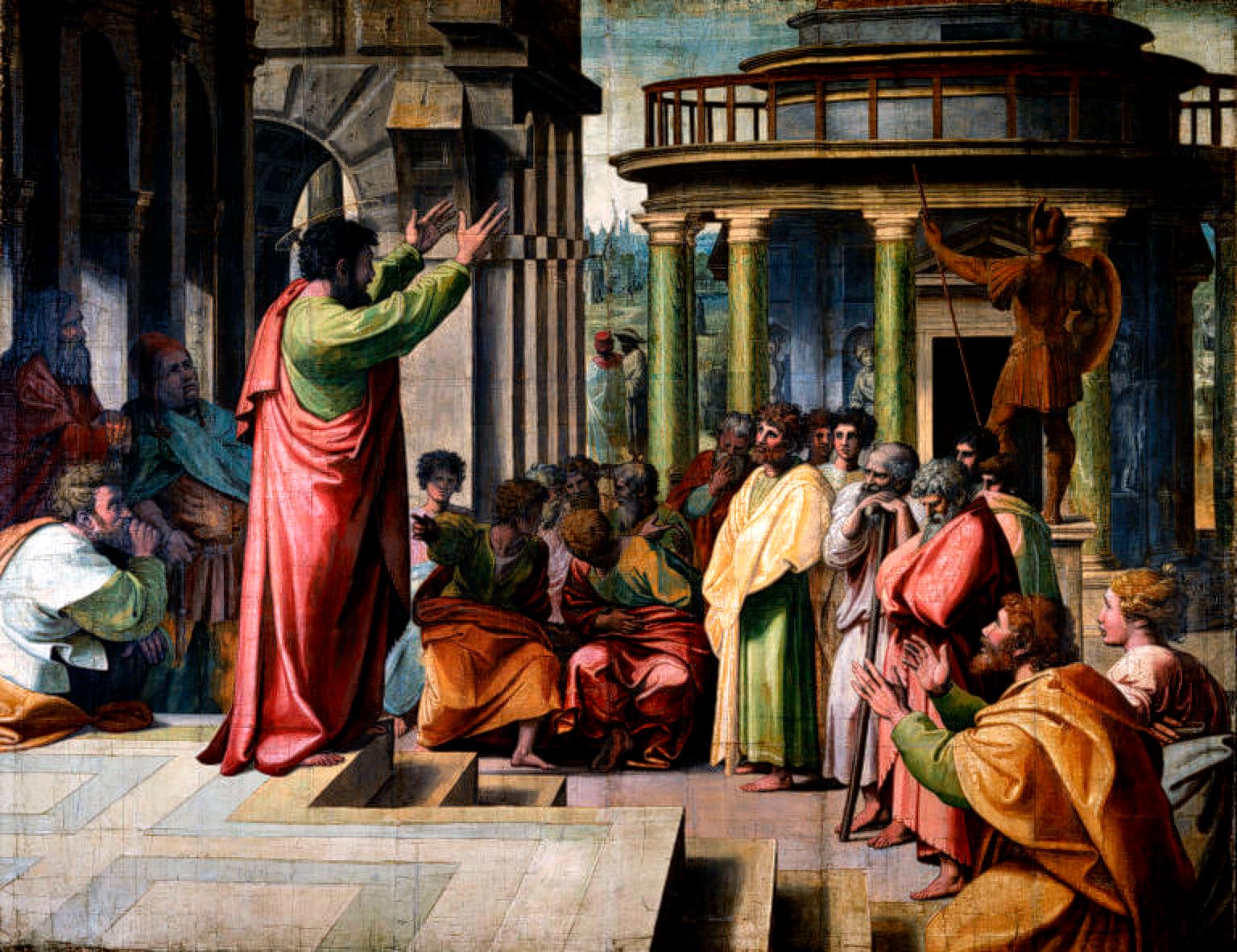
Respect their answer and continue treating them with care. Even Paul encountered varied responses when preaching in Athens: some mocked, some wanted to hear more, and some believed. Read Acts 17:22–34. You can offer a faithful witness without controlling the outcome.
Do I need to win an argument?
Explaining a belief can help, but a person is more than an objection to answer. Keep the goal of sharing Christ in view. If a conversation becomes hostile, pause it. A calm exchange another day may allow more understanding than continuing when neither person is listening.
An original prayer for sharing the faith
Lord Jesus, help me receive your Gospel more deeply and share it with love. Give me courage to speak, humility to listen, and wisdom to know when to be quiet. Let my actions agree with my words. Bless the people I meet, and guide us toward your truth and peace. Amen.