Catholic saint biography
St. Lawrence of Rome
- Commemoration:
- August 10
- Patron Saint of:
- cooks
- Lived:
- Third century; died 258 — Associated with Rome; birthplace uncertain
Roman feast August 10.
Why dates and liturgical observances can differ
Read the sources for this biography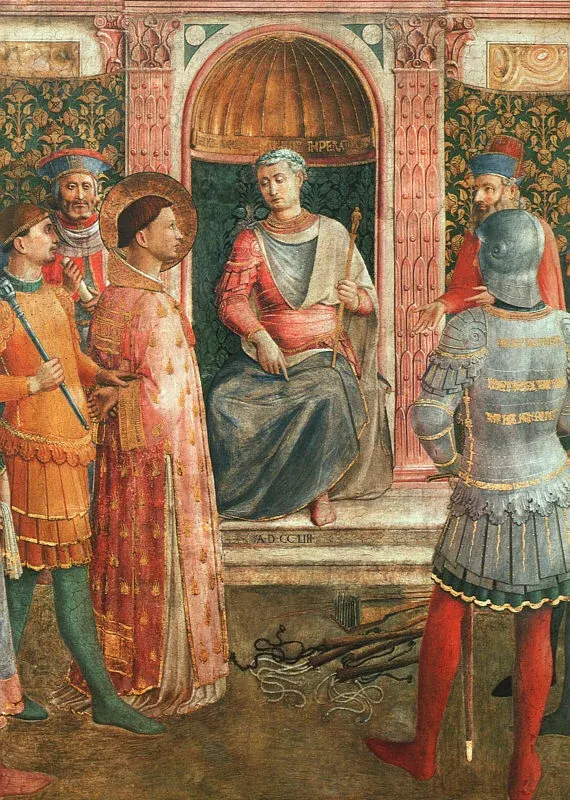
Biography
Lawrence was a deacon of the Roman Church who was killed during Emperor Valerian's persecution in 258, shortly after Pope Sixtus II. His martyrdom, burial near the Via Tiburtina, and early veneration have a firmer historical foundation than most details of his youth. Roman churches and an ancient liturgical commemoration preserve his place among the city's best-known martyrs.
The persecution targeted ordained leaders of Christian communities, which explains the close connection between his death and that of Sixtus. A fourth-century Roman calendar already associates Lawrence with August 10 and the burial area on the Via Tiburtina. This early liturgical evidence is different in character from the later dramatic martyrdom stories.
Later accounts describe him presenting poor people as the Church's treasure and being burned on a gridiron. Those powerful stories express charity and courage, but their dialogue and manner of execution cannot be verified from contemporary evidence. His biography should distinguish the historical deacon and martyr from the embellished narrative, while explaining why care for the poor became central to his memory.
A shrine grew over his burial place and developed into a major Roman center of devotion. The familiar gridiron in art identifies Lawrence through the traditional account, even when historians question that account's literal details. His cult demonstrates how a secure memory of martyrdom can acquire a much fuller imaginative narrative over time.
Context & contribution
Poetry, inscription, and the making of a Roman memory
Pope Damasus honored Lawrence with verse placed at his tomb. Ambrose and Prudentius later gave fuller literary accounts of his martyrdom, with Prudentius developing the story in a hymn. These are different kinds of witnesses: an inscription, moral instruction, and poetry each preserve memory through their own form.
The distinction matters because a moving scene in a poem is not automatically a surviving courtroom record. Comparing the early calendar evidence with these later works shows how Lawrence's secure commemoration became a rich narrative of Roman Christian identity. The history of that storytelling is itself part of his documented legacy, even where individual scenes remain unverifiable.
Explore the sources for this section
AI-assisted source comparison updated 2026-09-26. Editorial approach
From the Saint Discovery blog
Keep exploring your faith
Practical guides to prayer, the saints, and living the Catholic faith.
Why Do Catholics Pray to Saints? Intercession Explained
Why do Catholics pray to saints? Learn how intercession differs from worship, how it relates to Jesus, and a simple way to ask a saint to pray for you.
A next step with your saintRead the article Living the seasonsHow to Celebrate Your Patron Saint's Feast Day at Home
Celebrate your patron saint's feast day with prayer, a short biography, and an act of kindness. A practical plan for families, sponsors, and individuals.
A next step with your saintRead the articleFrom reading to reflection
What will you carry with you?
After reading about St. Lawrence of Rome, take a moment to consider:
- Compare what a calendar entry, a tomb inscription, and a hymn can establish about Lawrence; assign each source a question it is best suited to answer.
These are reflection prompts from Saint Discovery, not quotations from the saint.
Sources and further reading
Biography source comparison recorded on . This is an AI-assisted comparison, not independent human or ecclesiastical approval.
What the recorded review covers
AI-assisted expansion of the existing source-reviewed biography with comparison to retrieved cited sources; not ecclesiastical approval
A source list helps you check an account; it does not establish that every claim is certain. Follow the biography’s qualifications about historical evidence, traditions and feast calendars.
Suggest a correction to this biography
How we research these pages and handle corrections · Directory corrections log
More lives to explore
Suggestions based on the site’s quiz themes, not a historical relationship or a measure of holiness.