Catholic saint biography
St. Anastasia of Sirmium
- Commemoration:
- December 25
- Lived:
- Early fourth-century tradition — Sirmium
Why dates and liturgical observances can differ
Read the sources for this biography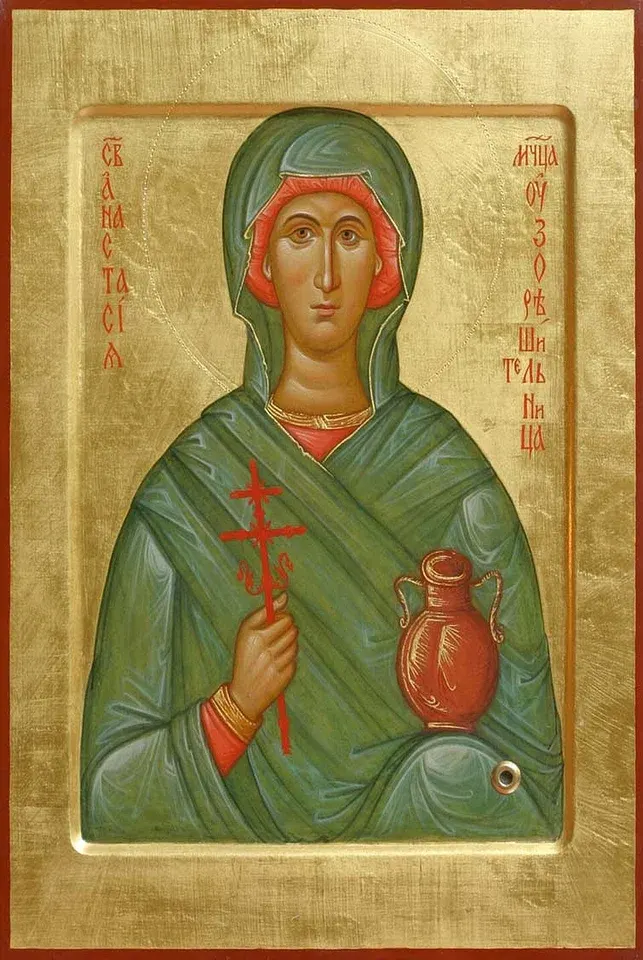
Biography
Anastasia is venerated as a martyr associated with Sirmium during the persecution of Diocletian. Her surviving devotional story emphasizes practical assistance to persecuted Christians and fidelity when she herself faced arrest.
According to the brief account preserved by Vatican News, she helped Christians suffering under the emperor's persecution. The notice does not provide a securely documented chronology of that work or a detailed account of her family and childhood. Those omissions should not be replaced by an invented personal history.
The martyrdom narrative describes her refusal to renounce Christianity, an attempt to dispose of her on a damaged ship, escape, and eventual recapture. It concludes with death by burning. These episodes are presented as the tradition of her passion rather than a complete contemporary record of judicial proceedings.
Her Catholic commemoration is December 25. The placement of her memory beside the celebration of Christmas does not make her a figure from the Nativity narratives: her story belongs to the much later history of Roman persecution. Her enduring significance lies in the Christian memory of care for prisoners and steadfastness under coercion.
Context & contribution
How an eastern martyr entered Rome's worship
Anastasia's place in the Roman Canon is an important part of her legacy. The Catholic Encyclopedia traces the growth of her Roman veneration in late antiquity, even though her martyrdom was associated with Sirmium. Her name in a central Eucharistic prayer carried that memory far beyond the place of her death.
The Roman church associated with her stood near the Palatine and became linked with the Christmas liturgy. This helps explain the unusual proximity of her commemoration to the Nativity. It is evidence of how worship developed around places and inherited observances, rather than evidence that Anastasia herself had any connection with the events of Jesus's birth.
Explore the sources for this section
AI-assisted source comparison updated 2026-09-26. Editorial approach
From the Saint Discovery blog
Keep exploring your faith
Practical guides to prayer, the saints, and living the Catholic faith.
Why Do Catholics Pray to Saints? Intercession Explained
Why do Catholics pray to saints? Learn how intercession differs from worship, how it relates to Jesus, and a simple way to ask a saint to pray for you.
A next step with your saintRead the article Living the seasonsHow to Celebrate Your Patron Saint's Feast Day at Home
Celebrate your patron saint's feast day with prayer, a short biography, and an act of kindness. A practical plan for families, sponsors, and individuals.
A next step with your saintRead the articleFrom reading to reflection
What will you carry with you?
After reading about St. Anastasia of Sirmium, take a moment to consider:
- Find Anastasia's name in the Roman Canon. What can the survival of a name in worship tell us that a detailed later legend cannot?
These are reflection prompts from Saint Discovery, not quotations from the saint.
Sources and further reading
Biography source comparison recorded on . This is an AI-assisted comparison, not independent human or ecclesiastical approval.
What the recorded review covers
AI-assisted expansion checked against retrieved historical and institutional sources; traditions distinguished from documented history; not ecclesiastical approval
A source list helps you check an account; it does not establish that every claim is certain. Follow the biography’s qualifications about historical evidence, traditions and feast calendars.
Suggest a correction to this biography
How we research these pages and handle corrections · Directory corrections log
More lives to explore
Suggestions based on the site’s quiz themes, not a historical relationship or a measure of holiness.