Catholic saint biography
St. Nicholas Owen
- Commemoration:
- March 22
- Lived:
- About 1562–1606 — England
Common individual devotional commemoration; also honored with the English martyrs.
Why dates and liturgical observances can differ
Read the sources for this biography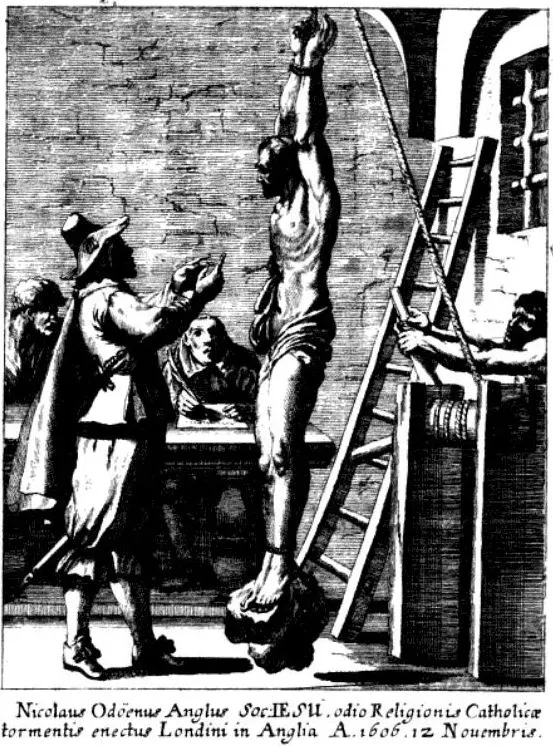
Biography
Nicholas Owen was an English carpenter and Jesuit lay brother who built concealed refuges for Catholic priests. During the Elizabethan and Jacobean persecutions, his practical skills helped priests continue their ministry and protected the households that received them.
Born in Oxford and sometimes called Little John, he spent roughly two decades creating hiding places. His work used spaces within walls, underground passages, and other concealed recesses. Secrecy was essential: knowledge of a hiding place could expose an entire network of people. He worked alone, combining design with construction, and supported this dangerous service with prayer and reception of the Eucharist.
Arrested in 1594, Owen endured interrogation without identifying those he had assisted. After his release through a ransom, he resumed his work. A further arrest in 1606 led to imprisonment and torture in the Tower of London, where he died rather than betray others.
He was canonized in 1970 among the Forty Martyrs of England and Wales. His individual commemoration is March 22. Owen's place in their history is distinctive: a lay brother's craftsmanship, discretion, and endurance sustained religious life when public ministry was dangerous.
Context & contribution
A craft that sustained a hidden Church
Owen’s work reveals a part of religious history easily missed in accounts centered on priests and rulers: the physical conditions that allowed worship to continue. A refuge had to remain concealed during a determined search, yet be accessible to someone in danger. Its usefulness depended on construction, trust, and the silence of a household acting together.
Franciscan Media also records his role in arranging the escape of two Jesuits from the Tower. His contribution was therefore not limited to making objects; it included practical judgment under pressure. Calling him a lay brother identifies his form of religious life, not a lesser share in the risks or responsibilities of the mission.
Explore the sources for this section
AI-assisted source comparison updated 2026-09-26. Editorial approach
From the Saint Discovery blog
Keep exploring your faith
Practical guides to prayer, the saints, and living the Catholic faith.
Why Do Catholics Pray to Saints? Intercession Explained
Why do Catholics pray to saints? Learn how intercession differs from worship, how it relates to Jesus, and a simple way to ask a saint to pray for you.
A next step with your saintRead the article Living the seasonsHow to Celebrate Your Patron Saint's Feast Day at Home
Celebrate your patron saint's feast day with prayer, a short biography, and an act of kindness. A practical plan for families, sponsors, and individuals.
A next step with your saintRead the articleFrom reading to reflection
What will you carry with you?
After reading about St. Nicholas Owen, take a moment to consider:
- Choose an ordinary skill you possess. What would it take to use it reliably for someone else’s safety or access to help?
These are reflection prompts from Saint Discovery, not quotations from the saint.
Sources and further reading
Biography source comparison recorded on . This is an AI-assisted comparison, not independent human or ecclesiastical approval.
What the recorded review covers
AI-assisted expansion using the linked historical and ecclesiastical sources; devotional traditions distinguished from documented history.
A source list helps you check an account; it does not establish that every claim is certain. Follow the biography’s qualifications about historical evidence, traditions and feast calendars.
Suggest a correction to this biography
How we research these pages and handle corrections · Directory corrections log
More lives to explore
Suggestions based on the site’s quiz themes, not a historical relationship or a measure of holiness.