Catholic saint biography
St. Mary of Egypt
- Commemoration:
- April 1
- Lived:
- Traditional late antique ascetic; precise dates uncertain — Egypt and the Palestinian desert, according to tradition
Also commemorated on the fifth Sunday of Orthodox Great Lent; Julian April 1 falls on civil April 14.
Why dates and liturgical observances can differ
Read the sources for this biography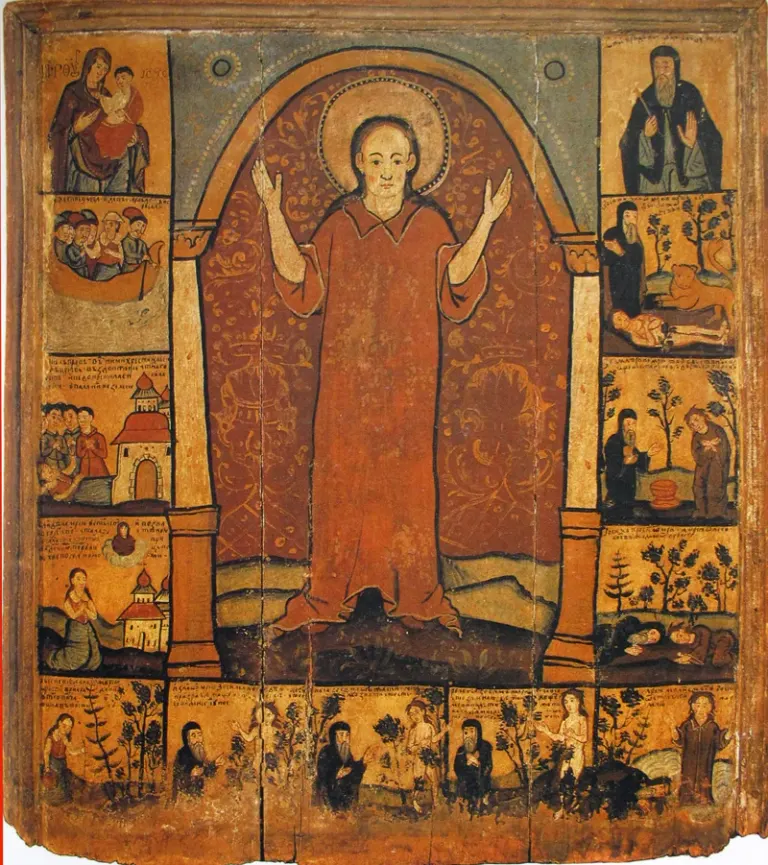
Biography
Mary of Egypt is remembered through a penitential life traditionally attributed to Sophronius of Jerusalem. The narrative describes her conversion during a journey to Jerusalem and her subsequent retreat beyond the Jordan. There she lived for many years in solitude before encountering the monk Zosimas.
Zosimas begins the narrative as an experienced monk who learns that holiness can take forms beyond his own experience. Mary's testimony reverses expectations: the solitary woman becomes his teacher. This literary structure is essential to the story's purpose and explains why its influence extends beyond interest in an unusual desert life.
The story presents repentance as a profound transformation and gives Zosimas the role of receiving her testimony and bringing her Communion. Its remarkable events belong to hagiography, and the chronology cannot be treated as securely documented biography. Her memory became especially important in Eastern Christian Lent, while her fixed commemoration is April 1. She is also honored in Western Christian tradition.
The account emphasizes both conversion and the long struggle that follows it. Communion connects the solitary ascetic with the Church rather than presenting isolation as self-sufficiency. Her Lenten prominence arises from that pattern of repentance and transformation, while precise calculations of her age and years in the desert remain dependent on the narrative.
Context & contribution
The monastic calendar frames the encounter
Mary's Life begins with a distinctive Lenten custom at Zosimas's monastery. After receiving Communion and asking one another's forgiveness, the monks disperse into the wilderness, returning on Palm Sunday. The account says they were not to question one another about their individual ascetic efforts. This discipline supplies the narrative setting in which Zosimas encounters Mary.
The frame shapes the reader's interpretation of the story. A monk seeking someone from whom he can learn meets a woman outside the institution's familiar structures; the rule against comparing private struggles also discourages spiritual competition. These are features of the transmitted hagiographical narrative, rather than independently verified evidence for every desert journey it describes.
Explore the sources for this section
AI-assisted source comparison updated 2026-09-26. Editorial approach
From the Saint Discovery blog
Keep exploring your faith
Practical guides to prayer, the saints, and living the Catholic faith.
What Is the Domestic Church? John Paul II on Faith at Home
What Catholics mean by the domestic church, how John Paul II explained family life, and practical ways to begin with prayer, forgiveness and welcome.
Bring reflection into prayerRead the article Prayer & reflectionHow to Make a Spiritual Communion When You Cannot Receive
Learn how to make a spiritual communion, with a short original prayer and clear guidance on Mass, Confession, and times when you cannot receive.
Bring reflection into prayerRead the articleFrom reading to reflection
What will you carry with you?
After reading about St. Mary of Egypt, take a moment to consider:
- Explain how the monastery's rule against comparing Lenten efforts prepares the reader for Zosimas's meeting with Mary; identify what that framing contributes beyond the conversion story.
These are reflection prompts from Saint Discovery, not quotations from the saint.
Sources and further reading
Biography source comparison recorded on . This is an AI-assisted comparison, not independent human or ecclesiastical approval.
What the recorded review covers
AI-assisted expansion of the existing source-reviewed biography with comparison to retrieved cited sources; not ecclesiastical approval
A source list helps you check an account; it does not establish that every claim is certain. Follow the biography’s qualifications about historical evidence, traditions and feast calendars.
Suggest a correction to this biography
How we research these pages and handle corrections · Directory corrections log
More lives to explore
Suggestions based on the site’s quiz themes, not a historical relationship or a measure of holiness.