Catholic saint biography
St. John de Brébeuf
- Commemoration:
- October 19
- Lived:
- 1593–1649 — Normandy, France
Roman and U.S. commemoration with the North American Martyrs; Canada uses September 26.
Why dates and liturgical observances can differ
Read the sources for this biography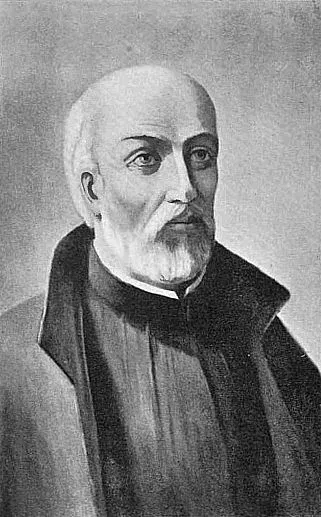
Biography
Saint John de Brébeuf was a French Jesuit missionary among the Wendat in seventeenth-century North America. His linguistic work and surviving reports are important records of encounters shaped by evangelization, disease, and colonial conflict.
Arriving in New France in 1625, he eventually traveled to Wendat territory and devoted sustained effort to learning the language and customs. He prepared a grammar and catechetical materials and helped other missionaries acquire the knowledge needed to communicate.
War between European powers interrupted his work and required his return to France. He later resumed the mission, encountering communities already affected by epidemics. His reports preserve significant observations, but they were written from a missionary perspective and must be read with awareness of that setting.
Brébeuf and Gabriel Lalemant were killed in 1649 during warfare that devastated Wendat communities. Their deaths form part of a much larger history of Indigenous suffering and displacement, not an isolated conflict between missionaries and an undifferentiated population. Canonized with the North American Martyrs in 1930, Brébeuf is commemorated in Canada and the United States on different calendar dates.
Context & contribution
Supplying a mission as well as teaching it
The Jesuit account records Brébeuf bringing twenty canoes of grain to Quebec in 1629, when an English blockade had interrupted French supplies. It also describes his responsibility for provisioning the mission between 1641 and 1644. These tasks place food, transport, and coordination alongside language learning in the practical history of his work.
The account of his return to Wendat country in 1634 supplies another revealing detail: an epidemic had reduced the visiting canoe fleet sharply, and hosts were reluctant to accept extra passengers. Their decisions affected when and how missionaries could travel. That dependence should remain visible when reading European narratives that otherwise place missionary initiative at the center of every event.
Explore the sources for this section
AI-assisted source comparison updated 2026-09-26. Editorial approach
From the Saint Discovery blog
Keep exploring your faith
Practical guides to prayer, the saints, and living the Catholic faith.
Why Is St. Thérèse the Patron Saint of Missions?
Why is St. Thérèse patron saint of missions? Discover her support for missionaries and practical ways to participate in the Church's mission from home.
Sharing the faithRead the article Everyday faithWhat Is Evangelization? A Catholic Guide to Sharing the Faith
What is evangelization? Learn the Catholic meaning, the new evangelization, and practical ways to share your faith with respect, confidence, and love.
Sharing the faithRead the articleFrom reading to reflection
What will you carry with you?
After reading about St. John de Brébeuf, take a moment to consider:
- Compare Brébeuf's grain convoy with the smaller Wendat fleet described in 1634. Identify how food supply, illness, and decisions by Indigenous hosts shaped the mission's possibilities.
These are reflection prompts from Saint Discovery, not quotations from the saint.
Sources and further reading
Biography source comparison recorded on . This is an AI-assisted comparison, not independent human or ecclesiastical approval.
What the recorded review covers
AI-assisted expansion checked against cited sources; historical traditions distinguished from documented evidence; not ecclesiastical approval
A source list helps you check an account; it does not establish that every claim is certain. Follow the biography’s qualifications about historical evidence, traditions and feast calendars.
Suggest a correction to this biography
How we research these pages and handle corrections · Directory corrections log
More lives to explore
Suggestions based on the site’s quiz themes, not a historical relationship or a measure of holiness.