Catholic saint biography
St. Germaine Cousin
- Commemoration:
- June 15
- Patron Saint of:
- Shepherdesses
- Lived:
- c. 1579–1601 — Toulouse region, France
Local commemoration on June 15.
Why dates and liturgical observances can differ
Read the sources for this biography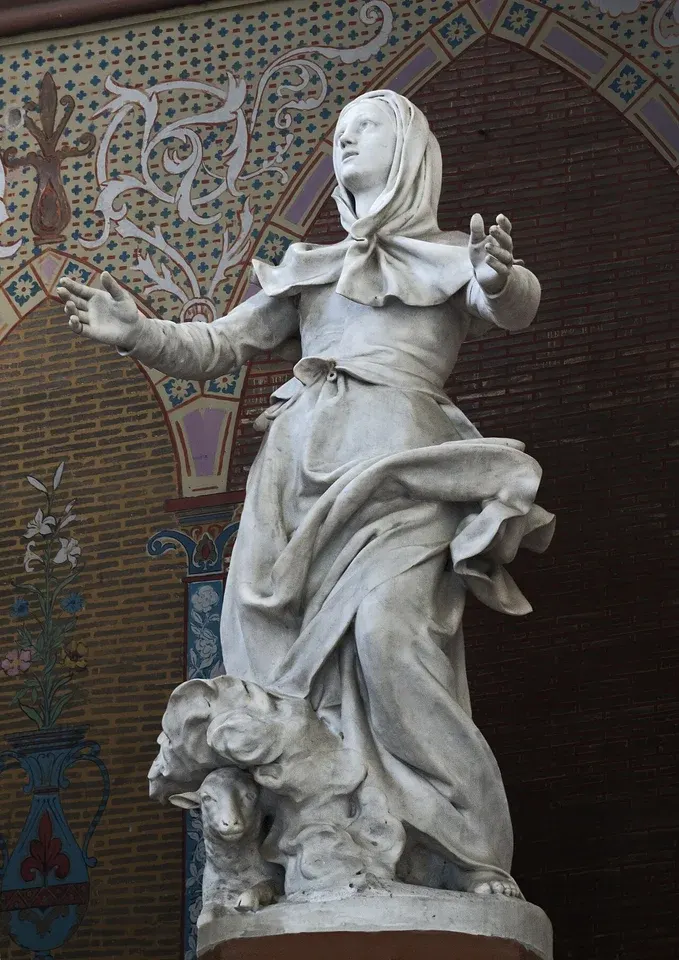
Biography
Germaine Cousin was a young laywoman of Pibrac near Toulouse remembered for enduring illness, poverty, and mistreatment. Her life is associated with tending sheep and practicing her faith despite exclusion within her household.
Traditional accounts describe physical disability, the early loss of her mother, and harsh treatment by relatives. Details differ, but the central memory is of a vulnerable girl assigned work and denied the comfort and recognition available to others around her.
Her devotional life is portrayed through attendance at Mass and the rosary. Stories say her flock remained safe while she went to worship. Such episodes belong to the later hagiographic tradition and should not be presented as independently verified events.
Germaine died in 1601 at about twenty-two and was canonized in 1867. Churches, images, and pilgrimage around Pibrac preserve her cult, with June 15 as her commemoration. The significance of the story is not that abuse was acceptable or deserved. It is that a person regarded as insignificant within her own surroundings came to be publicly honored. Her historical outline remains modest, while the later devotion gives clear evidence of that reversal in remembrance.
Context & contribution
Local memory and disputed household details
Germaine's local legacy extends beyond familiar paintings of a shepherdess. Nominis records statues, stained glass, reliquaries, and even bells bearing her name in the Lot region. Such objects show how a rural saint entered the ordinary soundscape and furnishings of parish life, as well as public devotion.
The same page preserves a warning about biographical certainty. Its principal account attributes her mistreatment to a stepmother, while an appended correction identifies the household differently, naming a half-brother and his wife after both parents' deaths. These conflicting accounts should not be silently combined. The enduring remembrance of suffering is clearer than every detail of the family narrative.
Explore the sources for this section
AI-assisted source comparison updated 2026-09-26. Editorial approach
From the Saint Discovery blog
Keep exploring your faith
Practical guides to prayer, the saints, and living the Catholic faith.
St. Josephine Bakhita: Hope Without Denying Suffering
Learn what St. Josephine Bakhita teaches about Christian hope, dignity, and freedom, with practical reflection prompts and an original prayer.
Faith in difficult timesRead the article Prayer & reflectionWhat Is Redemptive Suffering? A Catholic Guide
What is redemptive suffering? Learn what Catholics mean by offering it up, how to unite suffering to Christ, and why seeking help belongs with faith.
Faith in difficult timesRead the articleFrom reading to reflection
What will you carry with you?
After reading about St. Germaine Cousin, take a moment to consider:
- Find two types of memorial associated with Germaine and explain what they reveal about local devotion without treating them as proof of disputed household events.
These are reflection prompts from Saint Discovery, not quotations from the saint.
Sources and further reading
Biography source comparison recorded on . This is an AI-assisted comparison, not independent human or ecclesiastical approval.
What the recorded review covers
AI-assisted expansion checked against cited sources; historical traditions distinguished from documented evidence; not ecclesiastical approval
A source list helps you check an account; it does not establish that every claim is certain. Follow the biography’s qualifications about historical evidence, traditions and feast calendars.
Suggest a correction to this biography
How we research these pages and handle corrections · Directory corrections log
More lives to explore
Suggestions based on the site’s quiz themes, not a historical relationship or a measure of holiness.