Catholic saint biography
St. Crispin
- Commemoration:
- October 25
- Patron Saint of:
- shoemakers
- Lived:
- Early Christian martyr; exact dates uncertain — Traditionally Soissons, Gaul
Traditional joint commemoration with Crispinian.
Why dates and liturgical observances can differ
Read the sources for this biography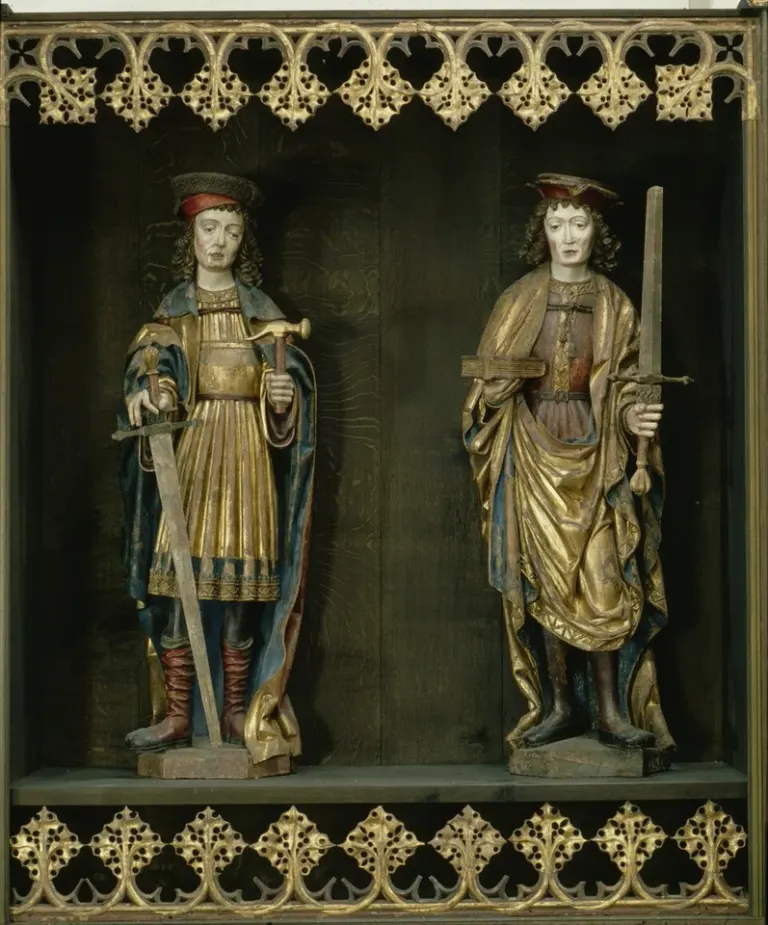
Biography
Crispin is remembered with Crispinian as a martyr associated with Soissons. Later tradition makes the two brothers and describes them as missionaries who supported themselves by making shoes, using their earnings to assist poor people. Their connection with this trade established a particularly strong devotion among shoemakers and leather workers.
The tradition locates their work in Roman Gaul. Its emphasis on skilled manual labor helped tradespeople recognize their own occupation within Christian devotion. This occupational patronage is better documented than many details of the martyrs’ personal lives.
The brothers’ dramatic persecution narrative combines imperial officials, torture, and miraculous deliverance. Its complicated chronology and late form require caution. A responsible account can explain why craftsmen honored Crispin without presenting every scene in the legend as an established episode of Roman history.
The detailed narrative of their Roman ancestry, journeys, and repeated miraculous escapes from torture cannot be treated as secure contemporary evidence. Their longstanding cult and the later stories surrounding it are different kinds of historical information. October 25 is their traditional shared feast. The association of that date with Agincourt and Shakespeare is part of their later cultural reception, not their ancient biography.
Context & contribution
Tracing a devotion through buildings and reliquaries
The history of Crispin's cult can be followed through places and objects more securely than through every detail of his persecution narrative. The Catholic Encyclopedia records a sixth-century basilica at Soissons and a costly shrine made by the goldsmith Eligius for the head of Crispinian. These belong to the brothers' later commemoration.
The same account describes relics reaching Rome and Osnabrück, extending the devotion beyond its original center. Such movements connected local churches through shared patrons and sacred objects. They explain how a pair associated with one Gallic town could acquire a much wider presence, while leaving open the separate historical questions about their ancestry, travels, and the legendary circumstances of their deaths.
Explore the sources for this section
AI-assisted source comparison updated 2026-09-26. Editorial approach
From the Saint Discovery blog
Keep exploring your faith
Practical guides to prayer, the saints, and living the Catholic faith.
Why Is St. Thérèse the Patron Saint of Missions?
Why is St. Thérèse patron saint of missions? Discover her support for missionaries and practical ways to participate in the Church's mission from home.
Sharing the faithRead the article Everyday faithWhat Is Evangelization? A Catholic Guide to Sharing the Faith
What is evangelization? Learn the Catholic meaning, the new evangelization, and practical ways to share your faith with respect, confidence, and love.
Sharing the faithRead the articleFrom reading to reflection
What will you carry with you?
After reading about St. Crispin, take a moment to consider:
- Map Soissons, Rome, and Osnabrück, then explain what a relic's journey can establish about devotion without establishing every detail of a martyr's life.
These are reflection prompts from Saint Discovery, not quotations from the saint.
Sources and further reading
Biography source comparison recorded on . This is an AI-assisted comparison, not independent human or ecclesiastical approval.
What the recorded review covers
AI-assisted expansion checked against retrieved historical and institutional sources; traditions distinguished from documented history; not ecclesiastical approval
A source list helps you check an account; it does not establish that every claim is certain. Follow the biography’s qualifications about historical evidence, traditions and feast calendars.
Suggest a correction to this biography
How we research these pages and handle corrections · Directory corrections log
More lives to explore
Suggestions based on the site’s quiz themes, not a historical relationship or a measure of holiness.