Catholic saint biography
St. Gregory Barbarigo
- Commemoration:
- June 18
- Lived:
- 1625–1697 — Venice, Italy
Why dates and liturgical observances can differ
Read the sources for this biography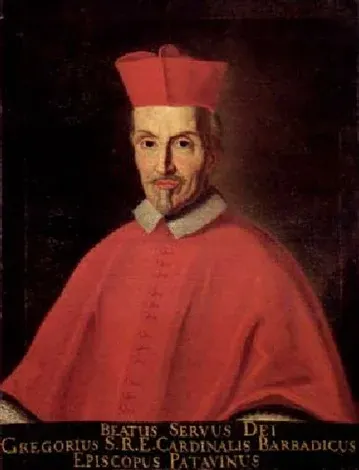
Biography
Gregory Barbarigo was a Venetian churchman whose work joined epidemic relief with the reform of clergy education. He served as bishop of Bergamo and later Padua during the seventeenth century.
As a young man he accompanied a Venetian diplomat to the peace negotiations at Münster. There he met Fabio Chigi, the future Alexander VII. After university study at Padua and ordination, that relationship drew him into service at Rome.
During a plague outbreak, he organized help in Trastevere, visiting sick people and coordinating assistance for quarantined households. Widows and orphans were particular concerns. His surviving correspondence acknowledged the fear involved, giving a more human picture than an account of effortless heroism.
Appointed to Bergamo and then Padua, he emphasized parish visits, catechesis, charity, and thorough preparation for priests. Padua's seminary became central to that project, combining religious formation with serious learning. He also supported contact with Eastern Christians. He died in 1697 and was canonized in 1960. His June 18 remembrance recalls a pastor whose educational reforms grew alongside direct experience of communities in distress.
Context & contribution
A printing press built for a curriculum
The Padua seminary library dates Barbarigo's printing press to 1684 and connects it to his earlier reform of studies. Seminarians learning Arabic, Hebrew, and Greek needed books that the local market could not adequately supply. After commissioning an unsatisfactory Hebrew grammar in Venice, he developed the means to print suitable texts locally.
The project depended on technical resources as well as episcopal resolve: donated type punches and matrices enabled work in several scripts. Under Barbarigo, the press produced schoolbooks, commissioned works, and profitable liturgical volumes printed in red and black. Education, missionary preparation, and the economics of publishing thus became parts of the same institutional undertaking.
Explore the sources for this section
AI-assisted source comparison updated 2026-09-26. Editorial approach
From the Saint Discovery blog
Keep exploring your faith
Practical guides to prayer, the saints, and living the Catholic faith.
Why Do Catholics Pray to Saints? Intercession Explained
Why do Catholics pray to saints? Learn how intercession differs from worship, how it relates to Jesus, and a simple way to ask a saint to pray for you.
A next step with your saintRead the article Living the seasonsHow to Celebrate Your Patron Saint's Feast Day at Home
Celebrate your patron saint's feast day with prayer, a short biography, and an act of kindness. A practical plan for families, sponsors, and individuals.
A next step with your saintRead the articleFrom reading to reflection
What will you carry with you?
After reading about St. Gregory Barbarigo, take a moment to consider:
- Consider Barbarigo's textbook shortage as a practical problem. Compare purchasing books, commissioning an edition, and founding a press, naming the new responsibilities each solution creates.
These are reflection prompts from Saint Discovery, not quotations from the saint.
Sources and further reading
Biography source comparison recorded on . This is an AI-assisted comparison, not independent human or ecclesiastical approval.
What the recorded review covers
AI-assisted expansion checked against cited sources; historical traditions distinguished from documented evidence; not ecclesiastical approval
A source list helps you check an account; it does not establish that every claim is certain. Follow the biography’s qualifications about historical evidence, traditions and feast calendars.
Suggest a correction to this biography
How we research these pages and handle corrections · Directory corrections log
More lives to explore
Suggestions based on the site’s quiz themes, not a historical relationship or a measure of holiness.