Catholic saint biography
St. Conrad of Piacenza
- Commemoration:
- February 19
- Lived:
- Birth uncertain; died 1351 — Piacenza, Italy
Franciscan and local commemoration.
Why dates and liturgical observances can differ
Read the sources for this biography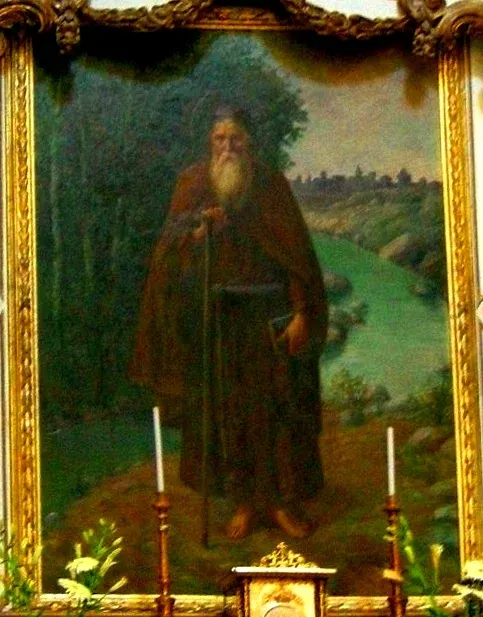
Biography
Conrad was a married layman from Piacenza who became a Franciscan penitent and hermit. His traditional conversion story centers on a hunting fire that devastated surrounding land. When an innocent man was blamed, Conrad acknowledged responsibility and surrendered his property to meet the damage. The account explains his subsequent embrace of poverty.
The fire reportedly began when Conrad ordered brushwood burned to drive out game. His confession prevented an innocent person’s execution. The story links his penitence to accepting responsibility and making material restitution, rather than escaping the consequences.
After an initial hermitage near Piacenza, he traveled through Rome to Sicily. Noto became the lasting center of his veneration. Leo X permitted its observance in 1515, and the permission was subsequently extended to the Franciscan order. These stages explain how a local hermit acquired wider recognition.
His wife entered a Poor Clare community, while Conrad eventually settled near Noto in Sicily and lived an austere life of prayer. Reports of holiness and healing encouraged a lasting local devotion after his death in 1351. His cult received papal permission rather than a modern formal canonization ceremony. The Franciscan commemoration is February 19.
Context & contribution
A hermit's memory in Noto's public life
Conrad's legacy in Noto has a visible civic form. The diocese describes the summer procession of the silver reliquary containing his remains through the historic center, accompanied by bearers of the cilii, large votive candles. Such observances require organized participation and preserve the relationship between a local community and its patron across generations.
That relationship can also be expressed by adapting a custom. In February 2021 the diocese announced that the customary processions would not take place because of the pandemic, while prayer and worship continued under restrictions. The decision illustrates a living tradition capable of separating its enduring purpose from a particular public form when circumstances demand care for neighbors.
Explore the sources for this section
AI-assisted source comparison updated 2026-09-26. Editorial approach
From the Saint Discovery blog
Keep exploring your faith
Practical guides to prayer, the saints, and living the Catholic faith.
Why Do Catholics Pray to Saints? Intercession Explained
Why do Catholics pray to saints? Learn how intercession differs from worship, how it relates to Jesus, and a simple way to ask a saint to pray for you.
A next step with your saintRead the article Living the seasonsHow to Celebrate Your Patron Saint's Feast Day at Home
Celebrate your patron saint's feast day with prayer, a short biography, and an act of kindness. A practical plan for families, sponsors, and individuals.
A next step with your saintRead the articleFrom reading to reflection
What will you carry with you?
After reading about St. Conrad of Piacenza, take a moment to consider:
- Compare Noto's procession tradition with its 2021 suspension: what makes a patronal celebration continuous when its customary public form must change?
These are reflection prompts from Saint Discovery, not quotations from the saint.
Sources and further reading
Biography source comparison recorded on . This is an AI-assisted comparison, not independent human or ecclesiastical approval.
What the recorded review covers
AI-assisted expansion checked against retrieved historical and institutional sources; traditions distinguished from documented history; not ecclesiastical approval
A source list helps you check an account; it does not establish that every claim is certain. Follow the biography’s qualifications about historical evidence, traditions and feast calendars.
Suggest a correction to this biography
How we research these pages and handle corrections · Directory corrections log
More lives to explore
Suggestions based on the site’s quiz themes, not a historical relationship or a measure of holiness.