Catholic saint biography
St. Ansbert of Rouen
- Commemoration:
- February 9
- Lived:
- Died about 695 — Fontenelle and Rouen, France
February 9, local commemoration.
Why dates and liturgical observances can differ
Read the sources for this biography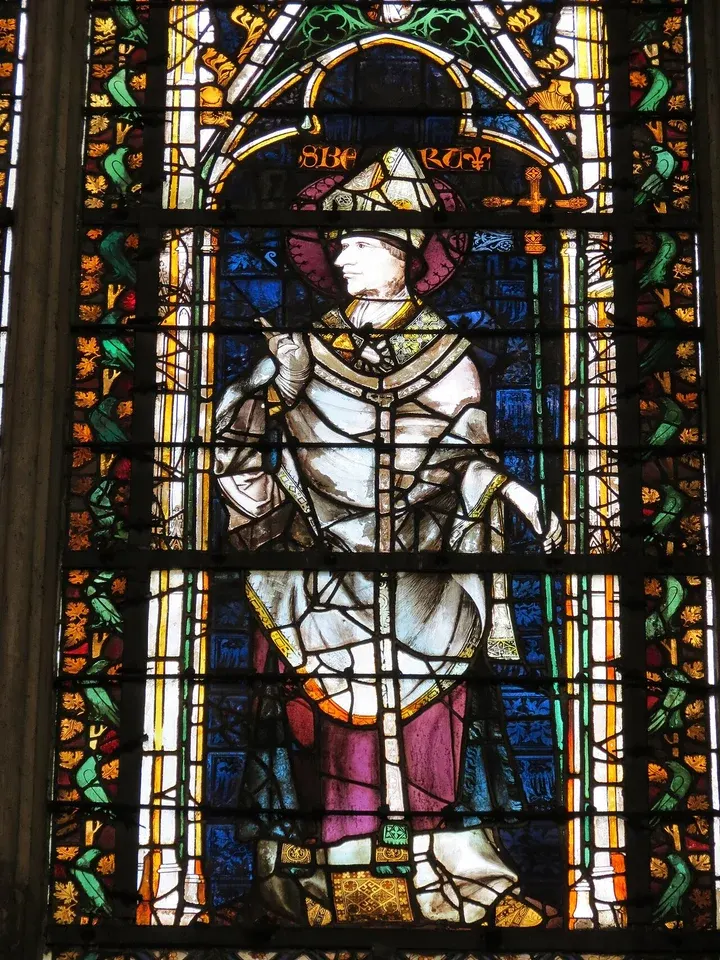
Biography
Ansbert served as abbot of Fontenelle before becoming bishop of Rouen. His career belongs to the Church of the early medieval Frankish kingdoms, where monastic leadership and episcopal service were closely connected.
Nominis describes an earlier career at the court of Clotaire III before Ansbert chose monastic life under Wandrille. He later succeeded to leadership at Fontenelle. This movement from royal service to an abbey illustrates how closely the political and religious institutions of the period were connected.
His final exile shows that appointment as bishop did not separate him from political conflict. Hautmont became the place of his death rather than his episcopal city. The brief record does not explain every charge or negotiation behind the exile, so a detailed account of his opponents’ motives would exceed the evidence.
According to Nominis, he was exiled by Pepin of Herstal and died at Hautmont on the Sambre around 695. The source records a local feast on February 9. The surviving account offers a broad outline of his career rather than a detailed record of his personal conversations.
Context & contribution
Reading several layers within one short source
Ansbert's Nominis entry combines an editorial life summary, a notice identified as Roman Martyrology material, and a reader-submitted anecdote about vine growing. Those layers do not carry equal evidentiary weight. The anecdote should not be promoted into an established agricultural achievement simply because it appears on the same page.
The more firmly presented outline follows court service, monastic leadership, episcopal office, and political exile. Its value is the pattern of institutions through which an early medieval church leader moved. The exile also cautions against assuming that religious office removed a person from royal politics. A short source can illuminate these relationships without supplying all their causes.
Explore the sources for this section
AI-assisted source comparison updated 2026-09-26. Editorial approach
From the Saint Discovery blog
Keep exploring your faith
Practical guides to prayer, the saints, and living the Catholic faith.
What Is the Domestic Church? John Paul II on Faith at Home
What Catholics mean by the domestic church, how John Paul II explained family life, and practical ways to begin with prayer, forgiveness and welcome.
Bring reflection into prayerRead the article Prayer & reflectionHow to Make a Spiritual Communion When You Cannot Receive
Learn how to make a spiritual communion, with a short original prayer and clear guidance on Mass, Confession, and times when you cannot receive.
Bring reflection into prayerRead the articleFrom reading to reflection
What will you carry with you?
After reading about St. Ansbert of Rouen, take a moment to consider:
- Label the different kinds of material on Ansbert's source page. Which would you use for a historical claim, and which would you retain only as an attributed anecdote?
These are reflection prompts from Saint Discovery, not quotations from the saint.
Sources and further reading
Biography source comparison recorded on . This is an AI-assisted comparison, not independent human or ecclesiastical approval.
What the recorded review covers
AI-assisted expansion checked against retrieved historical and institutional sources; traditions distinguished from documented history; not ecclesiastical approval
A source list helps you check an account; it does not establish that every claim is certain. Follow the biography’s qualifications about historical evidence, traditions and feast calendars.
Suggest a correction to this biography
How we research these pages and handle corrections · Directory corrections log
More lives to explore
Suggestions based on the site’s quiz themes, not a historical relationship or a measure of holiness.