Catholic saint biography
St. Felipe de Jesús
- Commemoration:
- February 5
- Lived:
- 1572–1597 — Mexico City, New Spain
February 5 for Felipe individually, especially in Mexico; February 6 with Paul Miki and companions in the General Roman Calendar.
Why dates and liturgical observances can differ
Read the sources for this biography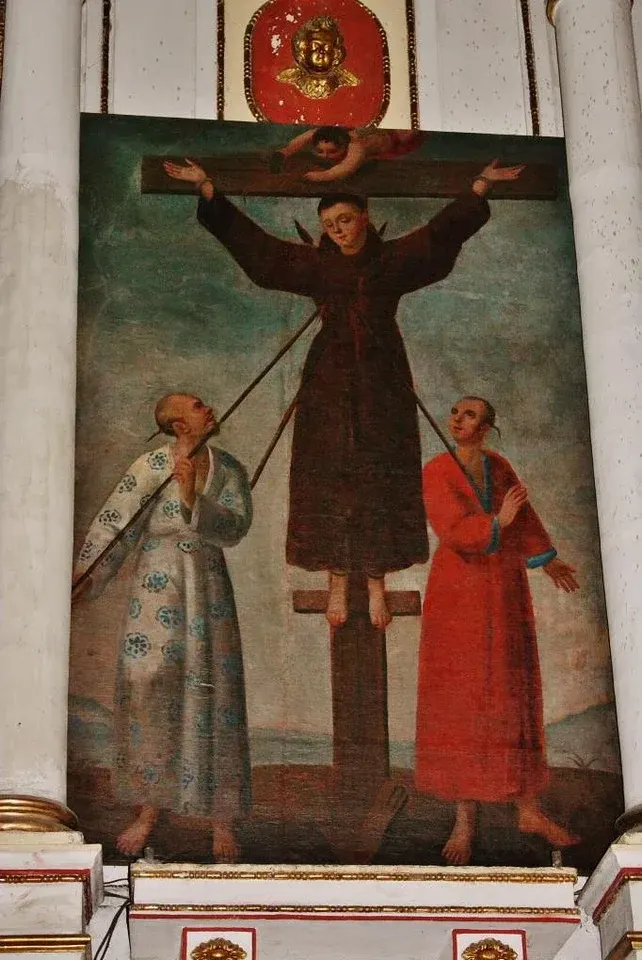
Biography
Felipe de Jesús was a Mexican-born Franciscan friar killed with the twenty-six martyrs of Japan in 1597. His route to martyrdom passed through commercial travel and religious formation rather than a planned lifelong mission in Japan.
He first attempted religious life in Mexico but left the novitiate. He then traveled to Manila, where his father hoped he would pursue commerce. There he reconsidered his vocation and entered the Franciscans, making his profession in 1594.
Sent toward Mexico in preparation for priestly ordination, he instead reached Japan after his ship was driven off course. He was arrested in the persecution ordered by Toyotomi Hideyoshi. He had not yet been ordained and should be described as a friar, not a priest.
Felipe and his companions were publicly humiliated and taken to Nagasaki, where they were crucified on February 5, 1597. Canonized together in 1862, they included Japanese lay Christians as well as religious missionaries. Mexico remembers Felipe individually on February 5; the wider Roman calendar celebrates Paul Miki and companions on February 6. His life connects the histories of Mexico, the Philippines, and Japan.
Context & contribution
An unexpected journey and its remembered symbol
Franciscan retelling links Felipe's image with a fig tree said to have become green at his death. The story answers a childhood prediction that the unruly boy would become a saint only when the dry tree revived. It is an explanation of iconography grounded in tradition, not evidence for botany or a dated childhood event.
The same source places his arrest at the Kyoto convent. This gives a concrete local setting to the final part of a life spanning the Pacific. His place among a group containing Japanese lay Christians also prevents his Mexican remembrance from eclipsing the people who shared his death.
Explore the sources for this section
AI-assisted source comparison updated 2026-09-26. Editorial approach
From the Saint Discovery blog
Keep exploring your faith
Practical guides to prayer, the saints, and living the Catholic faith.
Why Do Catholics Pray to Saints? Intercession Explained
Why do Catholics pray to saints? Learn how intercession differs from worship, how it relates to Jesus, and a simple way to ask a saint to pray for you.
A next step with your saintRead the article Living the seasonsHow to Celebrate Your Patron Saint's Feast Day at Home
Celebrate your patron saint's feast day with prayer, a short biography, and an act of kindness. A practical plan for families, sponsors, and individuals.
A next step with your saintRead the articleFrom reading to reflection
What will you carry with you?
After reading about St. Felipe de Jesús, take a moment to consider:
- Prepare an image caption explaining Felipe's fig tree, then add one sentence acknowledging the Japanese lay companions within the wider martyr group.
These are reflection prompts from Saint Discovery, not quotations from the saint.
Sources and further reading
Biography source comparison recorded on . This is an AI-assisted comparison, not independent human or ecclesiastical approval.
What the recorded review covers
AI-assisted expansion checked against cited sources; historical traditions distinguished from documented evidence; not ecclesiastical approval
A source list helps you check an account; it does not establish that every claim is certain. Follow the biography’s qualifications about historical evidence, traditions and feast calendars.
Suggest a correction to this biography
How we research these pages and handle corrections · Directory corrections log
More lives to explore
Suggestions based on the site’s quiz themes, not a historical relationship or a measure of holiness.