Catholic saint biography
St. Agnes Lê Thị Thành
- Commemoration:
- July 12
- Lived:
- Died 1841 — Vietnam
Why dates and liturgical observances can differ
Read the sources for this biography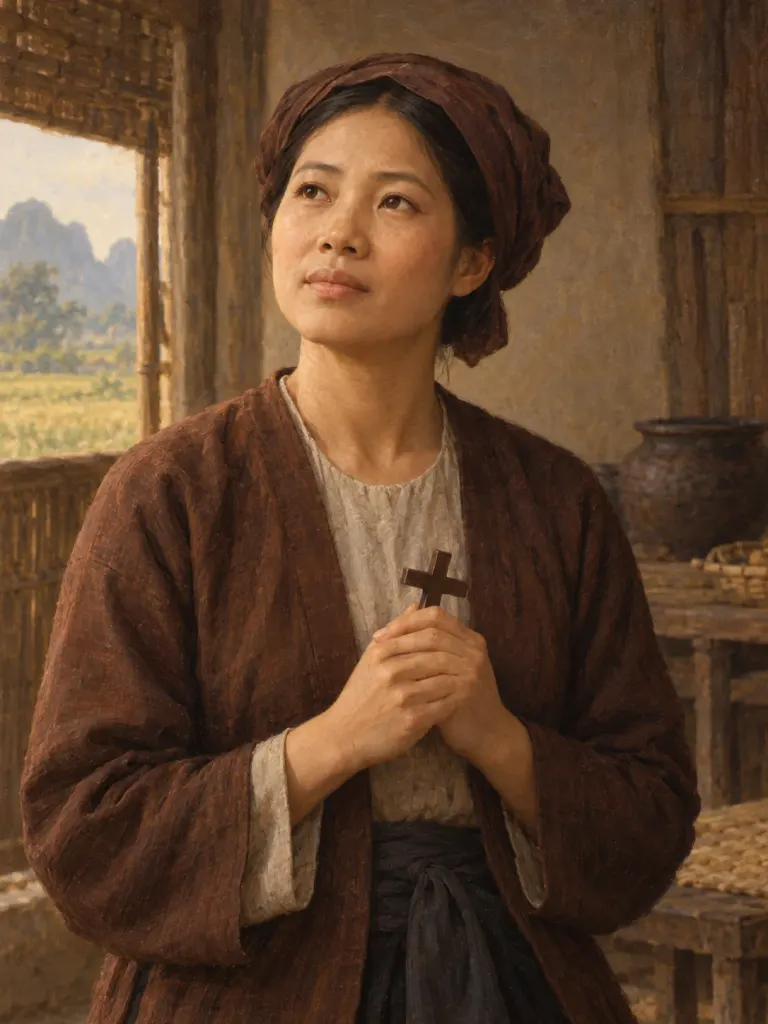
Biography
Agnes Lê Thị Thành, also known as Dê, was a Vietnamese mother and lay Catholic who sheltered a priest during persecution. She is the woman included among the 117 Vietnamese martyrs canonized together by John Paul II in 1988.
Her witness took place in Tonkin, in the province of Ninh Binh, during the reign of Emperor Thiệu Trị. Providing refuge to a priest exposed a household to punishment. Her story therefore belongs to the history of ordinary believers whose homes and practical assistance helped sustain Christian communities.
After her arrest, she was pressured to show rejection of Christianity by trampling on a cross. The martyrological account describes violence and repeated beatings, followed by her death in prison. It records the consequences of her refusal without preserving a full account of her earlier family life.
The Holy See's canonization list gives July 12, 1841, as her death date; some devotional listings give 1842. Her individual remembrance is July 12, and her canonization also places her within the larger memory of Vietnam's martyrs. That group includes clergy, catechists, and lay believers rather than a single community killed on one occasion.
Context & contribution
A household within a wider martyr community
The official list of Vietnam's 117 martyrs includes Vietnamese laypeople, catechists, priests, and European missionaries. Agnes's place in that company helps correct the assumption that the survival of a persecuted church depended only on ordained leaders. Homes, family decisions, and practical protection were also part of its religious infrastructure.
The canonization grouped people who died under several rulers and in different circumstances. It was not a declaration that all 117 shared one arrest or execution. Agnes can therefore be studied both as an individual lay witness and as part of a long history whose unity comes from the Church's later act of remembrance.
Explore the sources for this section
AI-assisted source comparison updated 2026-09-26. Editorial approach
From the Saint Discovery blog
Keep exploring your faith
Practical guides to prayer, the saints, and living the Catholic faith.
Why Do Catholics Pray to Saints? Intercession Explained
Why do Catholics pray to saints? Learn how intercession differs from worship, how it relates to Jesus, and a simple way to ask a saint to pray for you.
A next step with your saintRead the article Living the seasonsHow to Celebrate Your Patron Saint's Feast Day at Home
Celebrate your patron saint's feast day with prayer, a short biography, and an act of kindness. A practical plan for families, sponsors, and individuals.
A next step with your saintRead the articleFrom reading to reflection
What will you carry with you?
After reading about St. Agnes Lê Thị Thành, take a moment to consider:
- Using the official list, distinguish clergy, catechists, and other laypeople. What does Agnes's inclusion reveal about work that public leadership titles do not capture?
These are reflection prompts from Saint Discovery, not quotations from the saint.
Sources and further reading
Biography source comparison recorded on . This is an AI-assisted comparison, not independent human or ecclesiastical approval.
What the recorded review covers
AI-assisted expansion checked against retrieved historical and institutional sources; traditions distinguished from documented history; not ecclesiastical approval
A source list helps you check an account; it does not establish that every claim is certain. Follow the biography’s qualifications about historical evidence, traditions and feast calendars.
Suggest a correction to this biography
How we research these pages and handle corrections · Directory corrections log
More lives to explore
Suggestions based on the site’s quiz themes, not a historical relationship or a measure of holiness.