Catholic saint biography
St. Catherine of Alexandria
- Commemoration:
- November 25
- Lived:
- Dates uncertain — Traditionally associated with Alexandria
Why dates and liturgical observances can differ
Read the sources for this biography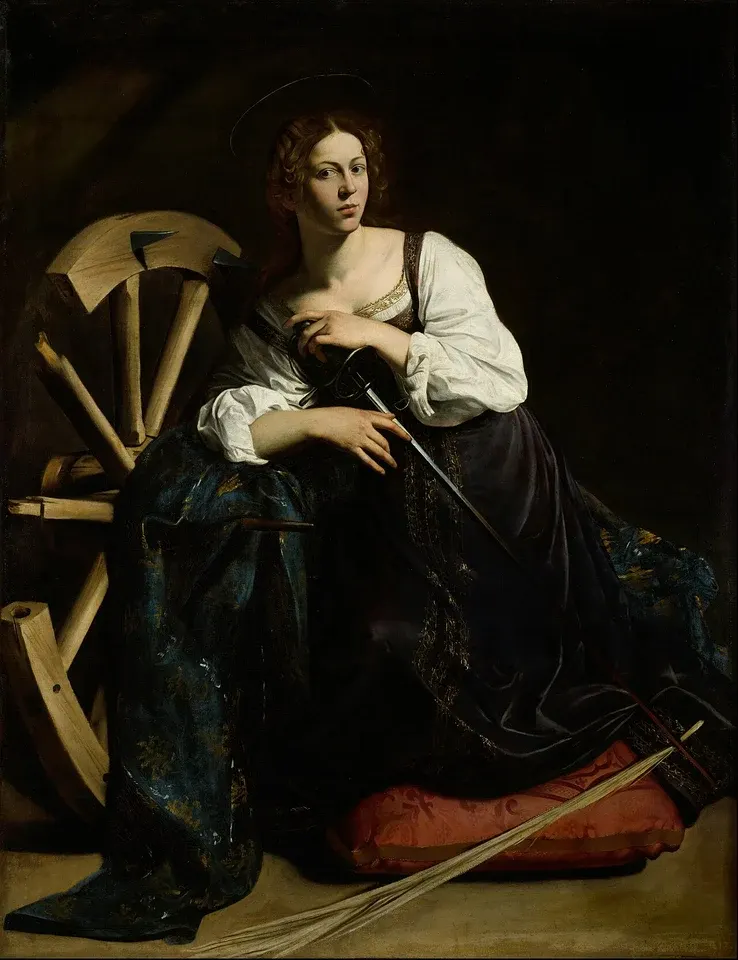
Biography
Catherine of Alexandria is venerated as a virgin and martyr whose legend became especially influential in medieval Christianity. It portrays a learned young woman who defended the Christian faith before an emperor and his scholars, endured imprisonment, and was condemned to death.
The central debate in the legend presents intellectual ability in the service of Christian belief. Scholars summoned to refute her instead become convinced by her arguments. This episode explains why later communities associated Catherine with learning, even though it cannot be treated as a transcript of an imperial debate.
Her connection with Sinai gave the devotion an important geographical center. The wheel became the most recognizable artistic attribute, expressing the failed torture described in her passion. These elements document the growth of her cult more securely than they establish the events of a particular year.
The surviving narratives contain substantial legendary development, including the breaking of a torture wheel and the miraculous transfer of her body to Sinai. They do not provide a secure contemporary biography. Her wheel, learning, and martyr’s palm became familiar features of Christian art. Her November 25 feast preserves a longstanding devotion while the details of her historical life remain uncertain.
Context & contribution
How a legend shaped the patrons of learning and craft
Catherine's later reception reached different kinds of work. Her reputation for learned argument made her a patron for students, philosophers, and preachers, while the wheel in her legend helped connect her with wheelwrights and mechanics. The same narrative could offer an image of intellectual courage and a recognizable emblem for manual occupations.
These associations are evidence of how communities used her story, even where they cannot establish the details of an ancient biography. Poetry, preaching, and images gave Catherine an influence far beyond a single shrine. Studying that reception allows readers to ask why particular groups chose a saint and which aspect of the story they emphasized. Her legacy includes the cultural history of those choices.
Explore the sources for this section
AI-assisted source comparison updated 2026-09-26. Editorial approach
From the Saint Discovery blog
Keep exploring your faith
Practical guides to prayer, the saints, and living the Catholic faith.
Why Do Catholics Pray to Saints? Intercession Explained
Why do Catholics pray to saints? Learn how intercession differs from worship, how it relates to Jesus, and a simple way to ask a saint to pray for you.
A next step with your saintRead the article Living the seasonsHow to Celebrate Your Patron Saint's Feast Day at Home
Celebrate your patron saint's feast day with prayer, a short biography, and an act of kindness. A practical plan for families, sponsors, and individuals.
A next step with your saintRead the articleFrom reading to reflection
What will you carry with you?
After reading about St. Catherine of Alexandria, take a moment to consider:
- Compare Catherine as patron of philosophers and wheelwrights: how does each group interpret the same legend differently, and what does that reveal about patronage?
These are reflection prompts from Saint Discovery, not quotations from the saint.
Sources and further reading
Biography source comparison recorded on . This is an AI-assisted comparison, not independent human or ecclesiastical approval.
What the recorded review covers
AI-assisted expansion checked against retrieved historical and institutional sources; traditions distinguished from documented history; not ecclesiastical approval
A source list helps you check an account; it does not establish that every claim is certain. Follow the biography’s qualifications about historical evidence, traditions and feast calendars.
Suggest a correction to this biography
How we research these pages and handle corrections · Directory corrections log
More lives to explore
Suggestions based on the site’s quiz themes, not a historical relationship or a measure of holiness.