Catholic saint biography
St. John Chrysostom
- Commemoration:
- September 13
- Lived:
- Fourth century–407 — Antioch, Roman Syria
Roman memorial; Byzantine calendars commonly use November 13.
Why dates and liturgical observances can differ
Read the sources for this biography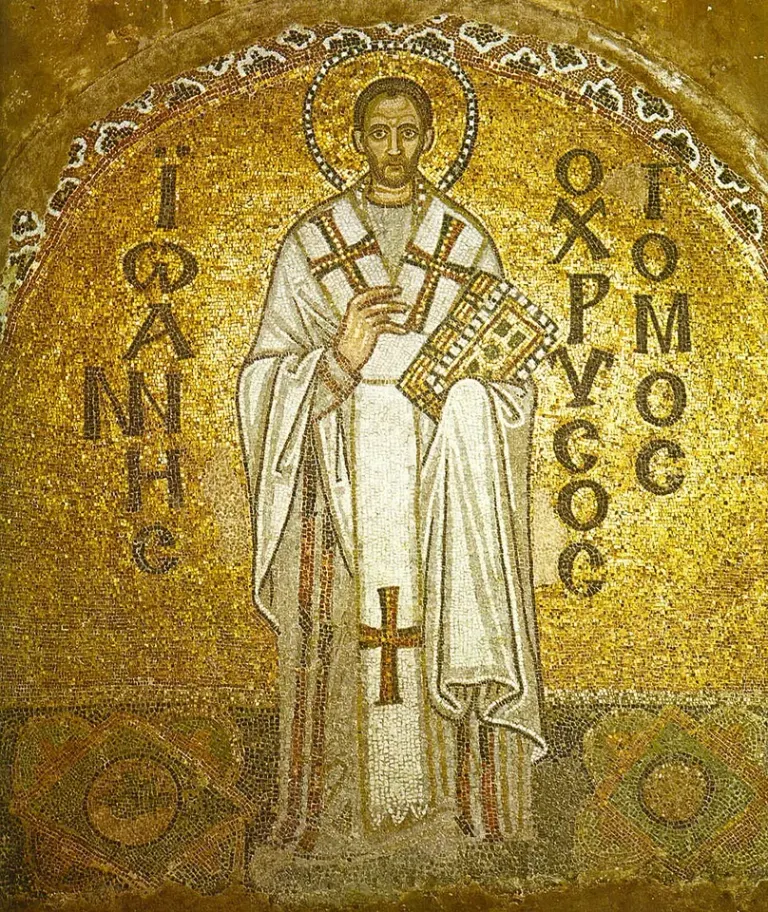
Biography
Saint John Chrysostom was a celebrated preacher and bishop of Constantinople. His title, meaning golden-mouthed, reflects the influence of his biblical preaching, while his later life shows the cost of reform amid ecclesiastical and imperial conflict.
After ministry at Antioch, John was called to lead the church of the imperial capital. He simplified the bishop's household and pressed for reform among clergy. His concern for people in need also took institutional form through organized charitable assistance.
These efforts brought him into disputes with powerful churchmen and members of the court. Questions of jurisdiction, the treatment of other clergy, and criticism of imperial festivities became entangled. He was deposed and exiled, briefly returned, and was forced into exile again.
Even in displacement he continued corresponding with supporters and caring about their situation. He died in 407 during a harsh journey to a more remote destination. His extensive homilies and letters remain central to early Christian studies, though their polemics require historical care. Eastern and Western churches honor him, and his name is attached to the principal Eucharistic liturgy of the Byzantine tradition.
Context & contribution
An urban vision drawn from Acts
In his preaching on Acts, Chrysostom treated the early Christians' sharing of possessions as a model for the life of a city. Benedict XVI interprets this as a demand reaching beyond occasional almsgiving toward the organization of common life. The needs of poor residents were therefore a question for the whole community, not only generous individuals.
His account of Scripture also used the image of a letter sent by God to humanity. Creation could point toward its Creator, while Scripture helped people understand that relationship more clearly. These themes connect his biblical interpretation with his social teaching: the text read in church was meant to shape how the city's inhabitants recognized and treated one another.
Explore the sources for this section
AI-assisted source comparison updated 2026-09-26. Editorial approach
From the Saint Discovery blog
Keep exploring your faith
Practical guides to prayer, the saints, and living the Catholic faith.
Why Is Saint Luke's Symbol an Ox? Meaning and Biblical Roots
Discover why Saint Luke's symbol is a winged ox, its biblical roots, and how the image connects his Gospel with priesthood and sacrifice.
Go deeper into ScriptureRead the article Prayer & reflectionHow to Pray the Jesus Prayer: A Catholic Beginner's Guide
Learn the Jesus Prayer, its Eastern Christian roots and biblical meaning, with a simple Catholic practice focused on Christ and mercy.
Go deeper into ScriptureRead the articleFrom reading to reflection
What will you carry with you?
After reading about St. John Chrysostom, take a moment to consider:
- Read Acts 4:32–37 and distinguish an individual act of generosity from a shared arrangement for meeting needs. Use that distinction to discuss Chrysostom's urban ideal.
These are reflection prompts from Saint Discovery, not quotations from the saint.
Sources and further reading
Biography source comparison recorded on . This is an AI-assisted comparison, not independent human or ecclesiastical approval.
What the recorded review covers
AI-assisted expansion checked against cited sources; historical traditions distinguished from documented evidence; not ecclesiastical approval
A source list helps you check an account; it does not establish that every claim is certain. Follow the biography’s qualifications about historical evidence, traditions and feast calendars.
Suggest a correction to this biography
How we research these pages and handle corrections · Directory corrections log
More lives to explore
Suggestions based on the site’s quiz themes, not a historical relationship or a measure of holiness.