Catholic saint biography
St. Athanasius of Alexandria
- Commemoration:
- May 2
- Lived:
- About 300–373 — Alexandria, Egypt
Why dates and liturgical observances can differ
Read the sources for this biography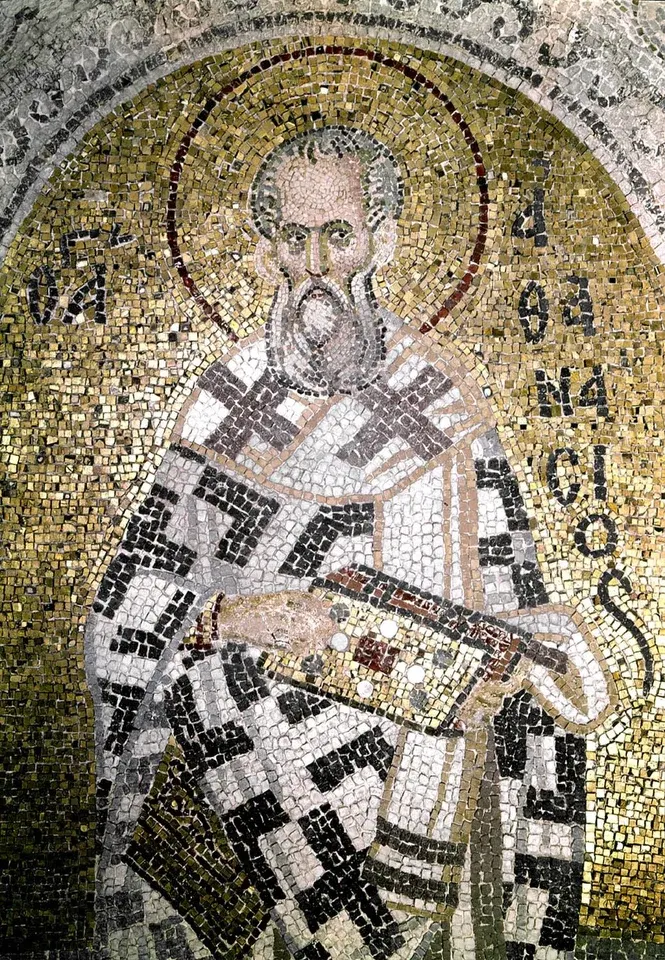
Biography
Athanasius served as a deacon and assistant to Bishop Alexander of Alexandria and accompanied him to the Council of Nicaea in 325. He became bishop of Alexandria in 328 and defended the council’s teaching that the Son is truly divine, of the same substance as the Father.
For Athanasius, the question of Christ’s divinity concerned salvation itself: the Word who became human must truly reveal and unite humanity with God. His theology of the Incarnation therefore explains why the Nicene controversy mattered beyond a dispute over technical vocabulary.
His episcopate unfolded amid imperial intervention and bitter opposition. Doctrine, church leadership, and politics could not be neatly separated in that setting. His writings outlasted those struggles and made his Alexandrian voice influential far beyond Egypt.
His opposition to Arian teaching placed him at the center of prolonged theological and political conflict. His writings on the Incarnation and his Life of Anthony helped shape both Christian doctrine and the spread of monastic ideals. He is honored as a Church Father in Eastern and Western Christianity and as a Doctor of the Church in Catholic tradition.
Context & contribution
Letters kept separated communities connected
Athanasius's festal letters announced the date of Easter to Egyptian churches and monasteries, but their purpose extended beyond the calendar. They also offered instruction and encouragement, maintaining relationships across a large region. A bishop repeatedly removed from his city could continue a form of pastoral presence through writing.
His letters to Serapion addressed the divinity of the Holy Spirit, showing that his doctrinal contribution extended beyond the more familiar controversy over the Son. These different kinds of letters joined a practical communication network with theological formation. Athanasius's influence therefore depended not only on dramatic resistance but on the repeated work of explaining faith to particular recipients.
Explore the sources for this section
AI-assisted source comparison updated 2026-09-26. Editorial approach
From the Saint Discovery blog
Keep exploring your faith
Practical guides to prayer, the saints, and living the Catholic faith.
Why Do Catholics Pray to Saints? Intercession Explained
Why do Catholics pray to saints? Learn how intercession differs from worship, how it relates to Jesus, and a simple way to ask a saint to pray for you.
A next step with your saintRead the article Living the seasonsHow to Celebrate Your Patron Saint's Feast Day at Home
Celebrate your patron saint's feast day with prayer, a short biography, and an act of kindness. A practical plan for families, sponsors, and individuals.
A next step with your saintRead the articleFrom reading to reflection
What will you carry with you?
After reading about St. Athanasius of Alexandria, take a moment to consider:
- What should a festal letter contain if it must both announce a common celebration and sustain communities whose bishop is absent?
These are reflection prompts from Saint Discovery, not quotations from the saint.
Sources and further reading
Biography source comparison recorded on . This is an AI-assisted comparison, not independent human or ecclesiastical approval.
What the recorded review covers
AI-assisted expansion checked against retrieved historical and institutional sources; traditions distinguished from documented history; not ecclesiastical approval
A source list helps you check an account; it does not establish that every claim is certain. Follow the biography’s qualifications about historical evidence, traditions and feast calendars.
Suggest a correction to this biography
How we research these pages and handle corrections · Directory corrections log
More lives to explore
Suggestions based on the site’s quiz themes, not a historical relationship or a measure of holiness.