Catholic saint biography
St. John Fisher
- Commemoration:
- June 22
- Lived:
- Fifteenth century–1535 — Beverley, Yorkshire, England
Roman memorial with Thomas More.
Why dates and liturgical observances can differ
Read the sources for this biography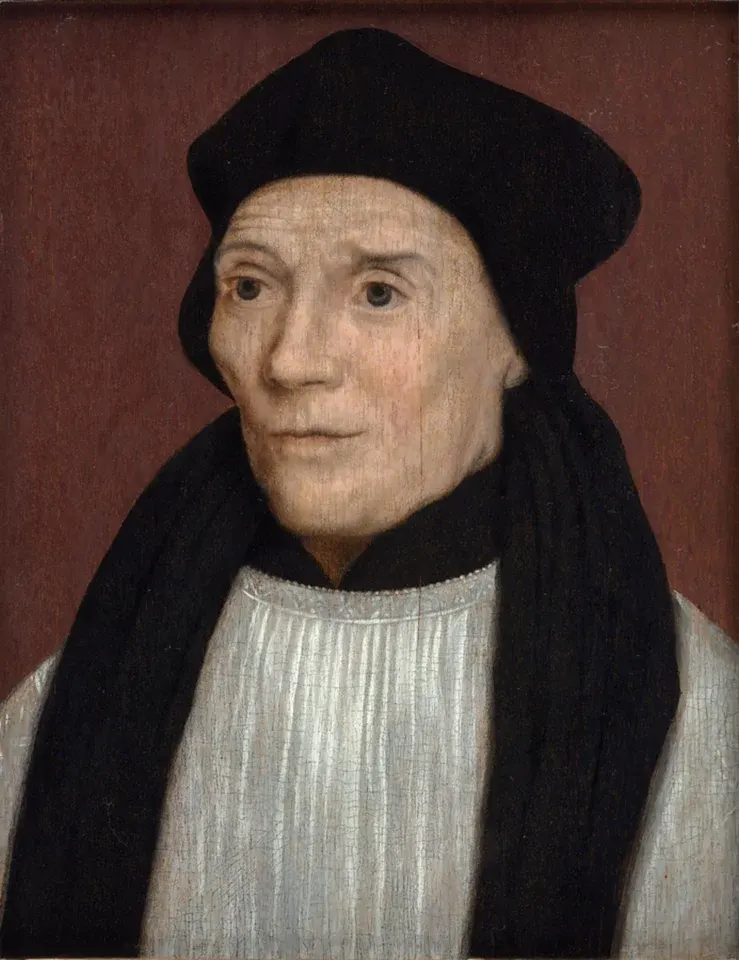
Biography
Saint John Fisher was bishop of Rochester, a scholar, and a leading supporter of university learning in England. He was executed after refusing to accept Henry VIII's claim to supreme authority over the English Church.
His work at Cambridge included teaching and university leadership. As an adviser to Margaret Beaufort, he helped direct patronage toward colleges and theological education. This commitment to learning accompanied a bishop's responsibilities rather than replacing them.
Fisher remained attached to the comparatively modest diocese of Rochester. During the Reformation he defended Catholic teaching in writing and opposed the king's efforts to resolve his marriage and authority disputes through coercion of the Church. These positions increasingly exposed him to imprisonment and legal pressure.
Held in the Tower of London, he was made a cardinal by Paul III shortly before his execution in June 1535. The appointment did not secure his release. Canonized with Thomas More in 1935, Fisher is remembered for conscience and fidelity under state pressure. His precise birth year is disputed, but the broad outline of his educational work, episcopate, and final conflict is well documented.
Context & contribution
Patronage that made learning possible
Fisher's educational influence included the Lady Margaret professorships of divinity at Oxford and Cambridge; he became the first holder of the Cambridge chair. His connection with Margaret Beaufort therefore supported teaching posts as well as college foundations. An endowed position could give theological study a continuing place beyond the career of one teacher.
He also encouraged Erasmus to come to Cambridge. The Catholic Encyclopedia points to Erasmus's acknowledgment of Fisher's protection for Greek studies there. This relationship adds a specific dimension to Fisher's reputation as a scholar: supporting another scholar and the study of a language could change the intellectual resources available to a whole university.
Explore the sources for this section
AI-assisted source comparison updated 2026-09-26. Editorial approach
From the Saint Discovery blog
Keep exploring your faith
Practical guides to prayer, the saints, and living the Catholic faith.
Why Do Catholics Pray to Saints? Intercession Explained
Why do Catholics pray to saints? Learn how intercession differs from worship, how it relates to Jesus, and a simple way to ask a saint to pray for you.
A next step with your saintRead the article Living the seasonsHow to Celebrate Your Patron Saint's Feast Day at Home
Celebrate your patron saint's feast day with prayer, a short biography, and an act of kindness. A practical plan for families, sponsors, and individuals.
A next step with your saintRead the articleFrom reading to reflection
What will you carry with you?
After reading about St. John Fisher, take a moment to consider:
- Compare founding a college with endowing a professorship and supporting a visiting scholar. Explain how Fisher's educational patronage operated at each of these levels.
These are reflection prompts from Saint Discovery, not quotations from the saint.
Sources and further reading
Biography source comparison recorded on . This is an AI-assisted comparison, not independent human or ecclesiastical approval.
What the recorded review covers
AI-assisted expansion checked against cited sources; historical traditions distinguished from documented evidence; not ecclesiastical approval
A source list helps you check an account; it does not establish that every claim is certain. Follow the biography’s qualifications about historical evidence, traditions and feast calendars.
Suggest a correction to this biography
How we research these pages and handle corrections · Directory corrections log
More lives to explore
Suggestions based on the site’s quiz themes, not a historical relationship or a measure of holiness.