Catholic saint biography
St. Bonaventure
- Commemoration:
- July 15
- Lived:
- Thirteenth century; died 1274 — Bagnoregio, Italy
Why dates and liturgical observances can differ
Read the sources for this biography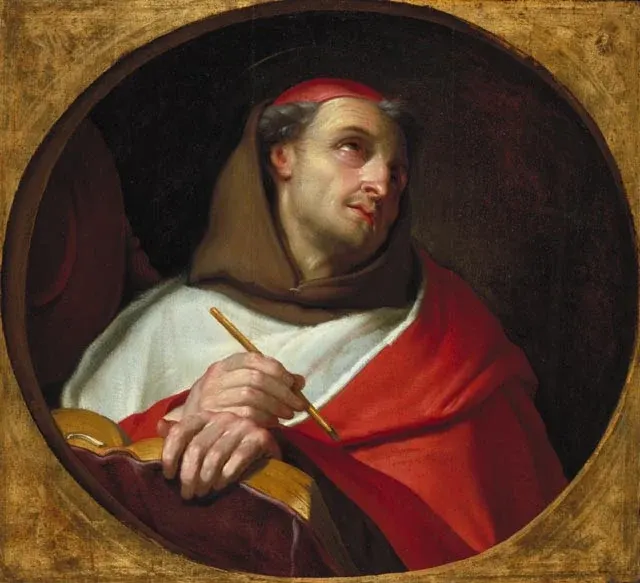
Biography
Born Giovanni Fidanza, Bonaventure studied at Paris and entered the Franciscan Order. He became a theologian and teacher before being elected minister general in 1257. In that office he worked to guide an expanding order through disagreements about how to live Francis of Assisi’s ideal.
His university career unfolded during controversy over the role of mendicant teachers. Entering the Franciscan Order did not remove him from intellectual debate; it placed his scholarship within a contested form of religious life. Election as minister general then required extensive travel and administrative responsibility.
His life of Francis helped provide the order with a common account of its founder amid competing interpretations. At Lyon, his work addressed the much wider relationship between the Latin and Greek churches. These responsibilities show the connection between his theology and his efforts to sustain ecclesial unity.
He wrote the Legenda Major, an influential life of Francis, as well as theological and spiritual works. Pope Gregory X made him a cardinal and bishop of Albano, and he helped prepare the Council of Lyon, where he died in 1274. The Church later recognized him as a Doctor of the Church, traditionally called the Seraphic Doctor.
Context & contribution
Theology as wisdom that changes its reader
Bonaventure treated theology as more than either theoretical knowledge or a set of instructions for action. His category of wisdom joined contemplation to the formation of a good life. Knowledge of Christ's love, in this account, should awaken a loving response; a reader has not finished learning merely by mastering an explanation.
This helps explain why he defended intellectual study within the Franciscan vocation. Inquiry could spring from the desire to know the beloved more deeply rather than from ambition to dominate an argument. His Journey of the Mind into God likewise connects attention to creation with movement toward God. The work asks readers to bring reasoning, desire, and prayer together, while recognizing that communion with God cannot be manufactured by intellectual effort alone.
Explore the sources for this section
AI-assisted source comparison updated 2026-09-26. Editorial approach
From the Saint Discovery blog
Keep exploring your faith
Practical guides to prayer, the saints, and living the Catholic faith.
Why Do Catholics Pray to Saints? Intercession Explained
Why do Catholics pray to saints? Learn how intercession differs from worship, how it relates to Jesus, and a simple way to ask a saint to pray for you.
A next step with your saintRead the article Living the seasonsHow to Celebrate Your Patron Saint's Feast Day at Home
Celebrate your patron saint's feast day with prayer, a short biography, and an act of kindness. A practical plan for families, sponsors, and individuals.
A next step with your saintRead the articleFrom reading to reflection
What will you carry with you?
After reading about St. Bonaventure, take a moment to consider:
- Take one theological claim you understand intellectually and ask Bonaventure's further question: what affection or action would show that it has become wisdom?
These are reflection prompts from Saint Discovery, not quotations from the saint.
Sources and further reading
Biography source comparison recorded on . This is an AI-assisted comparison, not independent human or ecclesiastical approval.
What the recorded review covers
AI-assisted expansion checked against retrieved historical and institutional sources; traditions distinguished from documented history; not ecclesiastical approval
A source list helps you check an account; it does not establish that every claim is certain. Follow the biography’s qualifications about historical evidence, traditions and feast calendars.
Suggest a correction to this biography
How we research these pages and handle corrections · Directory corrections log
More lives to explore
Suggestions based on the site’s quiz themes, not a historical relationship or a measure of holiness.