Catholic saint biography
St. Adrian of Canterbury
- Commemoration:
- January 9
- Lived:
- Died 710 — North Africa; Canterbury, England
Why dates and liturgical observances can differ
Read the sources for this biography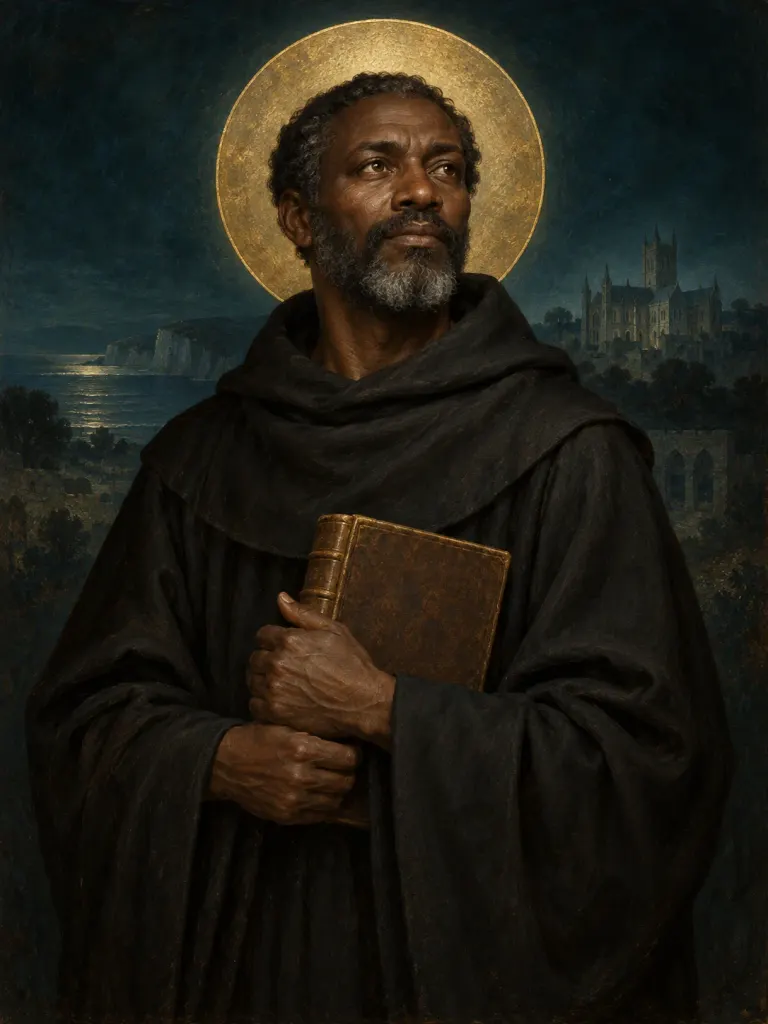
Biography
Adrian of Canterbury was an African-born abbot and teacher who helped make seventh-century Canterbury an important center of Christian learning. His influence came through education, monastic leadership, and partnership with Archbishop Theodore rather than through holding the archbishopric himself.
Adrian was leading a monastery near Naples when Pope Vitalian considered him for Canterbury. He declined and recommended Theodore, a Greek monk. The pope accepted on condition that Adrian accompany Theodore and assist him. They left Rome in 668, but suspicion of a political mission led to Adrian's detention in Francia and delayed his arrival.
In England, Theodore appointed him abbot of the monastery founded by Augustine at Canterbury. Adrian also accompanied the archbishop on pastoral visits. Together their work strengthened relationships between the English churches and Rome and helped develop a more coherent ecclesiastical organization.
Adrian's teaching included religious learning and wider scholarship. The school associated with his leadership trained people whose influence extended into later generations of scholars and missionaries. His life illustrates the African and Mediterranean contributions to early English Christianity. After decades of service in England, he died in 710 and was buried at Canterbury. His feast is January 9.
Context & contribution
Education sustained by partnership
Adrian's importance is easier to see when the school and the archbishopric are considered together. Theodore's pastoral visits and Adrian's teaching were complementary ways of strengthening churches: one coordinated their public life, while the other formed people able to teach and lead after the first missionaries were gone.
The Catholic Encyclopedia credits the educational network with preparing scholars and missionaries whose later work reached Francia and Germany. This makes Canterbury part of a circulation of learning around Europe. Adrian's African birth and Italian experience are therefore significant to the history of English education, without requiring unsupported claims about his precise ancestry or a modern national identity.
Explore the sources for this section
AI-assisted source comparison updated 2026-09-26. Editorial approach
From the Saint Discovery blog
Keep exploring your faith
Practical guides to prayer, the saints, and living the Catholic faith.
What Is the Domestic Church? John Paul II on Faith at Home
What Catholics mean by the domestic church, how John Paul II explained family life, and practical ways to begin with prayer, forgiveness and welcome.
Bring reflection into prayerRead the article Prayer & reflectionHow to Make a Spiritual Communion When You Cannot Receive
Learn how to make a spiritual communion, with a short original prayer and clear guidance on Mass, Confession, and times when you cannot receive.
Bring reflection into prayerRead the articleFrom reading to reflection
What will you carry with you?
After reading about St. Adrian of Canterbury, take a moment to consider:
- Create a diagram connecting Africa, Italy, Canterbury, Francia, and Germany. Explain the difference between Adrian's documented movements and the later influence of his students.
These are reflection prompts from Saint Discovery, not quotations from the saint.
Sources and further reading
Biography source comparison recorded on . This is an AI-assisted comparison, not independent human or ecclesiastical approval.
What the recorded review covers
AI-assisted expansion checked against retrieved historical and institutional sources; traditions distinguished from documented history; not ecclesiastical approval
A source list helps you check an account; it does not establish that every claim is certain. Follow the biography’s qualifications about historical evidence, traditions and feast calendars.
Suggest a correction to this biography
How we research these pages and handle corrections · Directory corrections log
More lives to explore
Suggestions based on the site’s quiz themes, not a historical relationship or a measure of holiness.